Activists who were detained by Israeli forces during a flotilla aimed at delivering aid to Gaza reported severe mistreatment. Several individuals were hospitalized due to injuries, and at least 15 have claimed they experienced sexual assaults, including rape. The allegations are unverified by Reuters, and Israel’s prison service did not comment, citing the holiday, while the military and Foreign Ministry redirected inquiries to them.
The Israeli prison service asserted that all detainees are treated in accordance with the law and that medical care follows professional guidelines. On Tuesday, Israeli forces arrested 430 people from 50 ships in international waters to stop the flotilla, raising more concerns about detainee treatment, especially following an incident where an Israeli minister mocked the activists, causing international backlash.
Organizers of the Global Sumud Flotilla reported numerous abuses, stating that individuals were shot at close range with rubber bullets, and many suffered broken bones. Luca Poggi, an Italian economist, and Sabrina Charik, who organized the return of French citizens, shared accounts of violence, including being stripped, kicked, tasered, and denied legal access. French participants reported serious injuries, with some sent to hospitals in Turkey.
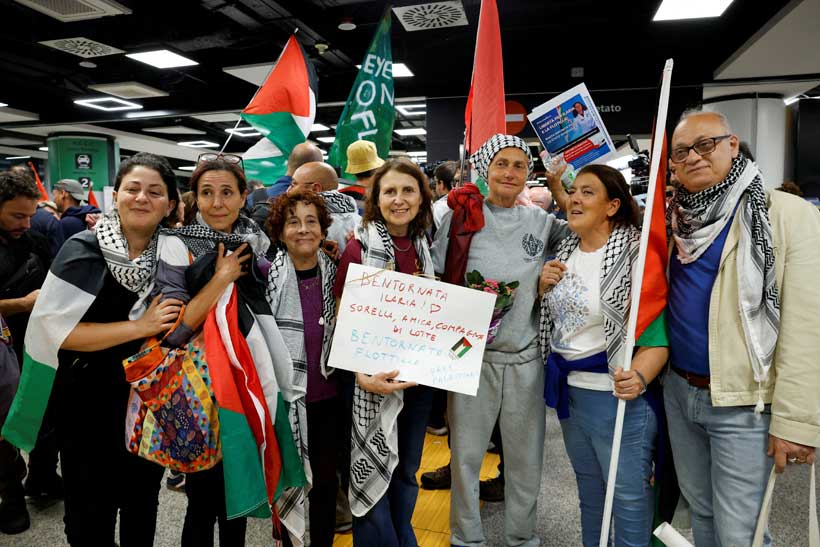
Activists mentioned that some abuses occurred at sea after being intercepted by Israeli naval forces, as well as during their detention in Israel. Flights bringing activists from various European countries back home have been scheduled from Turkey. Spanish officials announced that 44 members of their flotilla were expected home, with several requiring medical treatment.
Western governments expressed outrage over the Israeli minister’s actions. Italy moved to discuss imposing sanctions against this minister, Itamar Ben-Gvir, alongside other EU counterparts. EU sanctions require unanimous consent from all member states, which previously hindered action against Ben-Gvir.
With information from Reuters