


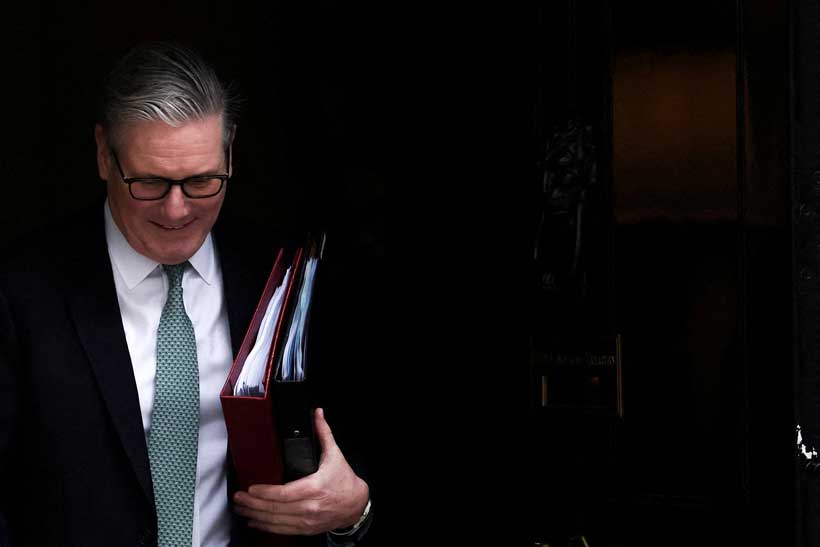
British Prime Minister Keir Starmer is facing the most serious political challenge of his leadership after significant Labour Party losses in local elections triggered growing internal unrest. More than 70 Labour lawmakers have publicly called for Starmer to either announce a timetable for his departure or resign altogether, reflecting widening dissatisfaction within the governing party.
Although no formal leadership contest has yet been triggered, the political pressure surrounding Starmer highlights deep concerns over Labour’s electoral direction, public support, and long term governing strategy.
The crisis demonstrates how rapidly political authority can weaken in parliamentary systems when electoral setbacks combine with internal party dissatisfaction.
Why Starmer Is Under Pressure
The local election losses have intensified doubts about Starmer’s ability to maintain Labour’s political dominance and lead the party successfully into future national elections. Many Labour lawmakers fear that declining public confidence could threaten the party’s long term electoral prospects.
Stay ahead of the geopolitical week.
MD Briefing delivers expert analysis across five global fronts — the Indo-Pacific, energy, geoeconomics, European security, and the Middle East — every Monday morning. Free.
Reports suggesting that even senior cabinet ministers have privately encouraged Starmer to prepare for an exit indicate that dissatisfaction is no longer limited to the party’s fringe factions. Resignations by ministerial aides further reinforce the perception of weakening political control within the government.
The criticism appears to reflect several concerns, including dissatisfaction with Labour’s policy direction, fears over declining voter enthusiasm, and anxiety regarding the rise of opposition and populist political movements across Britain.
Why Starmer Has Not Been Removed Yet
Despite mounting criticism, Labour’s internal rules make removing a sitting leader more difficult than simply expressing no confidence. The party requires leadership challengers to organize around alternative candidates rather than merely oppose the current leader.
To formally challenge Starmer, a rival candidate must secure support from at least 20 percent of Labour lawmakers. With Labour holding 403 parliamentary seats, this means a challenger would require at least 81 supporting members of parliament.
Potential challengers must also demonstrate support from grassroots Labour organizations and affiliated groups such as trade unions. These requirements are designed to prevent destabilizing internal revolts without broad party backing.
At present, many critics appear focused on persuading Starmer to resign voluntarily rather than launching a direct procedural challenge.
What Happens If Starmer Resigns
If Starmer chooses to resign, Labour would begin a formal leadership selection process. Candidates meeting party requirements would compete to become the next Labour leader and therefore prime minister.
If only one candidate secures enough support, that individual would automatically become Labour leader without a wider vote. However, if multiple candidates qualify, Labour Party members and affiliated organizations would vote to select the new leader.
Because Labour currently commands a parliamentary majority, the new party leader would become prime minister without requiring an immediate general election.
This process highlights one of the defining features of parliamentary systems: governments can change leadership internally without direct national voting between general elections.
Risks of a Leadership Contest
A leadership struggle could create significant political instability for Labour at a sensitive moment. Public internal divisions often weaken governing parties by damaging voter confidence, distracting policymakers, and creating uncertainty around economic and legislative priorities.
A prolonged contest may also expose ideological divisions within Labour regarding economic policy, immigration, public spending, and relations with emerging populist movements.
At the same time, forcing out a sitting prime minister can carry political risks if voters perceive the party as divided or opportunistic. Labour must therefore balance demands for political renewal against the dangers of appearing unstable while in government.
Implications for British Politics
The growing pressure on Starmer reflects broader volatility within British politics following years of economic challenges, cost of living pressures, and declining trust in traditional political leadership.
The rise of populist and anti establishment political movements has increased pressure on mainstream parties across Europe, including in the United Kingdom. Labour’s internal tensions suggest that even large parliamentary majorities may not guarantee political stability if public dissatisfaction continues to grow.
The situation could also reshape the future ideological direction of Labour. A leadership transition may encourage debates over whether the party should move toward more progressive economic policies, adopt a tougher stance on immigration, or focus more heavily on economic nationalism and public sector reform.
Analysis
The pressure facing Starmer demonstrates the fragile nature of political authority in parliamentary democracies. Electoral setbacks can rapidly weaken a leader’s legitimacy, particularly when lawmakers begin to fear for their own political futures.
Although Starmer still technically controls the government, the scale of public criticism within Labour indicates that his political position has become increasingly vulnerable. Once internal confidence begins to erode publicly, leadership speculation often becomes self reinforcing because rivals, donors, activists, and cabinet members begin recalculating their political interests.
However, the absence of a formal challenger also reveals an important reality: dissatisfaction alone does not automatically create leadership change. Removing a prime minister requires organized political coordination and a credible alternative capable of uniting the party.
For Labour, the coming weeks will likely determine whether the party can stabilize around Starmer or whether internal divisions escalate into a full leadership confrontation. The outcome will shape not only the future of Starmer’s premiership but also the broader trajectory of British politics during a period of economic uncertainty and political fragmentation.
With information from Reuters.
