


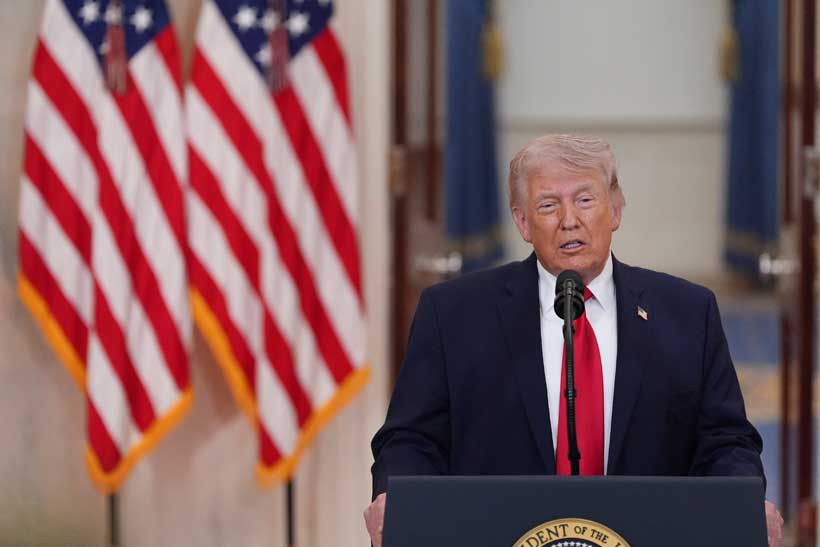
Hopes for a diplomatic breakthrough between the United States and Iran weakened significantly after United States President Donald Trump dismissed Iran’s latest counterproposal and warned that the fragile ceasefire was now “on life support.” The sharp deterioration in negotiations reflects widening disagreements over regional security, sanctions, maritime control, and the broader geopolitical balance in the Middle East.
Iran rejected Washington’s proposal for a phased peace process and instead demanded a comprehensive end to hostilities across the region, including in Lebanon, compensation for war damages, recognition of its authority over the Strait of Hormuz, and the lifting of the United States naval blockade.
The collapse in diplomatic momentum has intensified concerns about prolonged instability in global energy markets and growing political pressure on the Trump administration ahead of the United States elections.
Strait of Hormuz Becomes the Core Strategic Pressure Point
The Strait of Hormuz has emerged as the central geopolitical battleground in the conflict. The narrow maritime corridor previously handled nearly one fifth of global oil and liquefied natural gas shipments before the outbreak of war in February.
Stay ahead of the geopolitical week.
MD Briefing delivers expert analysis across five global fronts — the Indo-Pacific, energy, geoeconomics, European security, and the Middle East — every Monday morning. Free.
The near closure of the waterway has severely disrupted global energy flows, forcing oil producers to reduce exports and contributing to a sharp decline in OPEC oil output. Rising fears over maritime insecurity pushed Brent crude prices above 104 dollars per barrel, reinforcing concerns about inflation and global economic instability.
Although limited shipping activity continues through informal arrangements involving regional actors such as Pakistan and Qatar, commercial maritime traffic remains far below normal levels. Tankers are reportedly navigating with tracking systems disabled to reduce the risk of attack, underscoring the growing militarization of regional trade routes.
Control over Hormuz gives Iran significant leverage because disruptions in the strait immediately affect global energy markets, transportation costs, and international inflation trends. Tehran appears to be using this strategic advantage to increase pressure on Washington and its allies during negotiations.
Iran’s Demands Reflect Broader Regional Objectives
Iran’s response demonstrates that Tehran is seeking more than a temporary ceasefire. Its demands indicate an attempt to reshape the broader regional security environment and gain political recognition of its strategic influence.
By linking the conflict to Lebanon and the confrontation involving Hezbollah, Iran is reinforcing its position as the leader of a wider regional resistance network. Tehran also seeks economic relief through compensation and sanctions related concessions, while demanding recognition of its sovereignty and maritime influence in the Gulf.
These demands are unlikely to be accepted fully by Washington because they would be interpreted as major strategic concessions that strengthen Iranian regional influence.
Trump Faces Domestic and International Pressure
The continuing conflict is generating mounting domestic political pressure on Trump and the Republican Party. Rising fuel prices and economic uncertainty are affecting American consumers at a politically sensitive moment ahead of congressional elections.
Public opinion surveys indicate growing skepticism among American voters regarding the administration’s justification for the war. Concerns over inflation, gasoline prices, and prolonged military involvement are increasingly shaping public debate.
Trump’s proposal to temporarily suspend the federal gasoline tax reflects attempts to reduce domestic economic frustration and contain political fallout from rising energy costs.
At the international level, Washington has also struggled to build a unified coalition to secure maritime routes in the Gulf. NATO allies have reportedly avoided direct military involvement without a broader internationally supported peace framework, reflecting concerns over escalation risks and the absence of clear political consensus.
China and Regional Diplomacy Gain Importance
Trump’s upcoming meeting with Chinese President Xi Jinping in Beijing highlights the growing international dimension of the conflict. China remains heavily dependent on Gulf energy imports and has strong economic ties with Iran, making Beijing a potentially important diplomatic actor.
Meanwhile, regional powers such as Turkey and Pakistan are increasingly involved in mediation efforts aimed at preserving navigational security and preventing broader regional escalation. Turkey’s diplomatic engagement demonstrates how middle powers are attempting to position themselves as stabilizing actors amid weakening Western consensus.
Analysis
The collapse of momentum toward a peace agreement reflects the deep structural divisions between the United States and Iran rather than a temporary diplomatic setback. Both sides remain fundamentally divided over regional power, military influence, and the future security order in the Middle East.
Iran’s negotiating position suggests confidence that energy market disruption provides it with strategic leverage. By maintaining pressure around the Strait of Hormuz, Tehran can indirectly affect global inflation, energy prices, and political stability in Western countries. This gives Iran bargaining power beyond its conventional military capabilities.
For the Trump administration, the conflict presents a difficult strategic dilemma. Escalating pressure on Iran risks further destabilizing global energy markets and increasing domestic political dissatisfaction. However, accepting Iran’s demands could be interpreted as a geopolitical retreat that weakens American credibility among allies.
The situation also demonstrates how modern geopolitical conflicts increasingly combine military confrontation with economic warfare, energy security, and strategic supply chain disruption. Control over critical trade routes has become as important as direct battlefield outcomes.
If negotiations continue to deteriorate, the risk of prolonged regional instability will grow significantly. Continued disruption in the Strait of Hormuz could intensify global inflationary pressures, weaken economic growth, and deepen divisions between major powers over the management of Middle Eastern security crises.
Wirh information from Reuters.
