


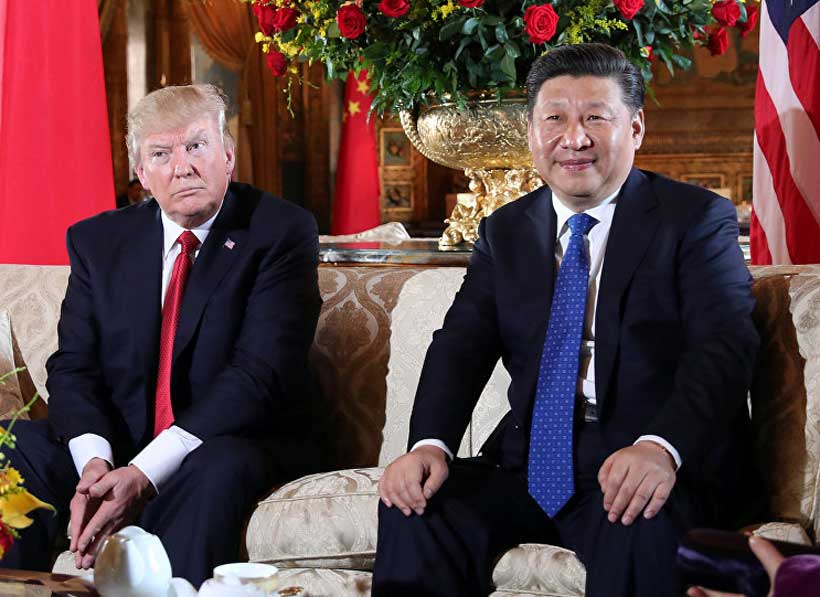
Taiwan’s growing concern ahead of the summit between United States President Donald Trump and Chinese President Xi Jinping highlights the increasingly fragile nature of strategic stability in the Indo Pacific region. Although Taipei continues to express confidence in its relationship with Washington, its repeated calls for “no surprises” reveal deeper anxieties regarding the possibility of Taiwan becoming part of a broader geopolitical bargain between the world’s two largest powers.
The upcoming summit in Beijing comes at a particularly sensitive moment. Cross Strait tensions have intensified through continued Chinese military activity near Taiwan, while Washington has simultaneously increased pressure on Taipei to strengthen its defence posture. The convergence of diplomatic engagement between Washington and Beijing alongside rising military pressure around Taiwan reflects the contradictory dynamics shaping contemporary United States China relations.
For Taiwan, the central challenge is no longer simply military pressure from China, but strategic uncertainty regarding how far the United States is willing to go in defending Taiwanese interests during periods of broader geopolitical negotiation with Beijing.
Taiwan as the Central Flashpoint in United States China Competition
Taiwan remains the most sensitive and strategically dangerous issue in relations between Washington and Beijing. China views Taiwan as an inseparable part of its territory and has consistently opposed any international recognition of Taiwanese sovereignty. At the same time, the United States remains legally committed to supporting Taiwan’s self defence capabilities under the Taiwan Relations Act.
Stay ahead of the geopolitical week.
MD Briefing delivers expert analysis across five global fronts — the Indo-Pacific, energy, geoeconomics, European security, and the Middle East — every Monday morning. Free.
This creates a structural contradiction at the core of the bilateral relationship. While both powers seek to avoid direct military confrontation, neither is willing to compromise on its broader strategic position regarding Taiwan. China sees reunification as tied to national sovereignty and political legitimacy, whereas the United States increasingly views Taiwan as a critical component of the regional balance of power in the Indo Pacific.
As a result, Taiwan has evolved beyond a regional dispute into a symbol of strategic credibility for both sides. Any perceived concession by Washington could weaken confidence among regional allies, while any retreat by Beijing could undermine the Chinese leadership’s nationalist narrative and domestic authority.
Taiwan’s Fear of Strategic Marginalization
Taiwanese officials have publicly emphasized confidence in relations with Washington, yet their diplomatic language also reveals concern regarding possible strategic marginalization. Taipei fears that Taiwan related issues could become bargaining tools within broader negotiations over trade, fentanyl, economic relations, or regional stability.
Historically, smaller states positioned between competing great powers often fear exclusion from negotiations directly affecting their security. Taiwan’s request for “no surprises” reflects precisely this concern. The statement indicates anxiety that discussions between Trump and Xi could produce unofficial understandings or political compromises that alter the strategic status quo without Taiwanese participation.
This concern is intensified by Trump’s transactional approach to foreign policy. Unlike traditional American administrations that emphasized alliance reassurance and institutional consistency, Trump has frequently framed international relationships through the lens of economic leverage and strategic bargaining. Such an approach generates uncertainty among partners who fear that security commitments may become subject to negotiation.
China’s Strategy of Sustained Military Pressure
China’s continued military patrols and combat readiness operations around Taiwan ahead of the summit demonstrate Beijing’s dual track strategy of diplomacy and coercion. China seeks to maintain diplomatic engagement with Washington while simultaneously increasing military and psychological pressure on Taiwan.
This strategy serves several objectives. First, it reinforces China’s territorial claims and signals resolve to domestic and international audiences. Second, it attempts to shape the negotiating environment ahead of high level diplomatic engagements. Third, sustained military activity gradually normalizes Chinese presence near Taiwan, thereby altering the long term security environment in the Strait.
Beijing also increasingly frames Taiwanese independence movements as the primary threat to regional peace rather than Chinese military pressure itself. This narrative attempts to shift international perceptions by portraying China as reacting to separatism rather than initiating instability.
The broader strategic aim is to isolate Taiwan diplomatically while convincing external actors that resisting Chinese demands would produce unacceptable economic and military risks.
Defence Spending and Questions of Strategic Credibility
Taiwan’s internal political disagreements over defence spending have added another layer of complexity to the crisis. The decision by Taiwan’s opposition controlled parliament to reduce parts of the defence budget has generated disappointment in Washington and raised concerns regarding Taiwan’s strategic preparedness.
The United States has increasingly adopted the position that partners facing major security threats must demonstrate stronger commitments to self defence. Washington’s expectations reflect lessons drawn from contemporary geopolitical conflicts where deterrence depends not only on alliance guarantees but also on domestic military readiness.
For Taiwan, insufficient defence investment risks weakening international confidence in its willingness to bear the costs of deterrence. This could create doubts within Washington regarding the sustainability of long term strategic support, especially under an administration focused heavily on burden sharing.
At the same time, domestic political divisions over defence spending reveal the challenge democracies face when balancing security requirements with economic and political constraints. Taiwan must simultaneously reassure its population, maintain democratic legitimacy, and respond to escalating military pressure from China.
The Indo Pacific Balance of Power
The Taiwan issue increasingly shapes the broader balance of power in the Indo Pacific. Regional states closely monitor how the United States responds to Chinese pressure because Taiwan’s security has become linked to wider questions regarding American credibility in Asia.
Countries such as Japan, South Korea, and the Philippines view stability in the Taiwan Strait as essential to regional security and maritime trade routes. Any weakening of deterrence around Taiwan could encourage broader Chinese assertiveness in contested areas of the South China Sea and East China Sea.
Simultaneously, China sees American support for Taiwan as part of a wider containment strategy designed to limit China’s rise. This perception intensifies strategic mistrust and reduces opportunities for stable long term cooperation between both powers.
The result is an increasingly polarized regional environment where diplomacy and military competition operate simultaneously, often reinforcing rather than reducing tensions.
Analysis
Taiwan’s appeal for “no surprises” before the Trump Xi summit reflects the deeper instability now characterizing United States China relations. The issue is no longer solely about Taiwan’s political future, but about the structure of power, deterrence, and strategic credibility across the Indo Pacific.
The summit illustrates the paradox at the heart of contemporary great power politics. While Washington and Beijing require dialogue to manage competition and prevent escalation, their fundamental strategic objectives remain incompatible. Taiwan therefore continues to function as both a diplomatic issue and a geopolitical fault line capable of triggering wider regional confrontation.
At the same time, Taiwan’s domestic defence debates demonstrate that external security guarantees alone are insufficient without credible internal preparedness. In an era of intensifying geopolitical competition, smaller states increasingly face pressure to strengthen both military resilience and diplomatic adaptability.
Ultimately, the growing uncertainty surrounding Taiwan reflects a broader transformation in international politics where strategic ambiguity, economic interdependence, and military deterrence coexist in an increasingly unstable balance.
With information from Reuters.
