


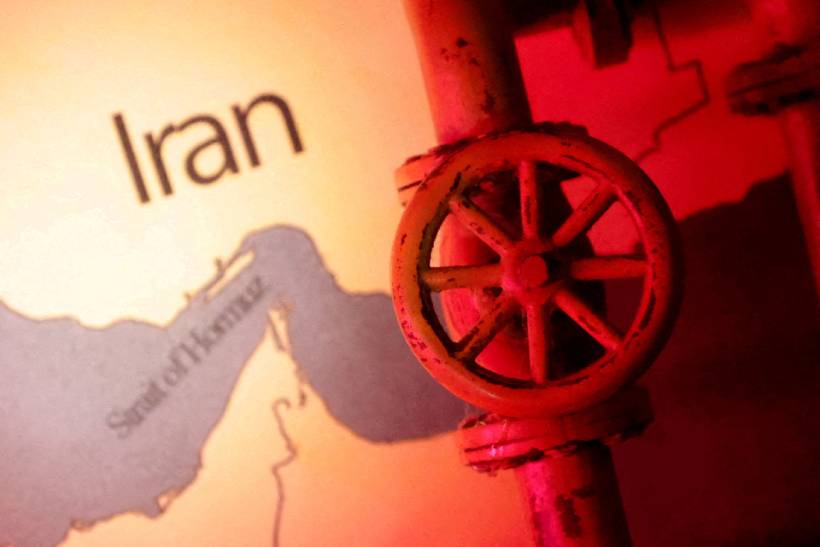
A fire aboard a South Korean operated cargo vessel in the strategically vital Strait of Hormuz has triggered fresh geopolitical tensions, with Donald Trump publicly blaming Iran for the incident. The ship, identified as HMM Namu and operated by HMM, was anchored and empty when an explosion led to a fire in its engine room.
Authorities in South Korea have confirmed that there were no casualties and that the fire was successfully extinguished. However, the exact cause of the incident remains unknown, prompting an official investigation.
An Incident Under Investigation
South Korean officials have emphasized caution, stating that the cause of the explosion will only be determined after the vessel is towed to port and undergoes a full damage assessment. Initial reports suggest the fire originated in the engine room, but maritime security experts have not ruled out external factors.
Stay ahead of the geopolitical week.
MD Briefing delivers expert analysis across five global fronts — the Indo-Pacific, energy, geoeconomics, European security, and the Middle East — every Monday morning. Free.
The United Kingdom based risk management group Vanguard has indicated that possibilities under consideration include an attack, a drifting sea mine, or collision with an external object. This uncertainty reflects the complexity of operating in increasingly volatile waters.
Rising Security Concerns in a Critical Chokepoint
The Strait of Hormuz remains one of the most sensitive and strategically important maritime routes in the world, handling a significant share of global energy shipments. Any disruption, whether accidental or intentional, has immediate international repercussions.
In response to the incident, South Korea has advised its vessels in the region to move to safer areas. Reports indicate that more than two dozen South Korean flagged ships are currently stranded near the waterway, highlighting the broader impact of regional instability on global shipping.
United States Accusations and Strategic Messaging
Trump’s claim that Iran fired upon the vessel introduces a sharp escalation in rhetoric, even as investigations are still underway. His statement aligns with a broader United States effort to assert control over the waterway and ensure the free movement of commercial shipping.
At the same time, Trump has called on allies, including South Korea, to participate in a coalition aimed at safeguarding navigation through the strait. This reflects a wider strategy of burden sharing and international alignment in securing critical trade routes.
South Korea’s Measured Response
Despite the heightened rhetoric, South Korea has adopted a cautious and measured stance. Officials have not confirmed any attack and have avoided endorsing the United States claims. Any decision to deploy naval assets to the region would require legislative approval, underscoring the domestic constraints on foreign policy actions.
This careful approach highlights South Korea’s balancing act between maintaining its alliance with the United States and avoiding unnecessary escalation in a region critical to its energy security.
Analysis
The incident illustrates how quickly uncertainty can translate into geopolitical tension in a high stakes environment. With no confirmed cause, competing narratives have already begun to shape international perception.
For the United States, attributing the incident to Iran reinforces its broader narrative of Iranian aggression and justifies increased military and diplomatic involvement in the region. For South Korea, restraint reflects both prudence and strategic necessity, as premature conclusions could complicate its position.
The episode underscores a larger pattern in the Strait of Hormuz, where ambiguity itself becomes a source of risk. In such an environment, even isolated incidents can escalate into broader confrontations if political narratives outpace verified facts.
Ultimately, the situation highlights the fragile balance between security, commerce, and diplomacy in one of the world’s most critical maritime corridors.
With information from Reuters.
