Two months into a war with the U. S. and Israel, Iran has experienced a shift in power dynamics, with no clear clerical leader after the death of Ayatollah Ali Khamenei on the war’s first day. His son, Mojtaba Khamenei, has taken on a role that primarily legitimizes decisions made by military leaders rather than dictating them himself. Power is now concentrated in a smaller, hard-line group within the Supreme National Security Council (SNSC) and the Islamic Revolutionary Guard Corps (IRGC), which dominate both military and political decisions.
A senior Pakistani official states that Iran’s responses in negotiations are slow due to the absence of a unified command structure, often taking days to react. The challenge arises not from internal strife but from differing expectations between Iran and Washington regarding deals. Iran’s diplomatic efforts are led by Foreign Minister Abbas Araqchi, with the added involvement of parliament speaker Mohammed Baqer Qalibaf, a former Guards commander. On the ground, key negotiations are managed by IRGC commander Ahmad Vahidi.
Mojtaba, severely injured in the war, communicates through intermediaries due to security risks. Iranian officials have not publicly commented on the issues discussed. Iran recently proposed new talks to the U. S., suggesting the nuclear issue be postponed until after addressing concerns over Gulf shipping, but Washington insists on addressing the nuclear issue first.
Both sides are reluctant to negotiate seriously, believing time will shift advantages in their favor. Analysts like Alan Eyre emphasize that neither side can compromise without appearing weak, which reflects the current state of decision-making within Iran where Mojtaba is more a consensus figure than a commanding force. Real decisions are made by the wartime leadership, specifically the SNSC.
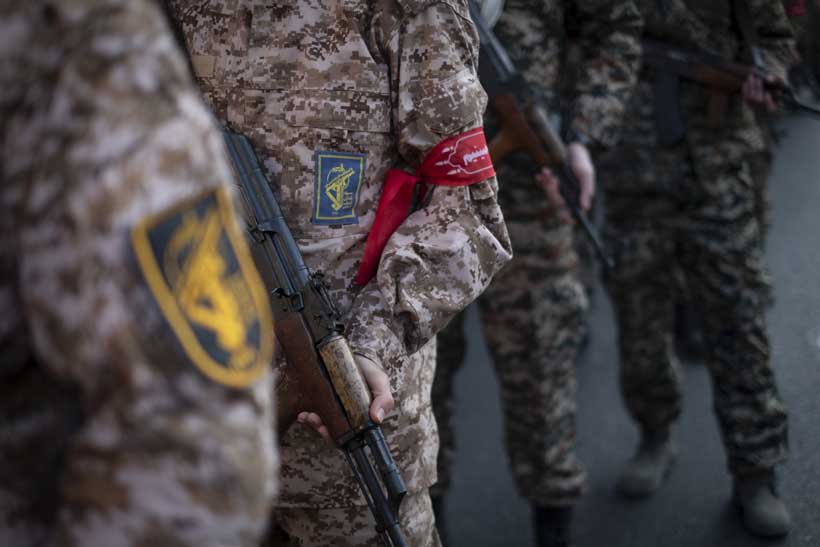
Hardline figures within the Iranian government have been vocal during the conflict but lack the power to change decisions. Mojtaba’s rise to power is tied to the IRGC, which has sidelined moderate factions and shifted Iran’s policies towards a more aggressive stance domestically and internationally. The IRGC’s focus is on maintaining the Islamic Republic’s integrity while projecting military strength abroad, particularly regarding nuclear policies and regional influence.
The balance of power has shifted away from clerics towards the security sector, indicating a transformation in governance. Analysts point out that Iran’s leadership faces a singular choice: an even harder line rather than a moderate approach. While dissent exists, decision-making has become more centralized within government security institutions.
Despite ongoing military and economic pressures from external forces, Iran shows no signs of weakening. The system remains cohesive, with power firmly in the hands of the IRGC and security services, allowing them to drive the conflict rather than simply respond to it. A consensus to avoid full-scale war while maintaining leverage over strategic areas, like the Strait of Hormuz, seems to characterize Iran’s current strategy as it seeks to emerge stronger from the ongoing conflict.
With information from Reuters