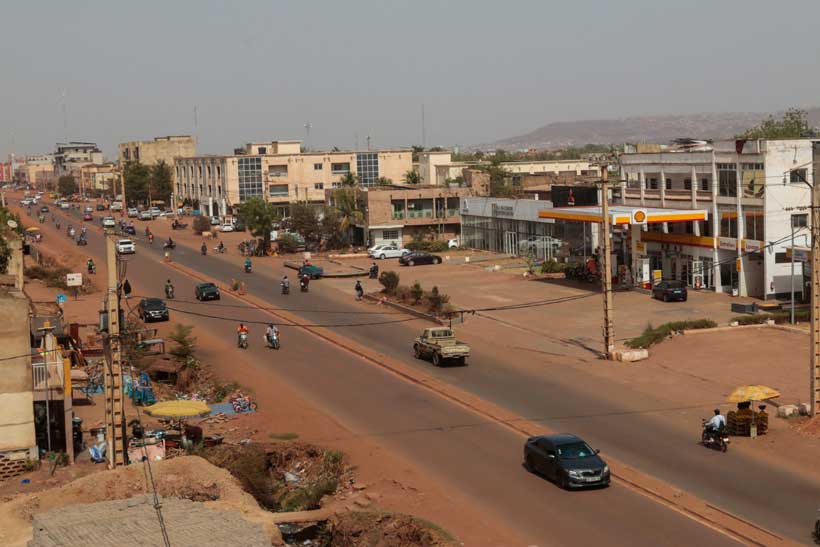
An al Qaeda affiliate and Tuareg rebels launched coordinated attacks across Mali on Saturday, marked as one of the most significant operations against the military-led government. The Mali army reported the killing of “several hundred” assailants and stated that the assault was repelled, affecting multiple locations in and around the capital, Bamako. The number of soldiers or civilians killed remains unclear, but 16 people were confirmed injured according to government spokesperson Issa Ousmane Coulibaly. Authorities declared the situation under control and imposed a three-day overnight curfew in Bamako.
Jama’at Nusrat al-Islam wal-Muslimin (JNIM), connected to al Qaeda, claimed the attacks on Kati, Bamako airport, and cities further north such as Mopti, Sevare, and Gao. They also stated that they had “captured” Kidal in collaboration with the Azawad Liberation Front (FLA), a Tuareg rebel group, which claimed to have taken control of military positions in Gao and one military camp in Kidal. Independent verification of these claims was not possible.
The attacks have prompted warnings from the U. S. embassy for citizens to shelter in place, while Britain advised against travel to Mali. The airport was closed, disrupting flights, with heavy fighting reported nearby. Witnesses described explosions and gunfire in Kati and Sevare, where attacks began early in the morning. The strategic targeting of these locations has been noted as significant, given their importance to the government.
After the army declared the situation under control, reports of explosions continued, indicating ongoing conflict in the region. The attacks signal a potential increase in the insurgency that has plagued Mali since 2012. JNIM has a history of violent attacks, including a previous assault in September 2024 that killed approximately 70 people.
The government of Assimi Goita, which came into power through coups in 2020 and 2021, has struggled to ensure security amidst the long-standing Tuareg rebellion in northern Mali. While leaning on Russian mercenaries, the government has recently sought closer ties with Washington. JNIM stated that they do not target Russian partners of the Malian military and aim for a constructive relationship. In response to the attacks, Russia’s embassy condemned the violence, attributing involvement of Western forces in training insurgent groups. Mali’s foreign minister accused neighboring states and foreign powers of supporting terrorist groups, though he did not specify which countries.
With information from Reuters