


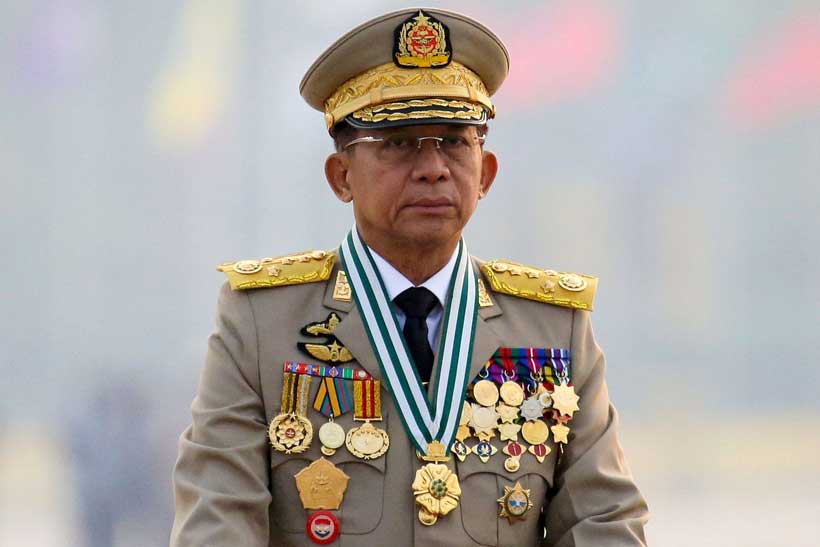
Myanmar’s military leader turned president Min Aung Hlaing has called for peace talks with armed opposition groups within 100 days, setting a deadline of July 31. The proposal invites groups that are not part of existing ceasefire arrangements to join negotiations aimed at ending the country’s prolonged conflict.
The crisis dates back to the 2021 Myanmar coup d’état, when the military overthrew the elected government of Aung San Suu Kyi, triggering nationwide unrest and a civil war that continues to destabilize the country.
Rebel Rejection
Major resistance groups have swiftly rejected the offer.
The Karen National Union stated it has no intention of returning to negotiations under frameworks associated with military rule, having already withdrawn from the Nationwide Ceasefire Agreement after the coup.
Stay ahead of the geopolitical week.
MD Briefing delivers expert analysis across five global fronts — the Indo-Pacific, energy, geoeconomics, European security, and the Middle East — every Monday morning. Free.
Similarly, the Chin National Front dismissed the proposal, emphasizing its goal of establishing a federal democratic system free from military influence.
These responses highlight a deep lack of trust and suggest that dialogue under the current political structure is unlikely to gain traction.
Political Context
Min Aung Hlaing recently assumed the presidency following widely criticized elections that opposition groups and Western governments have labeled as lacking credibility.
The military backed administration has gained limited international recognition, further isolating Myanmar diplomatically. Meanwhile, Aung San Suu Kyi remains imprisoned, despite a recent partial reduction in her sentence, a move seen by critics as symbolic rather than substantive.
Why It Matters
The rejection of peace talks underscores the entrenched nature of Myanmar’s conflict. Armed groups are not only fighting for territorial or political concessions but for a complete restructuring of the state.
Without trust in the military’s intentions or willingness to relinquish power, peace initiatives risk being perceived as attempts to legitimize military rule rather than genuine efforts at reconciliation.
What’s Next
With major groups refusing to participate, the proposed talks may proceed only with smaller or aligned factions, limiting their effectiveness.
Continued fighting is likely in the short term, especially in regions controlled by ethnic armed organizations. International pressure on Myanmar’s leadership may intensify, but tangible progress will depend on whether the military signals real political concessions.
Analysis
This initiative reflects a familiar pattern in Myanmar’s conflict dynamics. The military seeks dialogue while maintaining control, whereas opposition groups demand systemic change before engaging.
The gap between these positions remains vast. For the junta, talks could help reduce international pressure and stabilize parts of the country. For rebel groups, participation without guarantees risks undermining their broader struggle for democracy.
As a result, the 100 day timeline appears more symbolic than realistic. Without meaningful shifts in power sharing or governance, the likelihood of a comprehensive peace process remains low.
With information from Reuters.
