


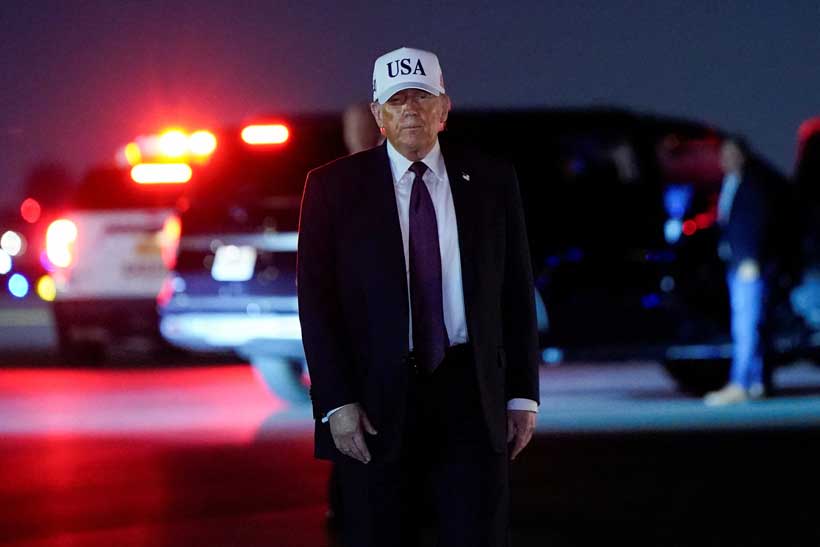
Representatives linked to U.S. President Donald Trump and his proposed “Board of Peace” have reportedly held discussions with DP World on rebuilding and managing logistics in Gaza Strip.
According to reports, the talks focused on creating a partnership to oversee supply chains, including humanitarian aid distribution, warehousing systems, and cargo tracking infrastructure in the war devastated enclave.
The initiative is tied to Trump’s broader plan, first introduced in 2025, to end the war and establish a mechanism for post conflict reconstruction and governance.
Scale of Destruction
After nearly two years of conflict involving Israel Defense Forces operations against Hamas, Gaza faces catastrophic damage.
Stay ahead of the geopolitical week.
MD Briefing delivers expert analysis across five global fronts — the Indo-Pacific, energy, geoeconomics, European security, and the Middle East — every Monday morning. Free.
Global estimates suggest that rebuilding could cost around $70 billion, with roughly four fifths of buildings either destroyed or severely damaged. Critical infrastructure including housing, hospitals, roads, and energy systems requires urgent reconstruction.
Proposed Economic Vision
The discussions reportedly extend beyond immediate aid logistics. Proposals include:
- Development of a new port in or near Gaza
- Construction of logistics hubs to regulate inflow of goods
- Potential creation of a free trade zone to stimulate economic recovery
DP World, known for managing ports and trade infrastructure globally, would play a central operational role if an agreement materializes.
Political Conditions and Constraints
Trump’s plan links reconstruction to major political conditions. It envisions:
- Withdrawal of Israeli forces
- Disarmament of Hamas
- Oversight by the proposed Board of Peace
These conditions remain highly contentious. Hamas has historically rejected disarmament demands, while Israel’s security concerns complicate any full withdrawal scenario.
Why It Matters
The proposal represents a shift toward combining geopolitics with large scale economic planning. If implemented, it could redefine how post conflict zones are rebuilt by integrating private sector logistics giants into governance frameworks.
However, it also raises serious questions about sovereignty, accountability, and who ultimately controls Gaza’s economic future. The involvement of external actors like DP World could bring efficiency but may also deepen political sensitivities in an already fragile region.
What’s Next
No formal agreement has been announced, and both The White House and DP World have yet to comment publicly.
The immediate focus will be on whether discussions evolve into a concrete framework and how regional stakeholders respond. Any progress will depend heavily on parallel political developments, particularly ceasefire stability and negotiations involving Israel and Hamas.
Analysis
This initiative highlights an emerging model where reconstruction is treated not just as humanitarian necessity but as a strategic economic project. Trump’s approach blends diplomacy, security, and corporate logistics into a single framework.
Yet the plan faces structural challenges. Without a durable political settlement, even the most well funded reconstruction strategy risks collapse. Infrastructure can be rebuilt, but without governance consensus and security guarantees, sustainability remains uncertain.
At its core, the proposal underscores a central dilemma: rebuilding Gaza is not only about money or logistics but about resolving one of the most deeply entrenched conflicts in modern geopolitics.
With information from Reuters.
