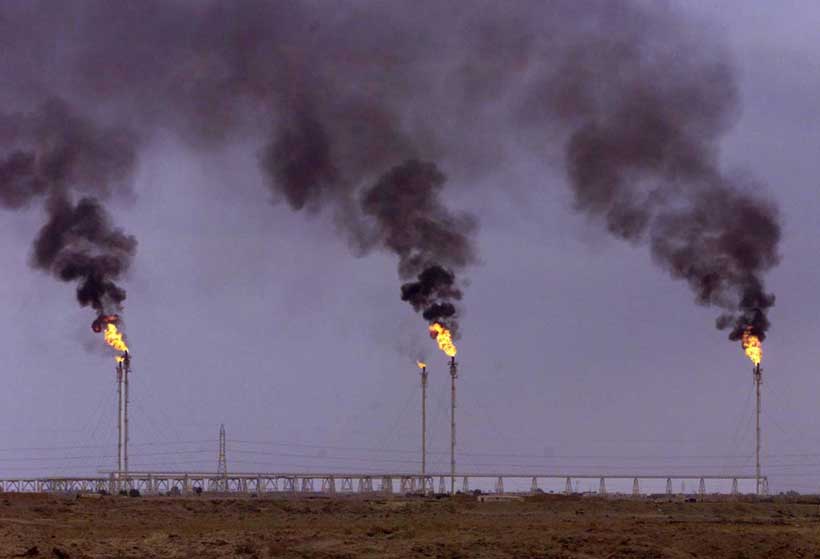
The closure of the Strait of Hormuz has significantly impacted global oil prices, benefiting countries like Iran, Oman, and Saudi Arabia while others like Iraq, Kuwait, and Qatar have experienced severe losses. Iran effectively shut down the Strait, a crucial route for about 20% of global oil and LNG flows, following U. S. and Israeli airstrikes at the end of February. Although Iran eventually allowed some tankers without U. S. or Israeli ties to pass, the energy market has faced unprecedented disruptions, with Brent crude prices surging 60% in March alone.
U. S. President Donald Trump has threatened severe repercussions for Iran unless it agrees to a deal that would allow the reopening of the Strait. While the Middle Eastern oil producers have been affected differently due to their geographical advantages or disadvantages, those like Oman, Saudi Arabia, and the UAE have alternate routes through pipelines and ports. In contrast, Iraq, Kuwait, and Qatar have been trapped, losing a significant amount of revenue.
An Iranian official reiterated that the Strait would not reopen amid Trump’s threats, asserting that Iran refuses to be humiliated. Analysts have suggested that the conflict may have inadvertently strengthened Iran’s position, with the potential for recurrent closures posing a significant threat to the global economy. The International Energy Agency has called this the most substantial energy supply shock in history, citing over 12 million barrels per day of output being shut down and damage to about 40 energy facilities.
In terms of oil export revenues, Iraq and Kuwait saw decreases of around 75%, while Iran’s revenues increased by 37%, and Oman’s by 26%. Saudi Arabia’s oil revenues grew by 4.3%, although the UAE experienced a slight drop. These estimates used data from ship-tracking firm Kpler and were calculated against Brent prices for convenience.
Saudi Arabia stands to benefit financially from increased royalties and taxes due to higher oil prices, essential for addressing its budget deficits caused by heavy spending on diversifying its economy. Its key East West pipeline, built during the Iran-Iraq War, connects oil fields to the Red Sea, allowing the kingdom to bypass the Strait. Saudi Arabia manages about 5 million barrels per day for export, with recent loadings near capacity, even amidst attacks on its infrastructure.
Iraq has suffered the worst with a 76% drop in revenue to around $1.73 billion, followed by Kuwait at a 73% decline to $864 million. Iraq’s revenues saw a temporary boost from early March exports, but further declines are expected. Gulf governments have options to mitigate the financial impact, including tapping into fiscal reserves or issuing debt, as they maintain moderately low government debt levels.
Looking ahead, the situation remains uncertain. Some Western oil companies have called for increased investment in fossil fuels, while others argue that a shift toward renewable energy might be a better long-term solution. Recently, a significant joint venture was announced between France’s TotalEnergies and UAE’s Masdar, aimed at deploying $2.2 billion in renewable energy projects across nine Asian countries, indicating a potential pivot from oil dependency.
With information from Reuters