


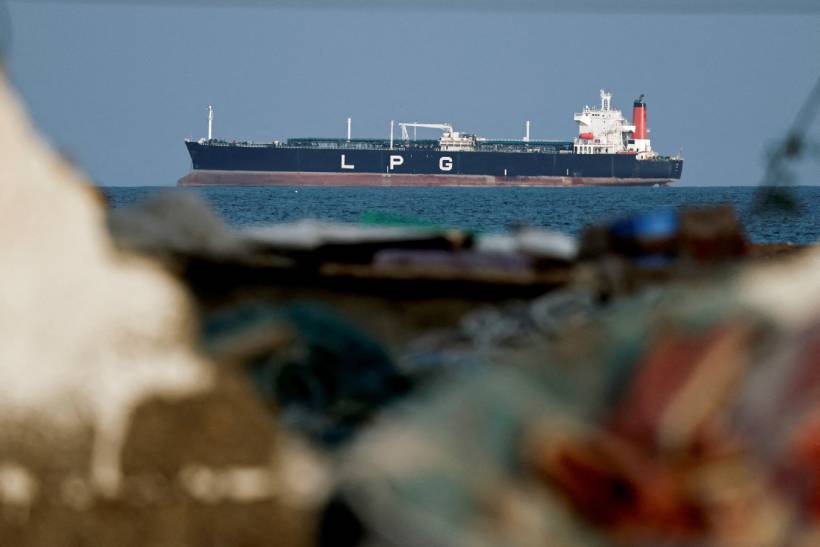
The ongoing conflict involving Iran has begun to affect not only energy markets but also the global supply of helium, a critical yet often overlooked resource. Qatar, which produces roughly one third of the world’s helium, has been forced to halt production due to attacks on its gas infrastructure. At the same time, the closure of the Strait of Hormuz has disrupted exports, effectively removing a significant portion of global supply from the market. This dual shock exposes the vulnerability of niche but essential global resources to geopolitical instability.
Strategic Importance of Helium
Helium plays a crucial role across multiple high value sectors, particularly in medicine, science, and advanced manufacturing. It is essential for cooling superconducting magnets used in MRI scanners, which enable high resolution medical imaging. These systems rely on extremely low temperatures, and helium’s uniquely low boiling point makes it irreplaceable in this context.
Beyond healthcare, helium is critical in scientific research, including its use in particle accelerators such as the Large Hadron Collider. It is also widely used in semiconductor manufacturing, aerospace systems, fibre optics, and precision welding. Its inert nature and light atomic structure make it difficult to substitute, increasing its strategic value in modern technological economies.
Structural Fragility of Supply Chains
The helium supply chain is inherently fragile because helium is not produced independently but as a by product of natural gas extraction. This means that any disruption to liquefied natural gas production directly reduces helium output. The attacks on Qatar’s gas infrastructure illustrate this dependency clearly, as both gas and helium production have been simultaneously halted.
Stay ahead of the geopolitical week.
MD Briefing delivers expert analysis across five global fronts — the Indo-Pacific, energy, geoeconomics, European security, and the Middle East — every Monday morning. Free.
Transporting helium also presents challenges. It requires specialized cryogenic containers and must pass through narrow maritime routes such as the Strait of Hormuz. When such chokepoints are disrupted, even existing supplies become difficult to distribute globally. This reflects a broader issue in global supply chains where efficiency has been prioritized over resilience.
Limited Alternatives and Global Dependence
Despite being abundant in the universe, helium is extremely scarce on Earth and effectively non renewable. It forms over billions of years through radioactive decay and easily escapes into the atmosphere due to its low density. As a result, global reserves are limited and unevenly distributed.
Countries have attempted to diversify supply. The United States holds significant reserves in Texas, historically used as a strategic buffer, though much of this stockpile has been depleted. China is investing in domestic production and exploration, while Iran has attempted to develop its own helium extraction capacity but faces constraints due to sanctions. These efforts, however, are long term and cannot quickly compensate for sudden disruptions like the current crisis.
Economic and Technological Implications
The disruption of helium supply has far reaching consequences beyond immediate shortages. In healthcare, limited helium availability could affect the operation of MRI machines, potentially delaying diagnoses and treatment. In technology sectors, semiconductor production could face bottlenecks, impacting global electronics supply chains. Scientific research facilities dependent on helium cooling systems may also experience interruptions.
The crisis highlights how seemingly niche resources underpin critical infrastructure. Unlike oil or gas, helium does not have widely available substitutes, making shortages more disruptive and difficult to manage.
Adaptive Strategies and Their Limits
Several strategies exist to mitigate helium shortages, including stockpiling, recycling, substitution, and diversification of supply sources. Recycling helium from industrial processes can reduce waste, while prioritizing its use for essential applications can preserve limited supplies. Expanding production in new regions may also improve long term resilience.
However, these solutions require time, investment, and coordination. Recycling is technically challenging due to helium’s tendency to escape, while developing new production infrastructure is costly and slow. As a result, these measures cannot provide immediate relief in the face of sudden geopolitical disruptions.
Analytical Interpretation
The helium supply crisis illustrates a critical dimension of modern geopolitical conflict: the disruption of specialized global resources that are essential to advanced economies. While much attention focuses on oil and energy, the impact on helium reveals deeper systemic vulnerabilities in global supply chains.
The situation underscores the risks of over reliance on geographically concentrated production and narrow trade routes. It also highlights the broader consequences of conflict, where even industries far removed from the battlefield experience significant disruptions. From a political economy perspective, the crisis reflects the tension between efficiency and resilience in globalization. Systems designed for cost effectiveness lack the redundancy needed to absorb shocks of this scale.
In the long term, the disruption may accelerate efforts toward diversification and strategic stockpiling. However, in the short term, the loss of a major supplier like Qatar combined with blocked transport routes suggests continued instability in helium availability. This reinforces the idea that modern conflicts are not confined to military outcomes but extend deeply into global economic and technological systems.
With information from Reuters.
