


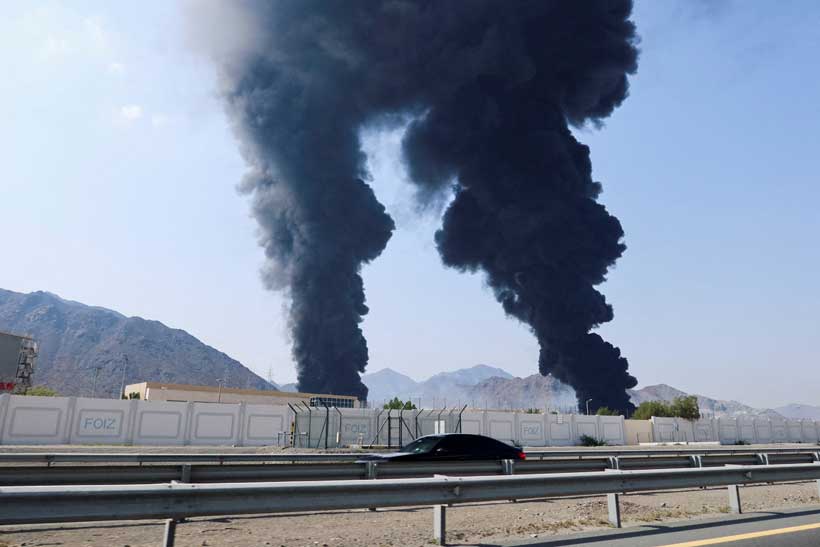
A major escalation in the Iran conflict unfolded after a crude oil tanker was struck and set ablaze near Dubai, underscoring the growing vulnerability of energy infrastructure in the Gulf. The Kuwait-flagged vessel, carrying roughly 2 million barrels of oil, was hit amid intensifying hostilities between Iran, the U.S., and Israel.
The incident comes as Donald Trump issued stark warnings that Washington could target Iran’s energy infrastructure if Tehran does not reopen the Strait of Hormuz, a waterway that handles nearly one-fifth of global oil and gas flows.
Strategic Significance
The attack marks a shift from symbolic confrontation to direct targeting of global energy lifelines. Tankers in the Gulf are not just commercial assets they are critical nodes in the global economy.
Even a single strike has outsized consequences:
Stay ahead of the geopolitical week.
MD Briefing delivers expert analysis across five global fronts — the Indo-Pacific, energy, geoeconomics, European security, and the Middle East — every Monday morning. Free.
- Immediate oil price volatility
- Increased shipping and insurance costs
- Heightened risk perception across energy markets
This reflects a broader pattern of asymmetric escalation, where relatively low-cost attacks generate disproportionate global economic disruption.
Expanding Conflict Dynamics
The war is no longer confined to a single front. It has expanded geographically and operationally:
- Iran has intensified missile and drone strikes across the region
- Israel has targeted infrastructure in Tehran and Lebanon
- The Houthi movement has entered the conflict, launching attacks from Yemen
- U.S. forces, including elements of the 82nd Airborne Division, are deploying to the region
This widening scope reflects horizontal escalation, increasing the risk of a prolonged, multi-theater conflict.
Economic Fallout
Energy markets have already reacted sharply. Oil prices spiked following the tanker strike, while rising fuel costs are beginning to impact consumers, particularly in the United States, where gasoline prices have crossed $4 per gallon.
The threat to the Strait of Hormuz remains the most critical variable. Any sustained disruption could:
- Severely constrain global energy supply
- Trigger inflationary shocks worldwide
- Push oil prices toward extreme levels
Diplomacy vs. Escalation
Despite the intensifying conflict, diplomatic efforts continue. Iran has received proposals via regional intermediaries, while Washington signals openness to a deal albeit alongside aggressive military threats.
Trump’s dual-track approach — combining negotiation with coercive pressure reflects a high-risk strategy aimed at forcing Iran to concede without prolonged conflict. However, mixed signals from Washington have added uncertainty to market and diplomatic expectations.
Analysis
The tanker strike illustrates a fundamental shift in the nature of the conflict: energy infrastructure has become a primary battlefield.
Rather than large-scale conventional warfare alone, the conflict is increasingly defined by targeted disruptions of critical systems — shipping routes, oil facilities, and chokepoints. This amplifies the global impact of each escalation.
The central risk now lies not just in military confrontation, but in the weaponization of economic interdependence. If attacks on shipping persist or the Strait of Hormuz remains restricted, the consequences will extend far beyond the Middle East, affecting global trade, energy security, and economic stability.
In this context, the war is no longer just regional it is a systemic risk to the global economy, where even limited escalation can produce far-reaching consequences.
With information from Reuters.
