


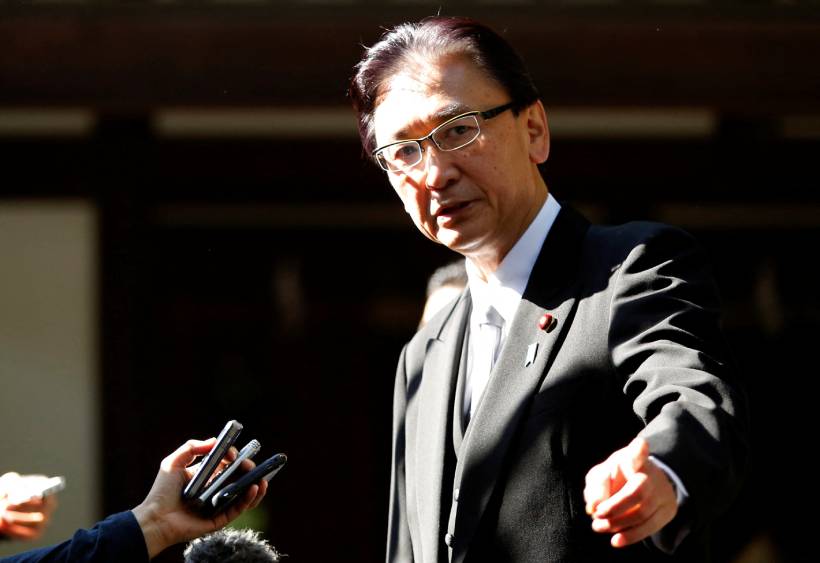
China has imposed sanctions on Japanese lawmaker Keiji Furuya, a close aide to Prime Minister Sanae Takaichi, following his recent trip to Taiwan. Beijing accused Furuya of collaborating with “Taiwan independence” forces, escalating a diplomatic dispute between China and Japan over Taiwan.
Furuya, who leads a cross-party Japan-Taiwan parliamentary group, has visited Taiwan multiple times to meet political leaders, most recently President Lai Ching-te in Taipei earlier this month.
China’s Response
The Chinese foreign ministry described Furuya’s visits as “gross interference” in China’s internal affairs and a violation of its claimed sovereignty over Taiwan. Spokesperson Mao Ning emphasized that Taiwan is a “core interest” and a “red line” that must not be crossed.
Beijing’s sanctions follow previous punitive measures on Japanese lawmakers and officials, including former military chief Shigeru Iwasaki, reflecting its sensitivity to any foreign engagement with Taiwan’s government.
Stay ahead of the geopolitical week.
MD Briefing delivers expert analysis across five global fronts — the Indo-Pacific, energy, geoeconomics, European security, and the Middle East — every Monday morning. Free.
Japan’s Reaction
Tokyo strongly condemned the sanctions. Deputy Chief Cabinet Secretary Masanao Ozaki called China’s actions “absolutely unacceptable,” accusing Beijing of attempting to intimidate lawmakers for exercising their diplomatic initiatives.
Furuya himself downplayed the impact, noting he has not visited mainland China in decades and holds no assets there. He described his group’s activities as promoting natural exchanges between democracies with shared values.
The sanctions come amid broader tensions after Takaichi suggested last year that a Chinese attack on Taiwan could trigger a Japanese military response, further straining Tokyo-Beijing relations.
Analysis
China’s sanctions illustrate Beijing’s increasingly assertive stance on Taiwan and its sensitivity to perceived diplomatic challenges from regional powers. By targeting a key parliamentary ally of the Japanese prime minister, China is signaling that political engagement with Taiwan carries direct consequences, even for lawmakers without direct economic or territorial stakes in China.
For Japan, the move reinforces the delicate balance between maintaining official neutrality on Taiwan and supporting democratic engagement in the region. Furuya’s statement underscores Japan’s strategy of diplomatic signaling without provoking direct military confrontation, while Beijing seeks to assert its claims through targeted diplomatic pressure.
This incident highlights how Taiwan remains a flashpoint in East Asian geopolitics, with individual lawmakers increasingly becoming instruments in the broader struggle for influence between China and regional democracies.
With information from Reuters.
