


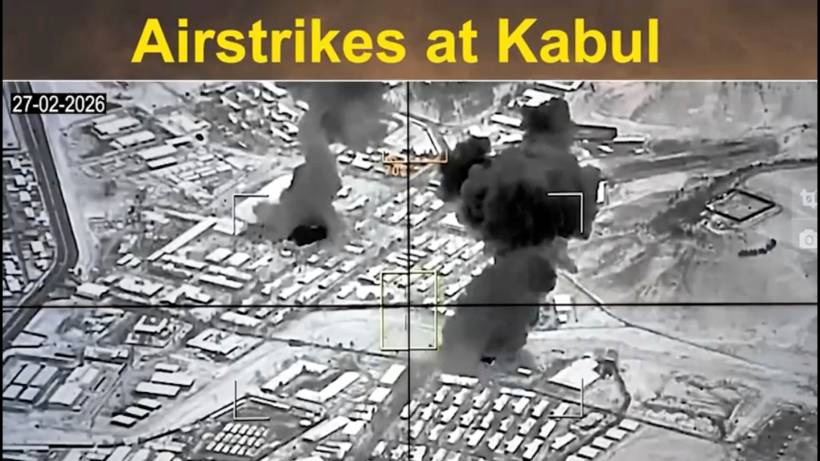
Tensions between Pakistan and Afghanistan have flared again, with both sides trading artillery fire along the border, just days after announcing a temporary pause in fighting. The clashes come as Pakistan seeks to host potential U.S.-Iran talks aimed at de-escalating the ongoing Middle East war.
Border Fighting
The latest exchange involved heavy weapons targeting locations in Afghanistan’s Kunar province and Pakistan’s Bajur district. Afghan officials said at least one person was killed and 16 others injured, most of them women and children. Pakistan denied targeting civilians, saying its response was limited to Afghan shelling.
Officials on both sides have disputed casualty claims, with Pakistani authorities calling the Afghan reports exaggerated. The Pakistani military has not publicly commented on the incident.
Recent Context
Last month saw the worst fighting in years between the two neighbors, including a Pakistani air strike on a drug rehabilitation centre in Kabul that the Taliban claimed killed over 400 people. Pakistan denied targeting civilians, stating it struck only military sites and terrorist infrastructure.
Stay ahead of the geopolitical week.
MD Briefing delivers expert analysis across five global fronts — the Indo-Pacific, energy, geoeconomics, European security, and the Middle East — every Monday morning. Free.
A temporary ceasefire had been declared for Eid al-Fitr and at the request of Turkey, Qatar, and Saudi Arabia, but Islamabad ended it last week. Kabul has not officially confirmed whether it is still observing the ceasefire.
Strategic Implications
The border clashes highlight the fragile security situation in the region, where historical mistrust, cross-border militancy, and conflicting narratives fuel recurrent violence. Pakistan continues to accuse the Afghan Taliban of supporting militants who operate inside its territory, while Kabul maintains that militancy is Pakistan’s domestic issue.
The timing of the clashes, coinciding with Pakistan’s offer to host U.S.-Iran talks, complicates Islamabad’s diplomatic positioning. It underscores the challenge for Pakistan to act as a mediator in Middle East diplomacy while managing persistent regional instability on its own borders.
The renewed violence also risks undermining broader regional efforts to reduce tensions, signaling that local conflicts in South Asia remain tightly intertwined with global geopolitical dynamics.
With information from Reuters.
