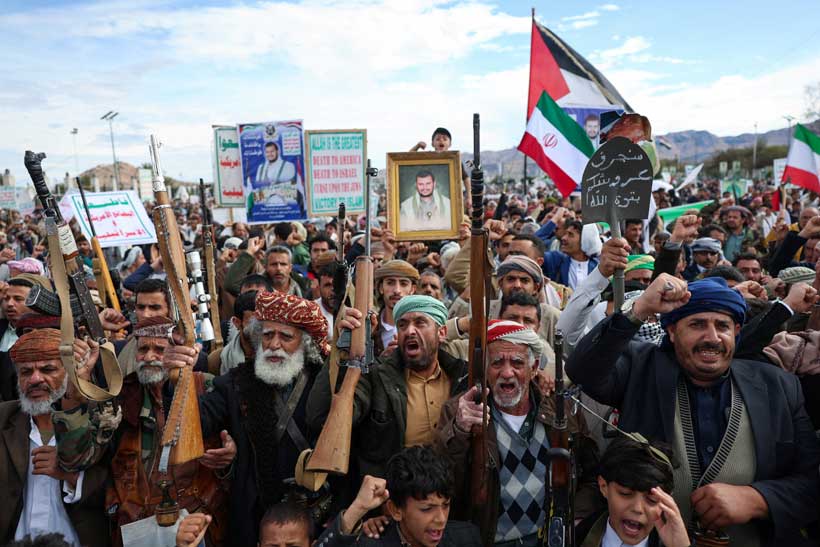
A missile was launched from Yemen, marking the first detection since the U. S.-Israeli conflict with Iran began about a month ago, according to Israel’s military. Details about the attack, such as the responsible party and target, are unclear. This incident follows a statement from the Iran-aligned Houthis, who expressed readiness to respond to actions they perceive as escalations against Iran and the “Axis of Resistance. ” The Houthis are a military, political, and religious group based in northern Yemen that follow the Zaydi sect of Shi’ite Islam. They gained power after the 2011 Arab Spring and captured Yemen’s capital, Sanaa, in 2014, leading to a Saudi-led military intervention. The Houthis have developed significant missile and drone capabilities, enabling them to attack Saudi infrastructure.
Following the Hamas attack on Israel on October 7, 2023, which initiated an Israeli military campaign in Gaza, the Houthis fired on international shipping in the Red Sea, claiming to support the Palestinians. They also launched drones and missiles at Israel, which retaliated with air strikes. A U. S. ceasefire in October 2025 temporarily halted Houthi attacks.
Houthi leader Abdul Malik Al-Houthi stated the group is prepared to strike at any moment if circumstances dictate. However, unlike Hezbollah and Iraqi groups, the Houthis have not formally joined the conflict. Observers note that Houthi motives primarily focus on domestic issues, despite their political alignment with Iran and Hezbollah. The U. S. claims Iran has supported the Houthis, although the latter insist they are not proxies and develop their own weapons.
Experts are divided on the next steps for the Houthis. Some believe they have conducted individual attacks already, while others think they are waiting for the right moment to enter the conflict, potentially in coordination with Iran to maximize pressure. The closure of the Strait of Hormuz could offer strategic opportunities, especially if other countries join the fight against Iran or if the Red Sea is used for attacks. This situation suggests a risk of broader regional conflict, as the Houthis have the capability to disrupt shipping lanes, impacting global trade.
With information from Reuters