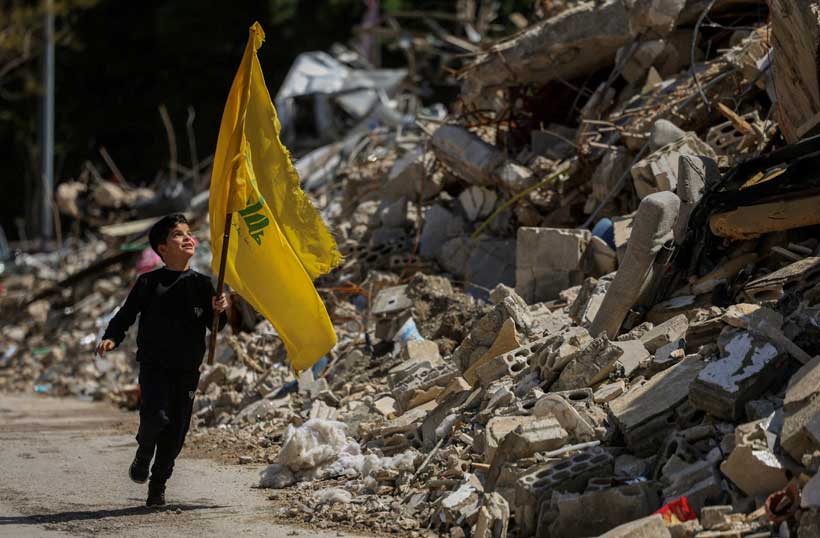
The ongoing conflict between Israel and Hezbollah is pushing Lebanon’s already fragile state and society toward a breaking point, intensifying sectarian tensions and political divisions. The renewed violence, triggered by the Iran war, is seen by analysts as potentially the most destabilizing crisis since Lebanon’s civil war (1975-90). Israel has issued threats of significant destruction in Lebanon, reminiscent of the situation in Gaza, and there are deepening divisions regarding Hezbollah’s armed status, as the group has resisted efforts to disarm.
The conflict has displaced over a million people—predominantly Shi’ite Muslims—from southern Lebanon and Beirut’s Hezbollah-controlled areas, prompting tensions in Christian, Druze, and other neighborhoods. The influx of displaced persons has raised concerns among local authorities regarding the accommodation of individuals who might become targets of Israeli attacks. Internal discord is increasing, with the Lebanese government, under Prime Minister Nawaf Salam, opposing Hezbollah’s military activities and urging diplomatic negotiations with Israel, further heightening tensions between the government and the militant group.
Hezbollah leaders decry the government’s stance, suggesting historical parallels to the wartime collaboration of Vichy France. This rhetorical escalation raises fears about internal stability, with lawmaker Wael Abu Faour warning that growing political divisions could be a “ticking bomb” for Lebanon’s social fabric. Since the conflict reignited on March 2, over 1,000 casualties have been reported in Lebanon, with local estimates indicating that more than one-fifth of the population is now displaced.
The Israeli military has ordered evacuations in southern Lebanon and other key areas, anticipating a “security zone” aimed at protecting northern Israel. This intention has caused concern among Christian lawmakers, who fear that Hezbollah’s constituents are being intentionally displaced to incite sectarian strife. Notably, Hezbollah’s military arsenal arguably surpasses the capabilities of the Lebanese army, raising alarms about potential clashes with other factions if the displacement continues.
Several government and military strategies have been implemented to manage the displacement crisis, specifically focusing on security vetting for new residents in mixed areas. Despite opposing pressures, some displaced individuals have found temporary refuge in predominantly Christian neighborhoods, with local councils implementing strict rental agreements to mitigate fears of potential danger.
The underlying political dynamics remain fraught, as Hezbollah’s influence within Lebanon is tested by the conflict, leading to speculation over the future balance of power between the state and Hezbollah’s military presence. Observers like lawmaker Alain Aoun suggest that the longstanding coexistence of state and non-state arms in Lebanon is nearing its endpoint, with the outcomes of the conflict likely to reshape the political landscape significantly. Furthermore, the Israeli government has indicated that its military operations will persist beyond the Iran war, posing ongoing challenges for Lebanon’s security and state integrity as regional tensions mount.
In summary, the existing conflict exacerbates existing sectarian divides, raises fears of a larger civil unrest, and threatens the fragile state of governance in Lebanon. The resolution of these tensions remains uncertain, contingent on both internal political developments and broader regional peace negotiations involving Iran and Hezbollah.
With information from Reuters