


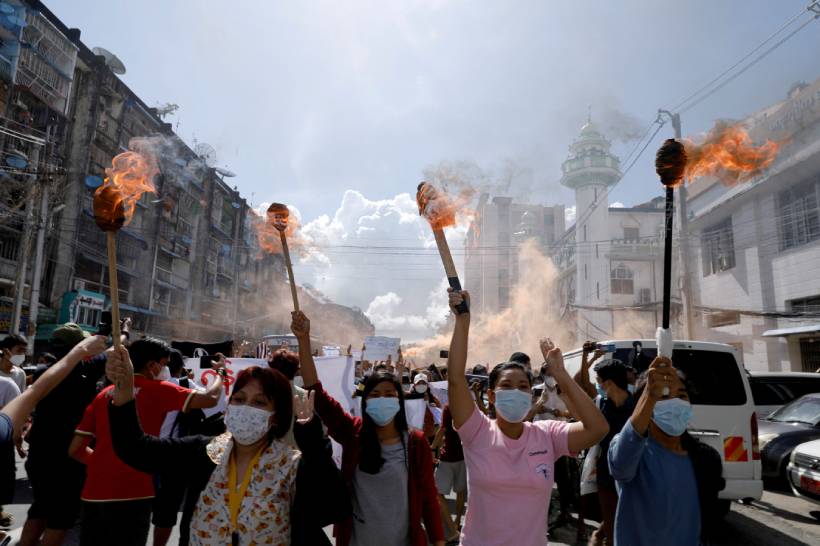
Since the Myanmar coup 2021, the country has been under the tight grip of the military, known as the Tatmadaw. The coup ousted the elected government led by Aung San Suu Kyi and triggered a nationwide resistance movement that has since evolved into a prolonged civil war.
The conflict has drawn in ethnic armed groups and pro-democracy forces, leaving Myanmar fragmented and unstable. Despite this, the military has attempted to create a veneer of political normalcy through tightly controlled elections.
Those elections, held recently and widely dismissed as lacking credibility, delivered victory to a military-backed party. This has paved the way for the current army chief, Min Aung Hlaing, to potentially transition into the presidency while maintaining influence behind the scenes.
A Rare Signal from a Secretive Institution
The announcement of an impending leadership change, made by deputy commander Soe Win, is unusual for Myanmar’s military, which typically operates with strict secrecy.
Stay ahead of the geopolitical week.
MD Briefing delivers expert analysis across five global fronts — the Indo-Pacific, energy, geoeconomics, European security, and the Middle East — every Monday morning. Free.
Such preemptive signaling suggests the transition is being tightly managed. It is not a break from military dominance, but an attempt to reorganize leadership while preserving institutional control.
A Transition Without Transformation
The timing is significant. With parliament set to begin the process of selecting a president, the reshuffle appears designed to facilitate Min Aung Hlaing’s move into a formal political role.
This would allow the military to consolidate power through both institutional and constitutional channels, reinforcing its authority while presenting an image of civilian governance.
However, the underlying power structure remains unchanged. The military continues to dominate political life, and any leadership shift is likely to be internal rather than systemic.
War Still Defines the State
The transition is unfolding against the backdrop of an ongoing civil war. The Tatmadaw remains engaged in multiple conflicts across the country, facing sustained resistance from both ethnic militias and pro-democracy forces.
This raises questions about stability. Leadership changes during active conflict can signal either confidence in control or concern about internal cohesion.
Analysts suggest the unusual transparency around the reshuffle may reflect internal anxieties, particularly over how power will be redistributed at the top.
International and Domestic Implications
Globally, the move is unlikely to change perceptions of Myanmar’s political system. The military’s grip on power remains intact, and the elections have not been recognized as legitimate by much of the international community.
Domestically, the transition may have limited impact on the ground. For many citizens, daily life continues to be shaped by conflict, economic hardship, and political repression.
Analysis: Consolidation Disguised as Change
This is less a transition than a recalibration.
By signaling a leadership reshuffle ahead of the presidential process, the military is attempting to manage both internal dynamics and external optics. It creates the appearance of movement while ensuring continuity of control.
For Min Aung Hlaing, the presidency would formalize authority that already exists in practice. For the Tatmadaw, it is a way to reinforce its dominance without relinquishing power.
In that sense, Myanmar is not moving toward political change, but toward a more structured form of military rule.
With information from Reuters.
