


Every country in the world has its own obstacles to building its economy. For Japan, the obstacle is their helplessness due to the lack of their natural resources. This country has one of the best technology industry giants, but it stands on a fragile foundation, with almost no reserves of oil, gas, coal, and rare earth that are the life of modern industrial and defense life. In the 1930s and until the end of World War II, Japan tried to solve its vulnerability through military campaigns in Greater East Asia, starting from Manchuria to Southeast Asia, to seize resources such as coal, oil, and rubber.
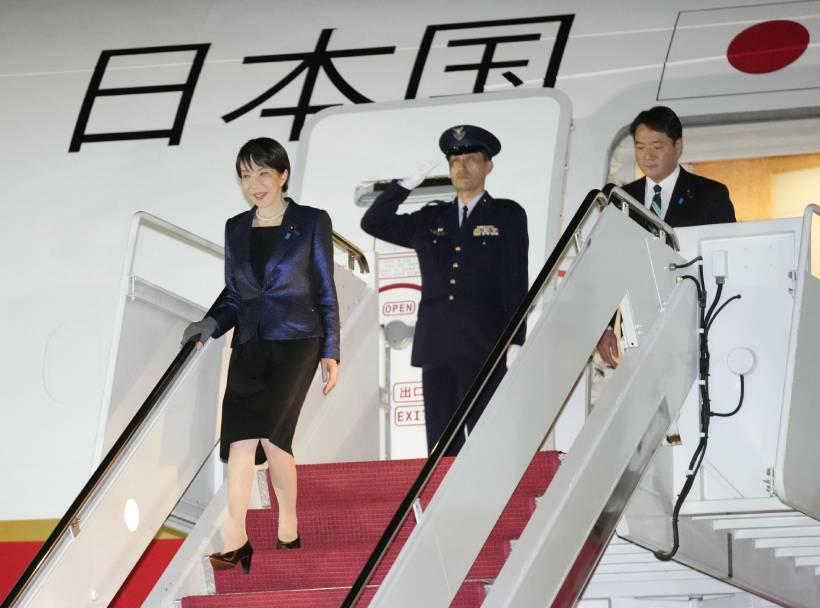
Moving on to the current era, when Japan is now led by Prime Minister Sanae Takaichi, Japan still faces the same dilemma, but the answer to the solution has changed completely. If in the past it was through military campaigns, now it is through strategic alliances, industrial domestication, and economic security legal frameworks. The latest data shows how acute Japan’s dependence is. For rare minerals, Japan still imports about 60% of its needs from China, while for some types of heavy rare earths used in electric vehicle magnets, the dependence is almost 100%. This situation was exacerbated by Beijing’s move in January 2026 to impose restrictions on the export of dual-use items to Japan in response to Takaichi’s remarks on Taiwan.
And it is not the first time China has used its economic weapon, because in 2010, Beijing had stopped the export of rare earths to Japan after the Senkaku/Diaoyu Islands dispute. Vulnerabilities are also seen in the semiconductor industry sector, an industry that is the backbone of the modern digital economy and military. Japan is in a dilemma; downstream, Japan’s market share of finished chips is only about 10%. But upstream, Japan is a hard-to-replace ruler.
About 90% of the global supply of photoresist (light-sensitive polymers) for chip manufacturing comes from Japanese companies such as JSR, Tokyo Ohka Kogyo, and Shin-Etsu. Ajinomoto, a flavoring company known for its MSG, almost monopolized the chip insulation material market through a product called Ajinomoto Build-up Film (ABF). Even Toto, a toilet manufacturer, accounts for 40% of its profits from the sale of ceramics for semiconductors. This position puts Japan, which on the one hand is vulnerable to external supply cuts, on the other hand in a position of bargaining power because it controls critical raw materials that global players cannot ignore.
Stay ahead of the geopolitical week.
MD Briefing delivers expert analysis across five global fronts — the Indo-Pacific, energy, geoeconomics, European security, and the Middle East — every Monday morning. Free.
Sanaenomics, Japan’s Neo-Mercantilism, to Face Economic Impasse
Sanae Takaichi, in the policy speech to parliament on February 20, 2026, affirmed her economic approach in unequivocal terms: “ending excessive austerity” and encouraging domestic investment through “responsive and proactive” fiscal policies. “What is very lacking is domestic investment,” she said, while promising to encourage “crisis management investment” in areas that contribute to economic security. In this economic strategy carried out by Sanae Takaichi, there are at least three main pillars to respond directly to Japan’s economic conditions.
The first is the domestication of strategic industries through technological partnerships. On February 5, 2026, Takaichi received a visit from TSMC’s CEO, C.C. Wei, who announced a plan for mass production of 3-nanometer semiconductors at TSMC’s second plant in Kumamoto. If realized, it would be Japan’s first state-of-the-art chip production and could possibly break the concentration of advanced semiconductor production that until now was concentrated in Taiwan. Takaichi called this step “critical to the diversification of global supply chains and strengthening economic security.” It’s a clever form of friendshoring, securing technology without having to build from scratch.
Second, exploration and diversification of mineral resources. Japan is currently undertaking a major mission to turn its sea into a mine. In January 2026, the Chikyu driller successfully sampled mud containing rare earths from a depth of 6,000 meters near Minamitorishima Island. The Japanese government has invested 40 billion yen (about 250 million US dollars) in the project since 2018, with a target of commercialization around 2030. Takaichi is also actively building cooperation with the United States, including planned discussions with President Donald Trump in March 2026 on the joint development of deep-sea resources. Even as of October 2025, the two leaders have signed a framework for cooperation on critical minerals.
Then the third is the strengthening of the economic security legal framework. The Takaichi government has just approved a revision of the Economic Security Law in March 2026. Interestingly, this revision not only focuses on domestic protection but also encourages the expansion of the Japanese economy into the countries of the Global South. The new mechanism allows the Japan Bank for International Cooperation (JBIC) to take on greater risk through a subordinated investment scheme, where when the investment is profitable, the priority goes to the private company, while if it loses, the state bears it. The target is to build infrastructure such as ports and data centers in ASEAN countries while securing critical energy and mineral supply chains, as was recently done between Japan and Indonesia.
Response to China
It cannot be forgotten that the tensions with China were the main catalyst for Japan to accelerate these policies. Takaichi’s statement in November 2025 that Japan might respond militarily if Taiwan was attacked triggered a backlash from Beijing. However, in the midst of that firmness, Takaichi still opens up the space for pragmatism. In her policy speech, she said she would “respond calmly and appropriately from the point of view of national interests” while still building “constructive and stable relations” with China. The International Institute for Strategic Studies (IISS), in its analysis, noted that Japan’s focus on the rare earths of Minamitorishima should be understood as a form of economic statecraft, not just an ordinary commercial operation. These strategic reserves will be an important asset in forming an economic security-oriented trade bloc with the US, the European Union, and other global partners.
It should be noted that Japan’s strategy is not without delay or high risk. First, between the economic costs and the strategic benefits, the extraction of rare earths from a depth of 6,000 meters is clearly not cheap. This project will only be economical if there is a supply disruption from China and in the long term. As long as China still offers competitive prices due to their tolerance of high environmental costs, seabed mining projects will continue to be a fiscal burden.
Then, Japan’s policy contradicts its environmental commitments. Japan wants to be a green leader but at the same time goes after deep-sea mines that risk damaging marine ecosystems. It is an irony when you want to make an environmentally friendly electric vehicle, but it has to damage the marine environment. And finally, on the domestic political spectrum, although Takaichi is very passionate and ambitious about this, what is still needed is a clear roadmap and firm priorities. Massive fiscal support without budgetary discipline risks exacerbating Japan’s already enormous public debt.
Lessons Learned, Especially for the Global South
What Japan did under Takaichi showed that dependence on a single source of supply was an existential vulnerability. Japan learned from the incident in 2010 that it is necessary to build strategic reserves and diversify resources. Then, economic security that requires long-term investment. For example, the Minamitorishima rare earths project started in 2018, 7 years before the commercialization target. This is not an instant project but rather a cross-regime commitment, and this needs mature consistency. And finally, alliances are better than isolation. Japan did not build a closed bloc as it did in the early 20th century but rather strengthened partnerships with the US, Australia, and ASEAN countries through the FOIP framework. For the Global South, Japan’s strategic partnership should be used to gain technology transfer and investment opportunities.
