


The governing Keir Starmer and his Labour Party have suffered significant losses in England’s local elections, marking one of the strongest early political tests since Labour’s landslide general election victory in 2024.
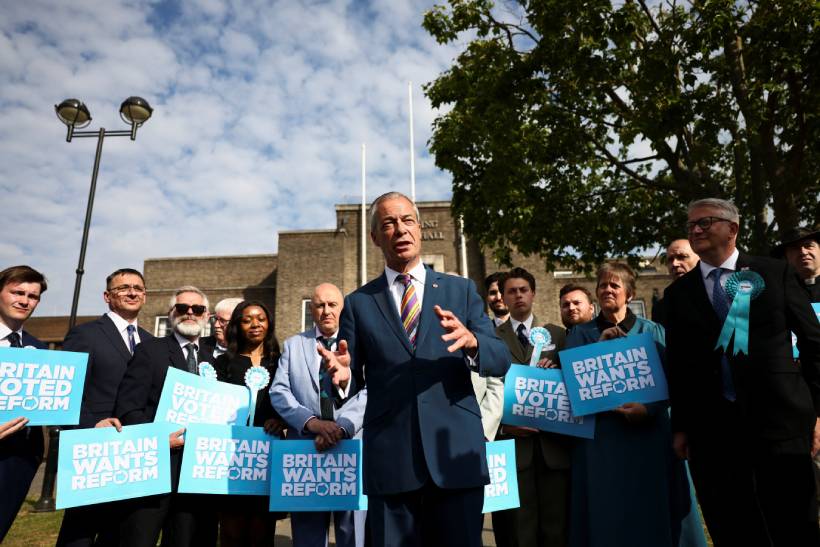
Early results show Labour losing hundreds of council seats across traditional strongholds in former industrial regions as well as parts of London. The main beneficiary has been the populist Reform UK, led by Nigel Farage, which has made major gains and reshaped the local political landscape.
These elections, which cover hundreds of councils across England along with devolved parliaments in Scotland and Wales, are widely seen as the most important measure of public opinion between general elections. They come amid rising frustration over living costs, public services, and political leadership across the United Kingdom.
Labour’s Losses and Voter Backlash
Labour’s losses were particularly severe in areas that have historically been party strongholds. Towns in central and northern England, many of which supported Labour for decades, shifted dramatically toward Reform UK in several council contests.
Stay ahead of the geopolitical week.
MD Briefing delivers expert analysis across five global fronts — the Indo-Pacific, energy, geoeconomics, European security, and the Middle East — every Monday morning. Free.
In some councils, Labour lost all or most of its contested seats, signalling not just a decline in support but a deeper political realignment in parts of the country. Political analysts describe this as a warning sign that Labour’s coalition of voters may be more fragile than expected following its national victory.
The scale of the losses has triggered internal debate within the party. While some lawmakers argue the results reflect normal mid term punishment for a governing party, others see them as evidence of deeper dissatisfaction with Labour’s direction, leadership, and policy choices.
Despite the pressure, Labour leadership allies insist that leadership change is not being considered and argue that the government needs more time to deliver its programme.
Reform UK’s Rise and Political Disruption
The biggest story of the elections has been the rise of Reform UK, which has gained hundreds of council seats and significantly expanded its influence in local government.
The party’s message, centred on immigration control, economic frustration, and anti establishment sentiment, appears to be resonating with voters who feel disconnected from both Labour and the Conservative Party.
Reform UK’s surge reflects a broader fragmentation of British politics. Instead of a traditional two party system dominated by Labour and the Conservatives, Britain is increasingly shifting toward a multi party landscape where smaller parties are gaining real electoral power.
Nigel Farage described the results as evidence of a historic political realignment, suggesting that long standing voter loyalties are breaking down in ways not seen in modern British politics.
A Fragmented Political System Emerging
One of the most significant developments highlighted by the election results is the continued weakening of Britain’s traditional political structure.
The dominance of Labour and the Conservatives is being challenged not only by Reform UK but also by the Green Party on the left and nationalist parties in Scotland and Wales. This fragmentation means that political power is increasingly dispersed across multiple parties rather than concentrated in two major blocs.
In Scotland and Wales, regional parties are expected to perform strongly, reinforcing long standing tensions over national identity, autonomy, and governance within the United Kingdom.
Political analysts argue that this shift represents one of the most significant transformations in British politics in decades, with voter loyalty becoming more fluid and issue driven rather than party based.
Leadership Pressure on Keir Starmer
Although Labour won a large parliamentary majority in 2024, these local election results have raised questions about the durability of its mandate.
Critics within and outside the party point to policy reversals, internal reshuffles, and political missteps as factors contributing to declining voter confidence. Some high profile controversies and resignations have also added to perceptions of instability in government decision making.
Despite growing pressure, Keir Starmer’s position remains relatively secure in the short term. Labour has historically avoided removing sitting prime ministers, and no clear successor is currently positioned to mount a strong leadership challenge.
However, continued poor electoral performance could intensify internal debate about the party’s direction and leadership strategy ahead of the next general election cycle.
Why Voters Are Turning Away
Several factors appear to be driving voter dissatisfaction. Economic concerns, particularly related to inflation, housing costs, and public service delivery, remain central issues for many voters.
At the same time, political trust has been weakened by repeated policy adjustments and perceptions of inconsistency in government messaging. In some regions, long standing industrial communities feel that mainstream parties have failed to address local economic decline and job insecurity.
Reform UK has been particularly effective in positioning itself as an alternative for voters disillusioned with both major parties, especially in areas that previously formed part of Labour’s traditional base.
Analysis
The local election results suggest that Britain’s political landscape is undergoing a structural transformation rather than a temporary protest vote against the government. The scale of Labour’s losses in former strongholds indicates a deeper shift in voter identity, where traditional class based political loyalties are weakening.
The rise of Reform UK signals that populist politics is becoming a durable force in British elections rather than a fringe movement. This creates a more fragmented political environment where governing majorities may become harder to maintain and political stability more difficult to secure.
For Keir Starmer, the challenge is not only managing short term electoral setbacks but also rebuilding trust among voters who supported Labour in 2024 but are now expressing dissatisfaction. The party’s ability to respond to economic concerns and public service pressures will be critical in determining whether this shift is temporary or long lasting.
More broadly, the results reflect a trend seen across several democracies where traditional two party systems are weakening under pressure from populist and issue focused movements. If this continues, future UK elections may be defined less by predictable party competition and more by fluid alliances and shifting voter coalitions.
The coming months will be crucial in determining whether Labour can stabilise its position or whether Britain is entering a new era of sustained political fragmentation.
With information from Reuters.
