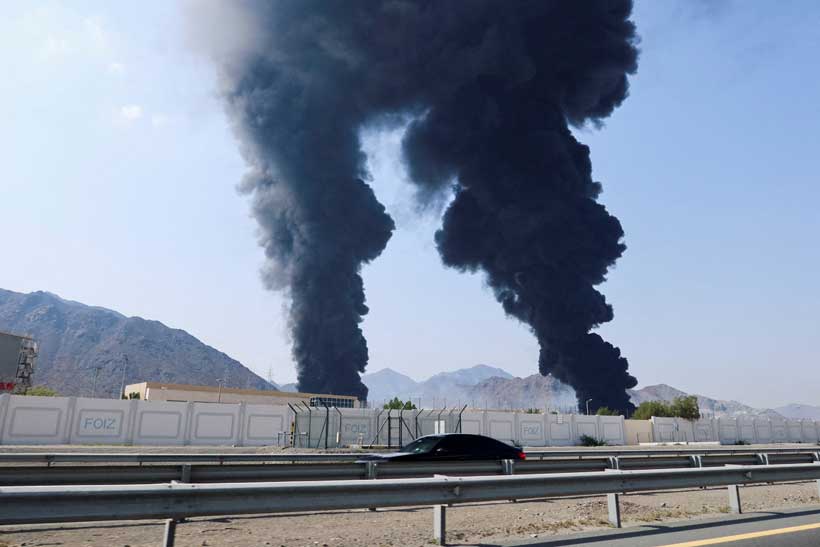
Some oil-loading operations have been suspended at Fujairah port in the United Arab Emirates after a drone attack and fire. Fujairah is a key global hub for fueling ships and exporting crude and refined fuels. Last year, it exported over 1.7 million barrels of oil and fuels daily, making up about 1.7% of global demand. Located on the Gulf of Oman, approximately 70 nautical miles from the Strait of Hormuz, Fujairah’s role is increasingly important due to the ongoing conflict affecting Hormuz.
In 2025, Fujairah sold 7.4 million cubic meters of marine fuels, ranking as the fourth largest in the world after Singapore, Rotterdam, and Zhoushan in China. For the UAE, which produced more than 3.4 million barrels per day before the conflict, Fujairah is crucial as it operates a pipeline that transports oil to bypass Hormuz. This pipeline is essential for exporting the Murban crude grade, mainly sold to Asia. If disruptions at Fujairah persist, it could lead to a shutdown of production for OPEC’s third largest crude producer.
Fujairah’s storage capacity of 18 million cubic meters positions it as a significant center for storing and blending crude and fuels. Several global storage companies operate there, contributing to the region’s commercial storage capacity for refined products.
With information from Reuters