


Officials in Taipei say a newly passed Chinese law aimed at promoting ethnic unity could become another legal mechanism for Beijing to target Taiwanese individuals it views as supporting independence.
The legislation was approved by China’s parliament, the National People’s Congress, and is designed to strengthen a shared national identity among China’s 55 officially recognized ethnic minority groups, including Uyghurs and Tibetans.
However, Taiwanese officials warn that language within the law referencing the protection of national sovereignty and unity could have implications far beyond China’s borders.
Beijing considers the democratically governed island of Taiwan to be part of its territory and regards its population as Chinese citizens, despite the island operating as a separate political system.
Stay ahead of the geopolitical week.
MD Briefing delivers expert analysis across five global fronts — the Indo-Pacific, energy, geoeconomics, European security, and the Middle East — every Monday morning. Free.
Law Emphasizes Sovereignty and National Unity
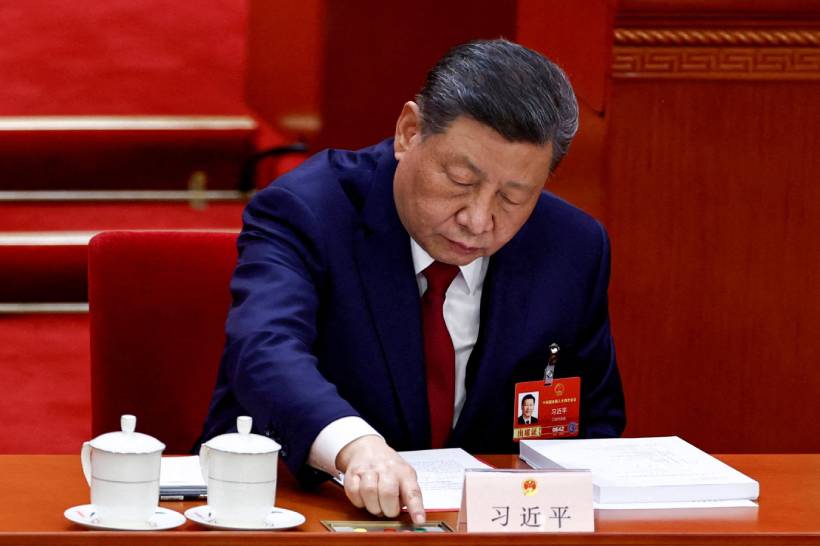
The new legislation stresses that Chinese citizens must safeguard national sovereignty, security and social stability. It also references statements by Chinese leader Xi Jinping emphasizing the need for citizens to uphold national unity.
While the law does not explicitly mention Taiwan in detail, it briefly calls for people on both sides of the Taiwan Strait to develop a shared Chinese identity.
Officials in Taipei fear that such language could eventually be interpreted as a legal obligation for Taiwanese individuals to support Chinese national unity.
Shen Yu-chung, deputy minister at Taiwan’s Mainland Affairs Council, warned that the wording could “spill over into becoming a legal basis for handling cross-Strait issues.”
According to Shen, the law’s vague definition of what constitutes support for unity creates significant legal ambiguity.
Existing Laws Already Target Taiwan Activists
China already maintains several legal frameworks aimed at discouraging Taiwanese independence.
In 2024, Beijing issued guidelines allowing severe punishment for what it calls “diehard” independence activists, including the possibility of the death penalty.
Although Chinese courts do not exercise jurisdiction within Taiwan, Chinese authorities have increasingly used legal measures to target individuals abroad who advocate for Taiwanese independence.
Taiwan’s government frequently describes this strategy as “lawfare” the use of legal tools to advance political objectives.
Concerns Over “Long-Arm Jurisdiction”
Taiwanese officials are particularly concerned about a clause in the new law stating that individuals and organizations outside the borders of the People’s Republic of China may be held legally accountable for undermining ethnic unity or encouraging separatism.
This provision raises fears that Beijing could attempt to apply the law extraterritorially targeting Taiwanese citizens overseas or applying pressure through international legal channels.
Officials in Taipei argue that such provisions reflect a growing trend in Chinese legislation to extend its legal reach beyond its borders.
Analysis: A Shift in Beijing’s Legal Strategy
Taiwanese analysts say the new law may signal an evolution in Beijing’s approach toward the island.
Previous Chinese legislation primarily focused on punishing explicit support for Taiwanese independence. The new framework, however, appears to go further by implying that individuals must actively support national unity.
According to one senior Taiwanese official, the change effectively raises the political bar for Taiwanese citizens.
“In the past, you were punished for supporting independence,” the official said. “Now you may also face consequences if you fail to actively promote unification.”
If interpreted broadly, the law could deepen already tense relations across the Taiwan Strait by introducing another layer of legal pressure into the long-running dispute between Beijing and Taipei.
With information from Reuters.
