


The war between the United States, Israel, and Iran has entered a dangerous new phase, contradicting claims by Donald Trump that Washington has already “won.” Nearly two weeks after joint U.S.–Israeli air strikes on Iran triggered the conflict, the battlefield has expanded beyond Iranian territory and into the heart of the Gulf’s energy infrastructure.
The conflict has already killed roughly 2,000 people, according to estimates, including more than 1,100 children reported killed or injured by UNICEF. But beyond the humanitarian toll, the most dramatic consequences are unfolding in the global economy. Oil infrastructure, maritime transport routes, and strategic energy reserves have all become instruments of war.
Iran’s response has shifted from direct military confrontation to economic disruption. By targeting oil tankers, ports, and shipping routes, Tehran appears to be attempting to weaponize the global energy system sending a message that even if Iran cannot defeat the United States militarily, it can inflict severe economic pain.
Tankers Burn in Iraqi Waters
Tensions escalated sharply after two fuel tankers were reportedly set ablaze in Iraqi waters, apparently by Iranian explosive-laden boats. Maritime security firms and port officials said projectiles struck three merchant vessels in the Gulf, killing one crew member and igniting fires.
Stay ahead of the geopolitical week.
MD Briefing delivers expert analysis across five global fronts — the Indo-Pacific, energy, geoeconomics, European security, and the Middle East — every Monday morning. Free.
The attack signals a deliberate escalation in Iran’s strategy: targeting shipping lanes and commercial vessels rather than purely military assets. Analysts believe such attacks are designed to destabilize global energy markets and deter maritime traffic in the Gulf.
Energy analyst Tony Sycamore described the incident as a “direct and forceful response” to the decision by the International Energy Agency to release massive strategic oil reserves aimed at cooling runaway prices.
The escalation highlights how economic warfare is now central to the conflict. Rather than attempting to confront U.S. military dominance directly, Iran is focusing on chokepoints and infrastructure that underpin the global oil market.
Oil Markets Rattle as Prices Surge
The attacks immediately reverberated across financial markets. Oil prices, which had briefly retreated after touching nearly $120 per barrel earlier in the week, surged again above $100 in Asian trading.
Iran’s military leadership openly warned that prices could reach $200 per barrel if instability continues across the region. Such a spike would represent one of the worst global energy shocks since the 1970s oil crises.
In response, the International Energy Agency recommended the largest strategic oil release in history up to 400 million barrels from global reserves. The United States alone plans to release 172 million barrels from its Strategic Petroleum Reserve.
President Donald Trump hailed the move as proof that Washington had neutralized the threat. Yet markets reacted in the opposite direction, suggesting traders remain deeply skeptical that supply disruptions can be contained.
Strait of Hormuz: The World’s Most Dangerous Chokepoint
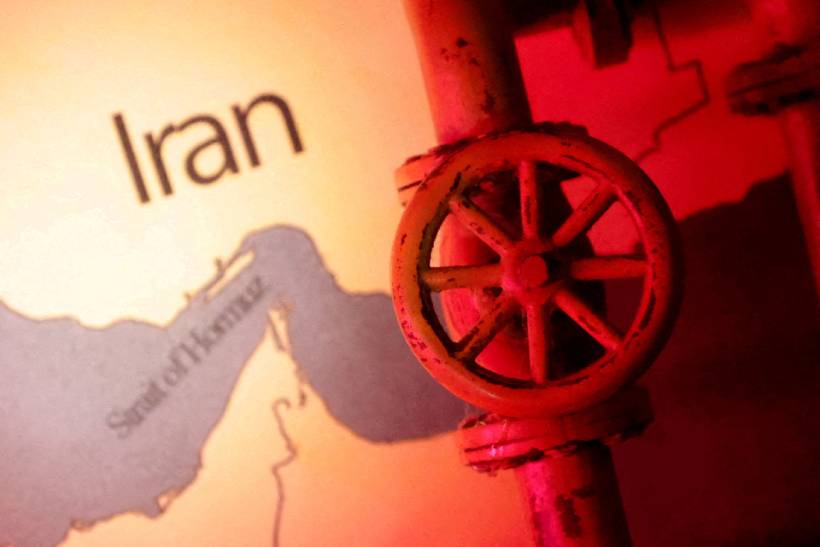
The most alarming development remains the apparent closure of the Strait of Hormuz, the narrow maritime corridor through which roughly one-fifth of the world’s oil supply normally passes.
Iranian officials claim the strait is now under their control. Maritime reports indicate that mines may have been deployed in the channel, making navigation extremely dangerous.
Western governments are now considering naval escorts for oil tankers passing through the Gulf. The proposal is being discussed by the Group of Seven industrialized nations, though such operations would risk further military confrontation.
If the blockade persists, the consequences could ripple through global supply chains, from energy markets to shipping insurance costs and international trade.
Regional Spillover Intensifies
The conflict is increasingly spreading across the Gulf region.
Drone strikes have hit oil storage facilities in Oman’s Salalah port and fuel tanks in Bahrain’s Muharraq area. A container vessel was also reportedly struck near the United Arab Emirates, while Kuwait reported a drone strike injuring two people in the country’s south.
These attacks suggest Iran and its allies are willing to expand the battlefield across multiple Gulf states many of which host U.S. military bases or energy infrastructure tied to Western markets.
The widening geographic scope makes the conflict harder to contain and increases the risk of miscalculation between regional powers.
Leadership Shock in Tehran
The war also triggered dramatic political upheaval inside Iran. The country’s long-time Supreme Leader Ali Khamenei was reportedly killed during the initial wave of strikes.
He has been replaced by his son, Mojtaba Khamenei, signaling that Iran’s hardline political structure remains firmly in place despite the military shock.
U.S. intelligence assessments suggest Iran’s leadership apparatus is still functioning and is unlikely to collapse in the near term, contradicting expectations among some policymakers that regime change might follow the strikes.
Analysis: Iran’s Economic Counterattack
The unfolding crisis reveals a central strategic miscalculation in Washington’s war planning. While U.S. and Israeli forces possess overwhelming conventional military superiority, Iran retains asymmetric tools capable of destabilizing global markets.
By targeting oil infrastructure, shipping lanes, and strategic chokepoints, Tehran is effectively shifting the battlefield from military confrontation to economic warfare.
The strategy serves multiple purposes. It raises the cost of the war for Western governments, pressures global markets, and places Gulf Arab states many of which did not initiate the conflict directly in the line of economic and security fallout.
At the same time, Iran’s approach exploits a structural vulnerability in the global economy: the concentration of energy supply routes in a few narrow maritime corridors.
As long as the Strait of Hormuz remains threatened, even limited attacks can generate disproportionate economic consequences.
The War’s Real Frontline
Despite claims of victory from Washington, the burning tankers in Iraqi waters suggest the war is far from over.
Instead of ending quickly, the conflict may be entering a prolonged phase defined less by battlefield victories and more by economic attrition where oil prices, shipping lanes, and global markets become the true frontlines of war.
For the world economy, that could prove far more destabilizing than the initial air strikes that started it.
With information from Reuters.
