Introduction
The night of February 28, 2026, “Operation Roaring Lion” marked a seismic shift in Middle Eastern geopolitics. A precision strike carried out by US and Israeli forces led to the demise of Iran’s Supreme Leader, Ali Khamenei, along with key architects of Iranian power, such as National Security Adviser Ali Shamkhani, Armed Forces Chief of Staff General Abdul Rahim Mousavi, Defence Minister Aziz Nazirzadeh, and IRGC Commander-in-Chief Mohammad Pakpour, effectively led to the dismantling of the old guard of the Islamic Republic.
The appointment of Ayatollah Alireza Arafi as the “interim” Supreme Leader just hours after the announcement is a strategic move by the clerical establishment to convey a message to the world. By appointing a member of the Guardian Council and Qom Friday Prayer Leader, the clerical establishment is seeking to convey the illusion of normalcy and stability.
Arafi as a Proxy: The Emergence of the “Garrison State”
The absence of power in the office of the Supreme Leader, it seems, started much earlier than the 2026 strike. During the so-called “Twelve-Day War” in 2025, it was claimed that Khamenei had suffered a mental decline, with real power residing in the office of the Parliament Speaker, Mohammad Bagher Ghalibaf, and a military junta in the IRGC.
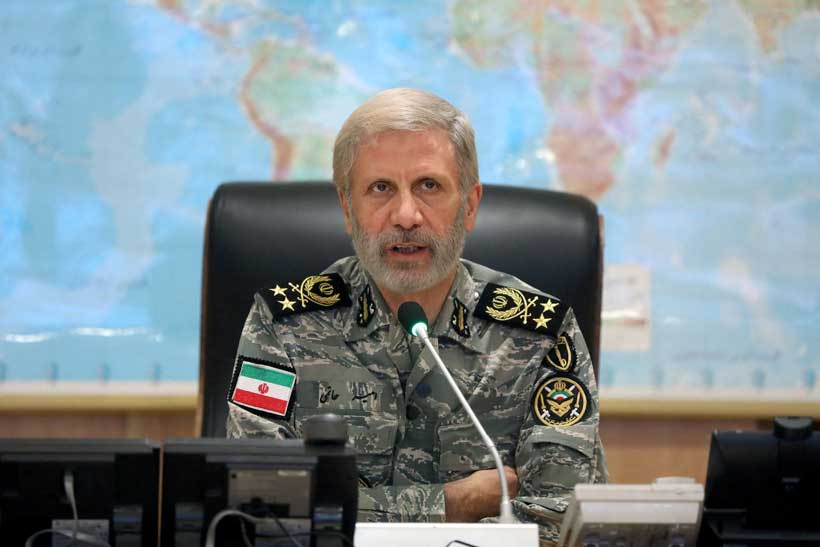
What we are seeing here is not a simple shift in power but a metamorphosis in the structure of power itself. The IRGC is evolving from a body that protects the regime to one that architects it, using clerics such as Arafi to provide a thin veneer of religiosity to a de facto military government, a Garrison State, to carry out an even more aggressive and intransigent foreign policy.
Stay ahead of the geopolitical week.
MD Briefing delivers expert analysis across five global fronts — the Indo-Pacific, energy, geoeconomics, European security, and the Middle East — every Monday morning. Free.
Institutional Metamorphosis: From Theocracy to Praetorianism
The way in which the IRGC behaves in this period of vacuum of power will not only change the internal society of Iran but also determine the future of the entire region. For over two decades, a silent but fierce competition for hegemony between the IRGC and the Clerical Establishment (the Ulema) has been ongoing. This was crystallized in a critical turning point in 2022, with the head of the IRGC Intelligence Organization, until then a clerical position, replaced by a military general. This was a clear indicator that the “deep state” apparatus, including security and intelligence, was officially in the hands of the military rather than the religious authorities. In this context, the following question should come to mind: Does the Supreme Leader represent the Islamic Republic of Iran as a faith-based entity, or is he merely a symbol of a new “Garrison State” phenomenon?
The “Kingmaker” and the Pakistan-Egypt Model
By appointing Alireza Arafi, the IRGC is essentially making the transition from being the “regime’s guardian” to becoming the “regime’s driver,” following the model established in Pakistan and Egypt. In these countries, the political leadership, either clerical or civilian, is relegated to a symbolic position, while the real power behind the throne is held by the generals. Controlling between 20% and 40% of the national economy and pushing the civilian technocracy to the margins, the IRGC which has effectively become the “Kingmaker,” the “regime’s driver,” and the “regime’s guardian” all at once.
The change also reflects an ideological shift. One should expect that the regime will move from its traditional position in Pan-Islamism to a position that combines Iranian nationalism with a more pragmatic and aggressive approach to regional security issues. By maintaining the civilian-clerical facade, the IRGC also avoids any crisis in legitimacy.
The Shadow of the “Habib Circle” (Halqe-ye Habib)
A figure that should not be overlooked is Mojtaba Khamenei, the son of the Supreme Leader. He has established a network called the Habib Circle, forging connections with important figures in the security and intelligence fields, such as Hossein Taeb and Alireza Panahian. Thus, he has a relatively strong sphere of influence over critical sectors of Iran. Furthermore, through his father’s office, called “Beit-e Rahbari,” he has provided funding to the Iranian Revolutionary Guard Corps for missile and drone programs. Through this funding, he has developed a close relationship with Iran’s military elite. However, the perception of a hereditary monarchy has reminded the public of the pre-1979 Pahlavi regime and has limited Mojtaba’s chances of becoming Iran’s next Supreme Leader. Nevertheless, the existing cooperation with the IRGC may be enough to make him an important actor in the background.
The Death of Diplomacy: The Larijani Paradox
One of the clearest signs that tensions will continue to escalate in the post-Khamenei era can be seen in the rhetoric of Ali Larijani. Larijani, the Secretary of the Supreme National Security Council, also known as a “pragmatic conservative,” has been the face of diplomacy with Iran. However, one of Larijani’s recent statements from his X account was an announcement that there would be no negotiations with the United States. As a key figure known for “rational conservatism,” his use of hardliner rhetoric is a clear indication that all diplomatic windows have closed. This “Larijani Paradox” proves that the regime has retreated into its shell of resistance, choosing survival and retaliation rather than geopolitical compromise.
The Siege of Hormuz: A Global Economic Heart Attack
The official announcement of the IRGC regarding the closure of the Strait of Hormuz is a demarcation of the shift from a regional war to a global economic siege. As the most strategic energy chokepoint, its closure not only raises prices but disrupts the entire supply chain. Combined with the strikes on Gulf states, the world is currently confronted with a crisis of a massive contraction in energy supplies and a vertical surge in energy prices. The ensuing inflationary tide and energy crisis will wreak more havoc on Western economies than any geopolitical gain in Tehran could ever compensate for. The war is no longer over borders; it is now over the very survival of the global financial system.
The international community is currently confronted with a “nightmare scenario.” While the trade policies of President Trump, which emphasized tariffs, had already strained global trade relations, the blockade of the Strait of Hormuz effectively translates these strains into a total collapse. The situation reached a critical point when President Trump announced that the US Navy would begin escorting oil tankers through the Strait of Hormuz. This ‘escort policy’ is a direct response to the total blockade imposed by the IRGC, which caused oil prices to surge significantly, reaching double-digit increases in just three days.
The Three-Polar Rift: Diplomatic Paralysis and Global Realignment
Operation Roaring Lion tore apart the thin veil of international consensus to reveal the Three-Polar World order characterized by differing strategic interests:
The Revisionist Axis (China, Russia, and Pakistan): Beijing and Moscow have rapidly transitioned from “strategic concern” to open condemnation. China’s official condemnation of the strikes as a violation of international law and Pakistan’s rhetoric on the threat to regional stability confirm this axis’s dedication to preserving the Iranian node of the Eurasian security architecture. These countries condemned the US for violating international law, but did not provide military support to Iran. This approach demonstrates their attempt to strike a strategic balance between an ideological stance developed against Western hegemony and a reflex to protect economic stability.
Defensive/Pragmatic Bloc: Europe, particularly France, the UK, and Germany, condemned Iran’s tit-for-tat attacks but did not support Trump’s stance. They emphasized “defensive actions” and pursued a path of protecting Mediterranean assets (e.g., France’s deployment of a missile defense system to Cyprus). This clearly demonstrated that Europe would not be dragged into a war that it perceived as a harbinger of a global crisis.
The Entrapped Proximate States (Gulf Monarchies): Countries like Qatar and Oman find themselves in a geopolitical impasse. Despite Iran’s attacks on energy assets in the region, proximate states continue to call for restraint. This indicates that the US security umbrella cannot protect its economic interests in the face of a complete blockade of the Strait of Hormuz. Moreover, the attacks on Saudi Arabia’s Ras Tanura refinery, the world’s largest oil processing plant, prove that the IRGC’s retaliation is proceeding in an asymmetrical manner.
Conclusion: The Dawn of a Garrison State
There was a consensus that the Iranian regime would begin to unravel with the death of Ali Khamenei. However, the situation is developing in the opposite direction. Iran has virtually begun to transform into a garrison state. Diplomacy is no longer on the table. The military iron fist of the clerics is stronger than ever. The coming weeks will not only determine the fate of Tehran but will also shape the world order, threatened by protectionism, oil wars, and the emergence of a new Guardian Corps. While Trump claimed the war would only last four weeks, the rise of uncompromising figures like Ayatollah Ahmed Khatemi suggests that the world must prepare for a protracted and volatile conflict.