


Beijing’s decades-long policy decision to expand Chinese presence in Africa has, largely, transcended into gifting buildings. The African Union and Africa’s CDC to Zimbabwe’s parliamentary village, Ghana’s Foreign Ministry headquarters, and Egypt’s sports stadium, among many others, are classical examples. Following all these, China will hand over the new headquarters of the Economic Community of West African States (ECOWAS) in mid-March 2026.
Since the turn of the 21st century, China has risen to become Africa’s geopolitical partner, addressing concrete infrastructural projects across the continent. As is well-known, Beijing does so, with the sole designed aim of spending thousands of dollars to gain strategic control of the continent’s critical resources.
In an official news release, the regional bloc’s president, Dr. Omar Alieu Touray, said that the new headquarters complex in Abuja, Nigeria, which will house the Commission, Parliament, and Court of Justice of the Economic Community of West African States (ECOWAS), will be operational in March 2026.
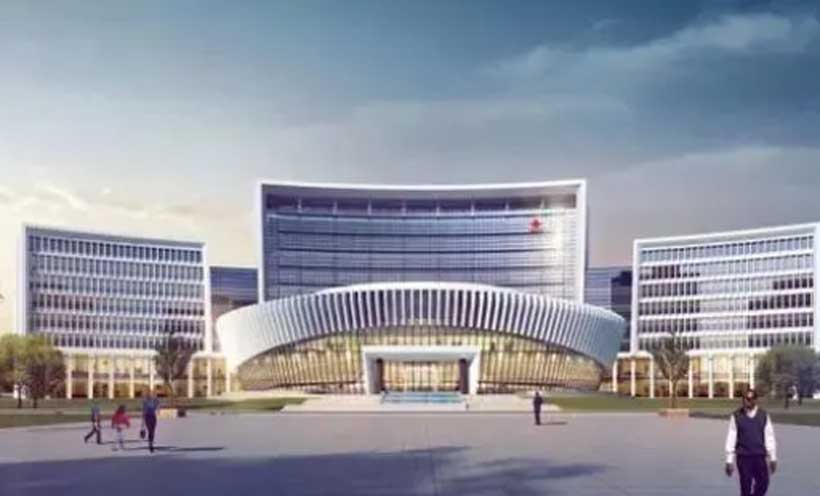
Built on a 7-hectare site along the road to Abuja airport, the building is currently completed. Known as the ‘Eye of West Africa,’ the new ECOWAS headquarters complex is entirely funded and built by the People’s Republic of China through the China International Development Cooperation Agency (China Aid).
Stay ahead of the geopolitical week.
MD Briefing delivers expert analysis across five global fronts — the Indo-Pacific, energy, geoeconomics, European security, and the Middle East — every Monday morning. Free.
It is a modern and functional administrative building, designed to meet the needs of the West African organization. It will provide services to create a favorable working environment for the community’s staff members. The new complex comprises a main administrative building with three restaurants/cafeterias, banking rooms, a crèche, a gym, and three blocks containing 899 workstations: block A (central) has 11 floors, and blocks B and C have eight floors each.
It also includes a multipurpose building with security facilities, shops, a water tank, and archive rooms, as well as car parks with a total capacity of 702 parking spaces, a 720-seat auditorium, two committee rooms, a conference room, an equipment room, guard posts, and a helipad.
The new ECOWAS headquarters complex is seen as a symbol of the strengthening cooperation between China and the regional organization. It is part of a technical and institutional partnership aimed at further supporting ECOWAS’ operational capacities, as well as part of ongoing cooperation between the two parties.
Accordingly, the headquarters complex will enable greater operational efficiency, reduced costs, and increased staff productivity. ECOWAS has expressed deep gratitude and sincere appreciation to China for its commitment and support to the regional organization through the construction, seen as a ‘symbol of Beijing’s steadfast commitment to West African integration.’
