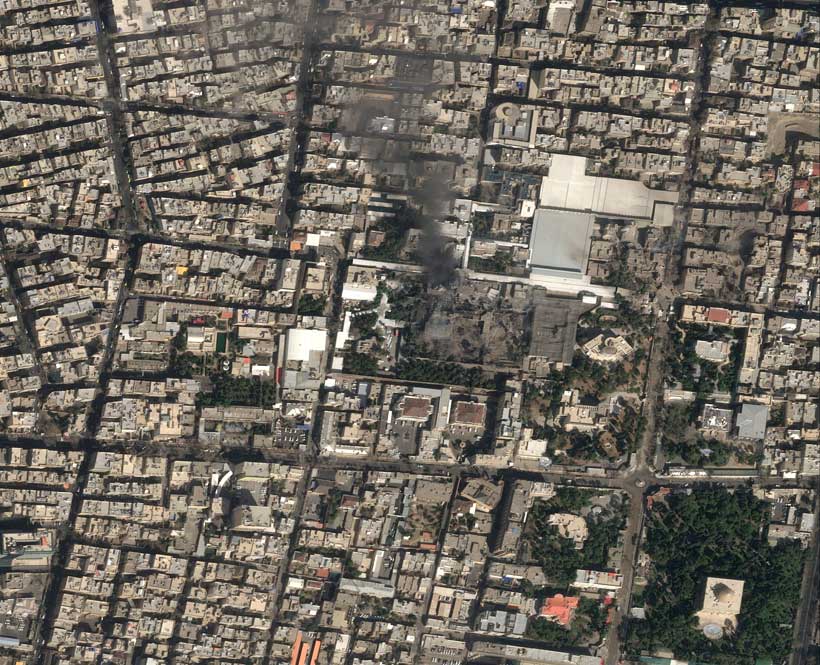
Israel announced on Sunday that it had carried out new attacks on Iran following the killing of Supreme Leader Ayatollah Ali Khamenei in U. S. and Israeli air strikes. Iran’s state media confirmed Khamenei’s death, reporting that he was killed in a coordinated military operation. The strikes also resulted in the death of Iran’s Armed Forces Chief of Staff Abdolrahim Mousavi. U. S. President Donald Trump issued a stern warning to Iran, stating that if they retaliated, the response would be devastating. He noted that Iran had threatened to strike back harder than ever before.
In response to Khamenei’s death, Iran’s top security official announced the formation of a temporary leadership council and accused the U. S. and Israel of trying to destroy Iran. Iran’s parliament speaker declared that both Trump and Israeli Prime Minister Benjamin Netanyahu had crossed a significant line and would face consequences. Reports stated that Iran’s air force launched strikes on U. S. bases in Iraq and neighboring Gulf countries. Israeli sources indicated that the military strategy would remain unchanged following Khamenei’s killing, continuing to target Iranian officials and military assets.
The aftermath of the strikes resulted in more loud explosions, especially in the regional hub of Dubai, as Iran aimed its retaliatory strikes at nearby Gulf states. Air raid sirens sounded in Israel as the country prepared for potential attacks, though initial reports indicated no damage or injuries from these defenses. Global air travel faced severe interruptions due to ongoing attacks, leading to major airports being closed.
Trump emphasized that the air strikes were meant to end a longstanding threat from Iran and prevent it from developing a nuclear weapon. Despite concerns over U. S. involvement in foreign conflicts, he framed the operation as justice for the people of Iran and others harmed by Khamenei’s regime. Both Trump and Netanyahu encouraged Iranians to seize the opportunity to overthrow their clerical government.
Iran had been under pressure from a struggling economy and protests, alongside attacks against its regional allies. The strikes coincided with a meeting that Khamenei was having with his advisors, resulting in a significant loss of leadership, including his family members. Experts cautioned that while the deaths represented a blow to Iran’s leadership, it wouldn’t necessarily end the clerical regime or the influence of the Islamic Revolutionary Guards Corps.
The Iranian armed forces vowed to retaliate again, promising a substantial offensive against U. S. bases and Israel. Iran had already responded to the initial attacks by launching hundreds of missiles and drones targeting U. S. interests and Israeli cities, leading to a widespread cancellation of flights in the Middle East. The Pentagon reported no American casualties in the attacks, but tensions rose when Iran claimed to have closed the crucial Strait of Hormuz, prompting concerns about rising oil prices.
OPEC+, comprised of major oil producers, was expected to meet to discuss potentially increasing oil output amid the disruption caused by these geopolitical events. The ongoing conflict escalated tensions in a region already sensitive to military actions and economic sanctions.
With information from Reuters