


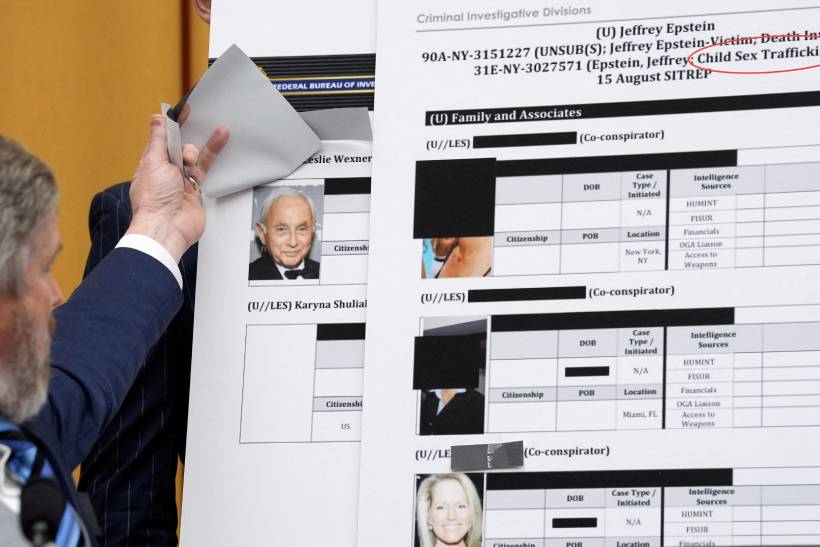
Billionaire retail magnate Leslie Wexner has acknowledged visiting the private Caribbean island owned by disgraced financier Jeffrey Epstein, while firmly denying any knowledge of criminal conduct. In written testimony to U.S. lawmakers, the 88-year-old said he stopped briefly at the island with his wife and children during a cruise shortly after Epstein purchased it.
Wexner, founder of L Brands once entrusted Epstein with managing his finances beginning in the 1980s. He severed ties around 2007, after Epstein faced criminal charges involving prostitution and the solicitation of an underage girl. Epstein later died in a Manhattan jail in 2019 in a death ruled a suicide.
The testimony comes as the U.S. Justice Department has released millions of internal records related to Epstein’s network, shedding new light on his relationships with wealthy and influential figures.
Why It Matters
Stay ahead of the geopolitical week.
MD Briefing delivers expert analysis across five global fronts — the Indo-Pacific, energy, geoeconomics, European security, and the Middle East — every Monday morning. Free.
Wexner’s statement highlights the enduring political and public scrutiny surrounding Epstein’s social and financial network. For years, questions have persisted about how Epstein leveraged connections with powerful individuals to sustain his operations. Congressional investigators are now re-examining those relationships, seeking to understand whether financial support, access, or institutional failures enabled Epstein’s crimes.
The controversy underscores broader concerns about accountability among elites and the mechanisms that allowed Epstein to maintain legitimacy despite earlier criminal convictions. Public trust in financial, legal, and political systems is at stake as lawmakers probe whether warning signs were ignored.
Stakeholders
At the center are Wexner and his family, who maintain they were financially victimized by Epstein, alleging he stole vast sums while serving as money manager. Epstein’s victims and their advocates continue to demand transparency and accountability from anyone connected to his operations.
U.S. lawmakers, including Representative Robert Garcia, are leading oversight efforts. Garcia has argued that Wexner played a pivotal role in enabling Epstein’s financial capacity, an assertion Wexner disputes.
Financial institutions, regulators, and corporate governance bodies are also stakeholders, as the case raises questions about due diligence, fiduciary oversight, and safeguards against financial exploitation.
What’s Next
Congressional investigators are expected to continue reviewing testimony and newly released records to map Epstein’s financial networks and social ties. Further hearings or document disclosures could intensify scrutiny of individuals and institutions linked to Epstein.
Legal action remains possible in related civil cases, particularly those involving victims seeking compensation or accountability. Meanwhile, reputational consequences for prominent figures associated with Epstein may continue to unfold as more information emerges.
For Wexner, the testimony represents an effort to draw a clear line between past association and alleged wrongdoing. For investigators and the public, it marks another step in a long-running effort to understand how Epstein operated and who, knowingly or not, enabled him.
With information from Reuters.
