


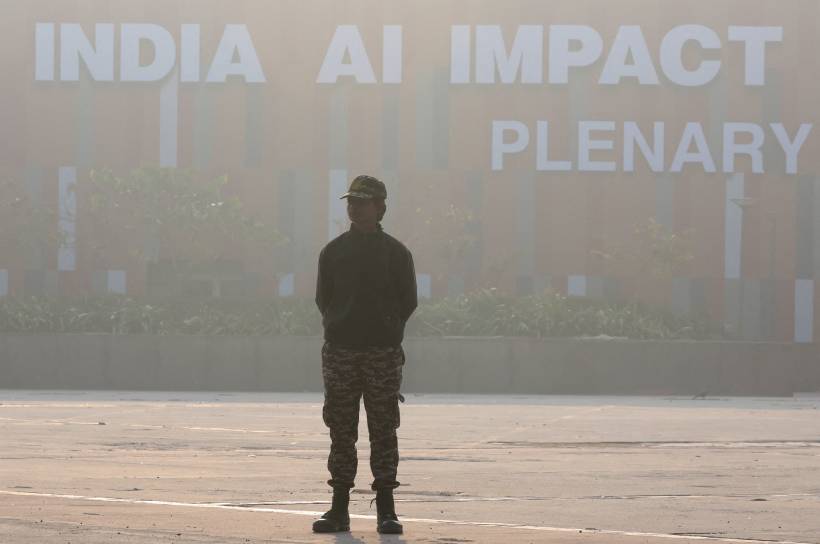
Bill Gates abruptly withdrew from India’s AI Impact Summit just hours before his scheduled keynote, delivering a major setback to an event New Delhi had positioned as the Global South’s premier forum on artificial intelligence governance. The Bill & Melinda Gates Foundation said the decision was intended to keep the spotlight on the summit’s priorities, despite having denied earlier speculation that he would cancel.
His withdrawal followed the release of U.S. Justice Department emails referencing past communication between foundation staff and late financier Jeffrey Epstein. Gates has previously acknowledged meeting Epstein, calling it a mistake and stating their interactions were limited to philanthropy-related discussions.
The summit suffered another blow when Jensen Huang also cancelled, compounding organisational troubles at an event meant to showcase India’s leadership in shaping global AI norms.
Global Power Stage for AI Governance
Stay ahead of the geopolitical week.
MD Briefing delivers expert analysis across five global fronts — the Indo-Pacific, energy, geoeconomics, European security, and the Middle East — every Monday morning. Free.
Prime Minister Narendra Modi used the platform to call for stronger protections for children in digital spaces, emphasizing the need for AI systems that are “child- and family-guided.” He appeared alongside French President Emmanuel Macron and leading tech figures including Sundar Pichai, Sam Altman, and Dario Amodei, highlighting the summit’s ambition to shape global AI governance debates.
A symbolic onstage photo moment exposed subtle industry rivalries when Altman and Amodei, heads of competing AI firms, stood side by side but did not join hands while others did.
Organisation Failures and Public Backlash
What was intended as a flagship international gathering quickly became overshadowed by operational missteps. Exhibition halls were unexpectedly closed to the public, leaving participating firms frustrated after investing in displays and pavilions. Roads were sealed for VIP convoys, triggering severe traffic disruptions in Delhi and forcing attendees to walk long distances due to a lack of transport arrangements.
Public criticism intensified after an incident involving Galgotias University, which was asked to vacate its stall when a staff member presented a Chinese-made robotic dog as an original innovation, sparking embarrassment and online backlash.
Opposition leader Mahua Moitra said the mismanagement had damaged India’s global reputation.
Investment Pledges vs. Infrastructure Strain
Despite the turmoil, the summit has attracted more than $100 billion in AI-related investment pledges, including commitments from Adani Group, Microsoft, and data centre firm Yotta Infrastructure. The government expects commitments to exceed $200 billion within two years.
Analysts warn that rapid expansion of AI infrastructure could strain India’s electricity grid and water resources, underscoring the environmental and logistical costs of scaling data centers and compute capacity.
Analysis: Reputation Risks Amid Strategic Ambition
Gates’ last-minute withdrawal amplified an already troubled opening, drawing global attention away from policy discussions toward organisational shortcomings. For India, which aims to position itself as a leading voice for emerging economies in AI governance, reputational credibility is crucial. Operational failures and diplomatic embarrassments risk undermining that ambition at a moment of intense geopolitical competition over technological leadership.
At the same time, the presence of world leaders and top AI executives coupled with massive investment pledges signals that India remains central to the future of AI development and regulation. The summit’s turbulence reveals a deeper tension: the country’s strategic importance in the AI economy is rising faster than its institutional capacity to host and manage global technology diplomacy.
Whether the long-term narrative becomes one of leadership or mismanagement will depend on India’s ability to translate investment momentum and policy ambition into credible governance, infrastructure readiness, and international trust.
With information from Reuters.
