


Thailand has taken a decisive step toward rewriting the foundations of its political system after voters overwhelmingly backed a referendum calling for a new constitution to replace the military-backed 2017 charter.
The vote marks the latest chapter in a decades-long struggle between Thailand’s conservative, military-aligned royalist establishment and popular democratic movements seeking to curb unelected power and expand civil liberties.
Election authorities said around 60% of voters supported drafting a new constitution, with 32% voting against, based on results from 94% of polling stations.
What did voters decide?
The referendum asked voters a single question: whether Thailand should have a new constitution. A clear “yes” gives parliament a public mandate to begin the process of replacing the 2017 charter, which was drafted by a military-appointed committee following the 2014 coup.
Stay ahead of the geopolitical week.
MD Briefing delivers expert analysis across five global fronts — the Indo-Pacific, energy, geoeconomics, European security, and the Middle East — every Monday morning. Free.
Unlike previous constitutional referendums in 2007 and 2016 both held to approve charters written after coups this vote was about whether a new charter should be written at all, marking a procedural break from the past.
Why does this matter?
Thailand has had 20 constitutions since the end of absolute monarchy in 1932, most following military takeovers. Thirteen successful coups in the past 94 years have entrenched the armed forces as a decisive political actor.
Critics argue the 2017 constitution institutionalised military influence by shifting power away from elected bodies and toward unelected institutions. At the centre of that system is the Senate, whose 200 members are selected through an opaque, indirect process that limits public participation and allows elite networks to dominate its composition.
The Senate wields significant authority, including oversight of legislation and the power to appoint judges to the Constitutional Court and other bodies that can dissolve political parties or ban politicians. These mechanisms, critics say, have repeatedly been used to neutralise elected leaders and constrain popular mandates.
The charter also restricts civil liberties by subordinating rights to vague concepts such as state security and public morality, reinforcing what opponents describe as a managed form of democracy.
Who backs change and who resists it?
Support for rewriting the constitution cuts across most of Thailand’s political mainstream. The ruling Bhumjaithai Party, the opposition People’s Party and Pheu Thai all campaigned for a “yes” vote, reflecting broad consensus that the current charter has outlived its legitimacy.
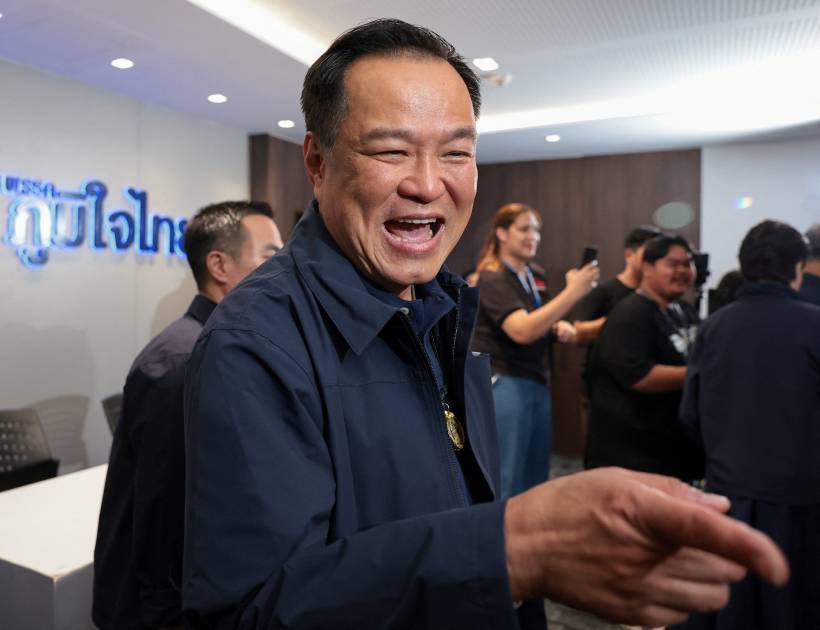
Prime Minister Anutin Charnvirakul said the government would move quickly to amend the constitution in line with the public mandate, while stressing that protections for the monarchy would remain untouched a red line for conservative forces.
Resistance comes primarily from ultra-conservative and pro-military factions, including the United Thai Nation Party, once led by former junta chief Prayuth Chan-ocha. Once dominant, the party has since lost influence, securing just 36 seats in the last election.
What happens next?
The referendum does not immediately scrap the constitution. Instead, it unlocks a multi-stage process requiring parliamentary action and at least two additional nationwide votes.
Lawmakers must first agree on the framework for drafting a new charter, including who will write it and under what principles. A second referendum would then seek public approval of that process. Only after that would a final draft be put to voters in a third referendum.
Political analysts say the process is likely to take at least two years, leaving the current constitutional order intact in the meantime.
Analysis: a mandate with limits
The referendum result delivers a symbolic blow to military-era rule, but it does not guarantee meaningful reform. The same institutions critics blame for blocking democracy particularly the Senate and the courts still operate under the existing charter and retain the power to slow, reshape or derail the process.
Much will depend on whether elected politicians can maintain unity, manage conservative resistance and translate popular support into structural change. Thailand’s history shows that constitutional moments often trigger backlash from entrenched elites, raising the risk of judicial intervention or renewed political instability.
For now, the vote signals clear public fatigue with military-designed governance but whether that mandate survives the system it seeks to dismantle remains an open question.
With information from Reuters.
