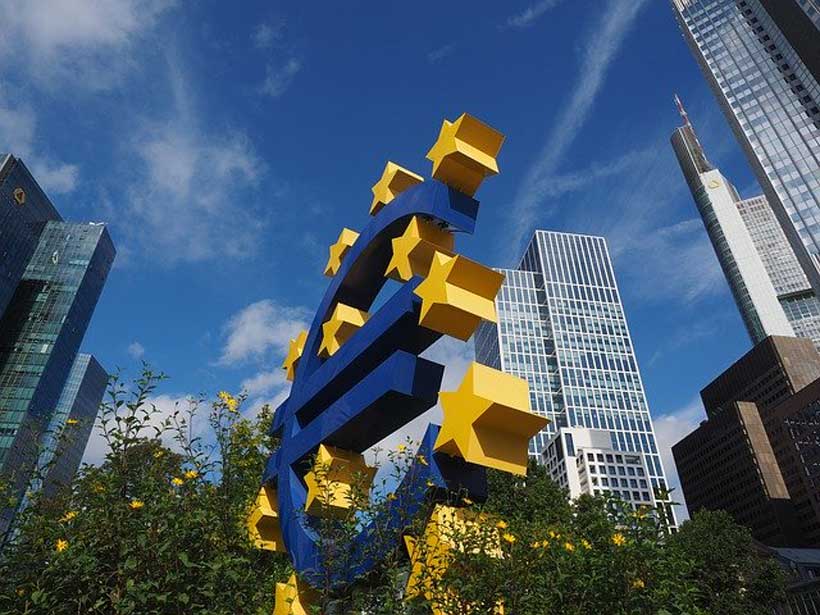
Euro zone finance ministers will meet on February 16 to discuss increasing the global role of the euro and enhancing Europe’s economic security. A document prepared by the European Commission highlights the need for the EU to strengthen its financial position in light of global trade tensions and uncertainties about the U. S. dollar. The paper states that the EU must act to ensure its economic security and effectively promote its interests.
Currently, the euro is the second-largest reserve currency, making up about 20% of global reserves compared to the U. S. dollar’s 60%. The Commission suggests that a stronger euro would contribute to global financial stability, improve EU trade relations, support the EU’s values, enhance its sanctions policies, and protect the EU economy from external pressures. It also proposes the issuance of euro-denominated digital assets such as stablecoins and central bank digital currencies (CBDCs) to address the risks of foreign currency-backed stablecoins. Currently, euro-denominated instruments hold less than 1% of the stablecoin market.
Additionally, the EU should expand the euro-denominated debt market by issuing joint EU debt for common projects and encouraging external companies to issue euro-denominated debt. However, there is reluctance from countries like Germany regarding joint debt issuance, despite a demand for these triple-A rated assets. About 1 trillion euros of joint EU debt is currently outstanding, significantly less liquid compared to the $27 trillion U. S. debt market.
To further enhance the euro’s global status, the European Central Bank (ECB) is encouraged to establish more liquidity arrangements with other countries. The ECB is also preparing a list of reforms to boost growth and competitiveness in Europe.
The document suggests that EU development aid and loans should be in euros and encourages European businesses to conduct trade invoicing in euros. To become independent from payment systems dominated by Visa and Mastercard, Europe needs its own payment system. Additionally, governments should eliminate trade obstacles and harmonize regulations within the EU to boost investment. Finally, the finance ministers should consider transforming the European Stability Mechanism into a true EU institution responsible for all EU debt issuance.
With information from Reuters