


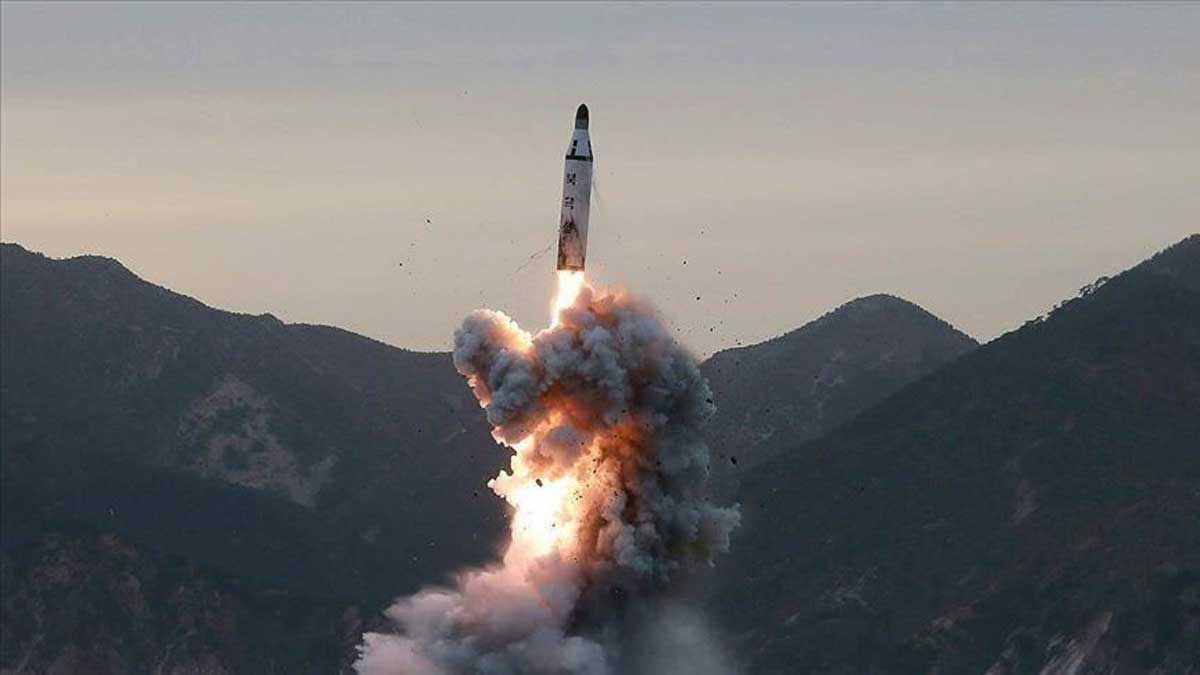
North Korea fired multiple ballistic missiles into the sea on Tuesday, likely short-range projectiles, according to South Korean and Japanese authorities. The launches occurred near Pyongyang at around 3:50 p.m. local time, with the projectiles travelling approximately 350 kilometres (217 miles) toward the East Sea. Japan’s coast guard detected similar launches, though Prime Minister Sanae Takaichi said they posed no direct threat to Japanese territory.
Strategic Context
The missile tests coincided with a visit by a senior U.S. Defense Department official to South Korea, where discussions are ongoing about reshaping the U.S.-South Korea alliance. Washington is exploring a more limited role in combined defence operations against North Korea, prompting Seoul to consider adjustments to its own military posture. The launches can therefore be seen as both a demonstration of North Korea’s tactical capabilities and a signal amid evolving regional defence dynamics.
North Korea’s Missile Developments
In recent months, Pyongyang has focused on testing short-range missiles and multiple-launch rocket systems, describing them as integral to its tactical nuclear arsenal. These weapons are intended to deter threats from the United States and South Korea. Analysts have also noted increased international attention after North Korea supplied such missile systems to Russia in 2024 under a mutual defence pact, highlighting the potential export of its tactical weapons to conflict zones.
Implications for Regional Security
The timing of the missile launch underscores the complex interplay between North Korea’s weapons development and alliance management in Northeast Asia. As the U.S. considers scaling back its direct involvement in South Korea’s defence, Pyongyang may perceive opportunities to assert its strategic leverage. The launches serve both as a tactical demonstration and a political signal, reinforcing North Korea’s intent to maintain deterrence against perceived U.S.-led threats while testing responses from Seoul, Washington, and regional partners.
Stay ahead of the geopolitical week.
MD Briefing delivers expert analysis across five global fronts — the Indo-Pacific, energy, geoeconomics, European security, and the Middle East — every Monday morning. Free.
Analysis
North Korea’s missile activity highlights the evolving security environment in the Korean Peninsula. By demonstrating capabilities that could threaten U.S. and allied forces, Pyongyang seeks to influence the strategic calculus of its neighbours, especially as Washington and Seoul consider a more autonomous South Korean defence posture. The tests also illustrate the dual-use nature of North Korea’s missile program serving both as a deterrent and as a tool of geopolitical signalling. For policymakers, these developments emphasize the need for calibrated responses that balance deterrence with diplomacy, while managing the implications for regional stability and alliance cohesion.
With information from Reuters.
