


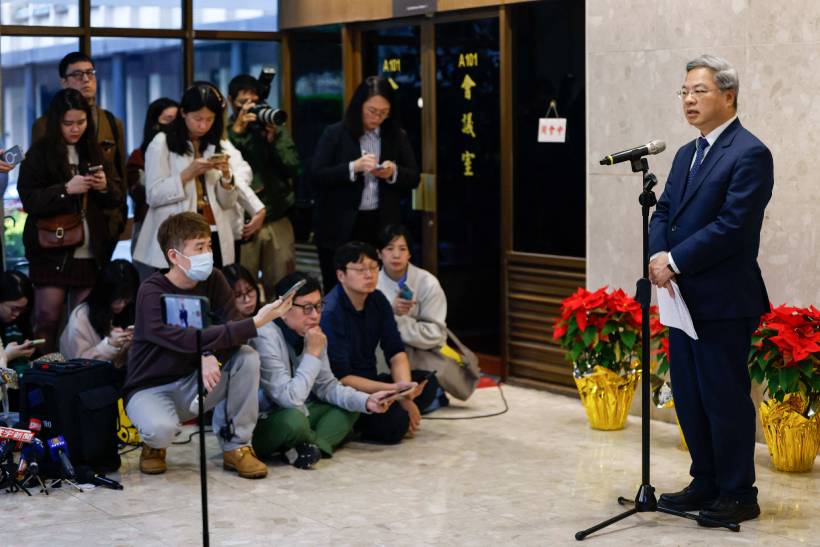
Taiwan aims to position itself as a strategic artificial intelligence partner of the United States following a trade agreement that cuts tariffs and commits billions of dollars in new Taiwanese investment in the U.S. Vice Premier Cheng Li-chiun said the deal reflects a shared vision of deepening high-tech cooperation, particularly in semiconductors and AI. The agreement comes amid strong pressure from the Trump administration for Taiwan’s chipmakers to expand production on U.S. soil.
Details of the Trade Deal
The agreement, finalized after negotiations led by Cheng in Washington, reduces tariffs on a wide range of Taiwanese exports while directing substantial investment toward U.S. technology sectors. U.S. Commerce Secretary Howard Lutnick said Taiwanese firms would invest up to $250 billion in semiconductors, energy, and AI production in the United States. Taiwan will also guarantee an additional $250 billion in credit to support further investment, underscoring the scale of economic integration envisioned under the deal.
AI and Semiconductor Cooperation
Artificial intelligence lies at the center of the agreement, with U.S. officials emphasizing the importance of securing domestic access to advanced chips. Taiwan, home to the world’s most sophisticated semiconductor manufacturing ecosystem, views the partnership as an opportunity to expand rather than relocate its technology base. Cheng stressed that the strategy is about “building” supply chains in the United States while extending Taiwan’s technological footprint globally, rather than hollowing out domestic production.
TSMC’s Role
Taiwan Semiconductor Manufacturing Company (TSMC), the world’s leading producer of advanced AI chips, welcomed the prospect of stronger trade ties between Taipei and Washington. The company reiterated that its investment decisions are driven by market demand and customer needs, noting that demand for advanced technology remains robust. While TSMC has already committed $100 billion in U.S. investment for 2025, it emphasized that it will continue to invest heavily in Taiwan alongside overseas expansion.
Stay ahead of the geopolitical week.
MD Briefing delivers expert analysis across five global fronts — the Indo-Pacific, energy, geoeconomics, European security, and the Middle East — every Monday morning. Free.
Supply Chain Restructuring
The Trump administration has framed the deal as part of a broader effort to reshore advanced manufacturing and reduce reliance on foreign supply chains. Lutnick said the objective was to bring up to 40% of Taiwan’s chip supply chain to the United States, warning that failure to do so could result in tariffs as high as 100%. Taiwan officials, however, estimate that by 2036 the production split for advanced chips will remain closer to 80% in Taiwan and 20% in the United States, reflecting a more gradual and limited diversification.
Domestic and Regional Sensitivities
The agreement must still be ratified by Taiwan’s parliament, where opposition parties have raised concerns about the potential erosion of Taiwan’s strategic semiconductor advantage. The deal also risks aggravating China, which considers Taiwan part of its territory and strongly opposes high-level U.S.–Taiwan cooperation. Taipei rejects Beijing’s sovereignty claims, but remains cautious about balancing economic opportunity with geopolitical risk.
Strategic Significance
U.S. officials have described the semiconductor investment as the largest in American history, arguing that it will create high-paying jobs, strengthen national security, and anchor AI development within the United States. For Taiwan, the deal reinforces its role as an indispensable partner in global high-tech supply chains and strengthens ties with its most important international supporter despite the absence of formal diplomatic relations.
Analysis
This agreement highlights how semiconductors and AI have become core instruments of geoeconomic power. From a realist perspective, the United States is using tariffs and market access to secure strategic technologies critical to economic and military dominance. For Taiwan, the deal is both an opportunity and a risk: deeper integration with the U.S. enhances security and political backing, but excessive production shifts could weaken its “silicon shield,” long seen as a deterrent against Chinese coercion. Ultimately, the partnership reflects a broader shift from globalization toward strategic supply-chain alignment, where technology, security, and trade are increasingly inseparable.
With information from Reuters.
