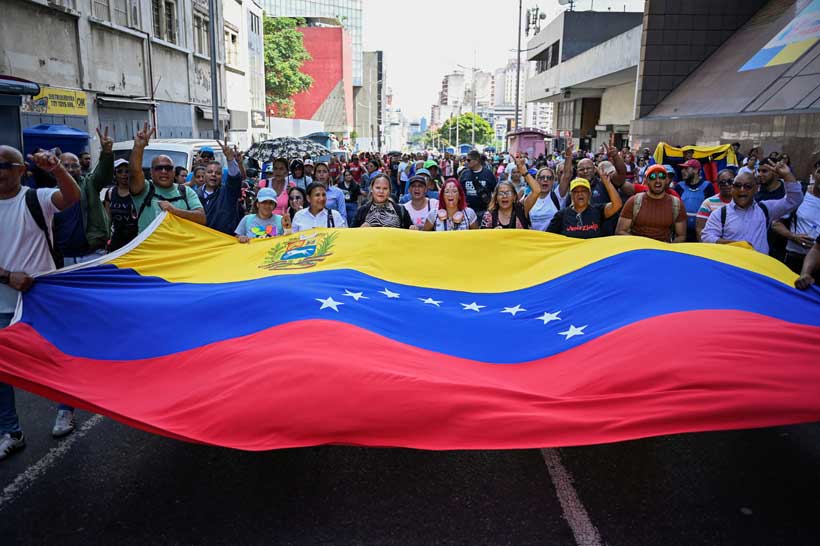
A small yet influential group of political and military leaders has been in control of Venezuela, supported by loyalists and security forces. This power structure has persisted despite the U. S. actions against President Nicolas Maduro, who was detained in New York on drug charges while a new interim leader was appointed.
Delcy Rodriguez, Maduro’s former vice president, is now the interim president, managing the country under U. S. supervision. She has significant experience and is trusted by U. S. oil companies to help revitalize Venezuela’s energy sector, even though she is sanctioned for her past role in Maduro’s government.
Her brother, Jorge Rodriguez, leads the National Assembly and has been instrumental in negotiating with the U. S. and opposition members. He is seen as a reasonable negotiator who might lead changes to the country’s oil laws to attract more foreign companies.
Diosdado Cabello serves as the interior minister and is feared for his extensive influence over military intelligence and armed groups supporting the government. He is seen as the enforcer of government oppression and faces criminal charges in the U. S., which could lead to his arrest if he does not cooperate with Delcy Rodriguez.
Vladimir Padrino is the defense minister, commanding the armed forces and seen as essential during Venezuela’s transition. He appears more adaptable than Cabello and has shown support for Rodriguez while seeking a way to exit safely, despite facing his own legal troubles.
Maria Corina Machado stands out as a leading opposition figure and a Nobel laureate. She has aimed to challenge the ruling party and speak against abuses under Maduro’s regime. Despite winning an opposition primary, Machado was barred from running in the upcoming presidential election, and U. S. President Trump has questioned her capability to govern.
In the U. S., Marco Rubio, the acting national security advisor, is a key figure in influencing Venezuela’s political landscape. His focus is on unseating Maduro and ensuring that Venezuela aligns with U. S. interests. He maintains direct communication with Delcy Rodriguez.
John Ratcliffe, the CIA director, plays a crucial role in intelligence operations regarding Venezuela. He has been involved in strategic decisions related to Maduro’s removal.
Stephen Miller, the White House deputy chief of staff for policy, has significant influence over immigration policies that affect Latin America, including Venezuela. He promotes a strong approach to foreign government changes.
Pete Hegseth, the defense secretary, oversees military operations and was significantly involved in the action that removed Maduro from power. He suggests that further military action is possible if the current Venezuelan government remains uncooperative.
Chris Wright, the energy secretary, is tasked with reviving Venezuela’s oil sector while ensuring it does not become overly aligned with China. He anticipates expansion of U. S. oil companies in Venezuela, despite the ongoing oil trade with China.
With information from Reuters