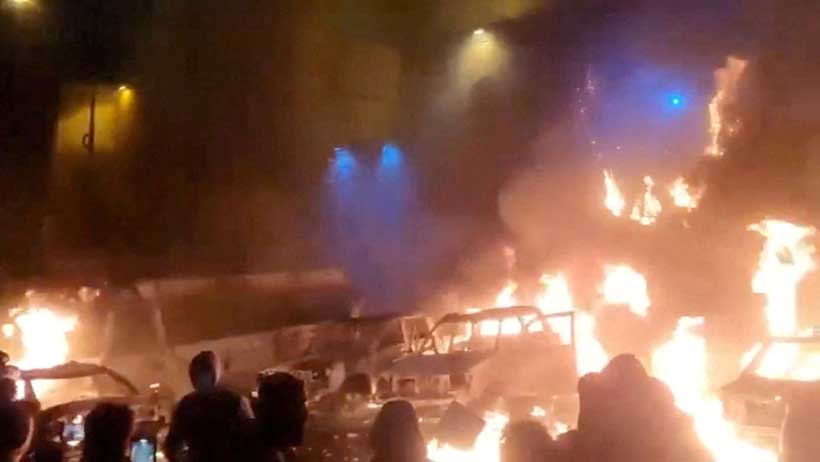
Iran’s Revolutionary Guards declared that maintaining security is a “red line” as they aim to control increasing protests that have emerged across the country. The unrest, which began due to rising inflation, quickly became political, with protesters demanding the end of clerical rule. U. S. President Donald Trump and Secretary of State Marco Rubio expressed support for the Iranian protesters, amid warnings to Iran’s leadership.
Protests erupted in various cities, and state media reported incidents of violence, including a municipal building set on fire in Karaj. An internet blackout was imposed by the authorities as tensions escalated. Witnesses reported that the Revolutionary Guards used live fire against protesters. They accused “terrorist groups” of targeting military bases, resulting in casualties among both civilians and security forces.
The military, under the command of Supreme Leader Ayatollah Ali Khamenei, voiced its commitment to protecting national interests and public property. Reza Pahlavi, the son of Iran’s last shah, emerged as a key voice for the opposition, calling for a nationwide strike among workers in vital sectors.
Trump had previously indicated he would not meet Pahlavi, choosing to wait and observe the situation before deciding on supporting an opposition leader. He warned Iran against violent reprisals, emphasizing the dangers for protesters. Public sentiment has combined calls for Pahlavi with demands to end clerical rule and address economic issues worsened by international sanctions.
Reports from hospitals revealed a surge of injured protesters needing treatment for severe injuries, including gunshot wounds. Iranian leaders accused protestors of collaborating with foreign interests, particularly Trump, as some protesters were labeled “mercenaries. ” The Revolutionary Guards reported casualties among their personnel due to clashes with armed protesters.
Leaders from France, Britain, and Germany condemned the violence against protesters and urged restraint from Iranian authorities. While officials recognized some protests as legitimate expressions of economic frustration, they differentiated between peaceful demonstrators and violent rioters.
This round of protests represents a significant challenge to Iran’s clerical leadership, which has faced calls for change during previous waves of unrest. Reports indicated that at least 65 people had died amid the violence, and over 2,500 individuals had been arrested in the preceding two weeks.
With information from Reuters