


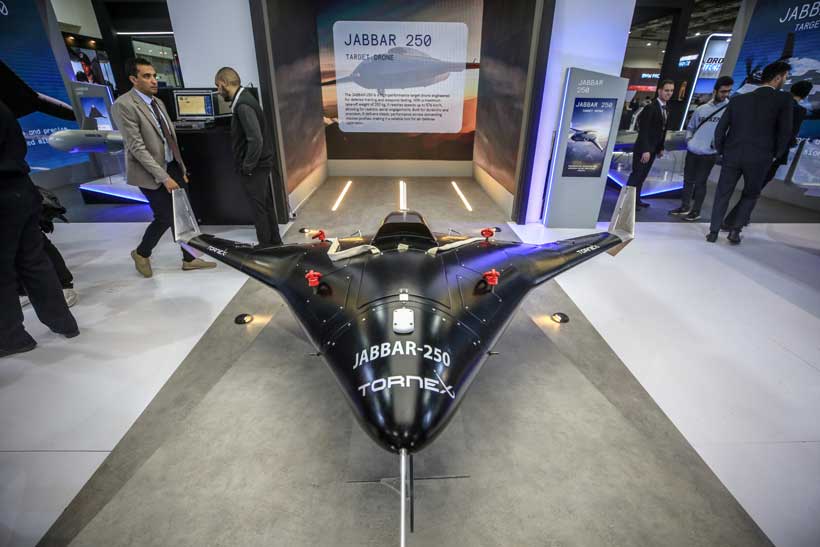
Quadcopters, electromagnetic rifles, and an AI navigation system were showcased at one of the largest arms exhibitions in Africa and the Middle East. The event highlighted the growing importance of drones in warfare, especially seen in conflicts from Ukraine to Libya, creating business opportunities for both large companies and startups as nations increase defense spending.
The Egypt Defense Expo (EDEX) featured over 450 exhibitors and attracted military representatives from various countries, including Kenya and Saudi Arabia. Egypt aims to establish a military-industrial complex to enhance its defense manufacturing capabilities, backed by substantial U. S. aid. Among the notable contracts, Egypt’s Arab Organization for Industrialization signed an agreement with China’s Norinco to produce drones, and a deal with France’s Dassault Aviation for spare parts for Rafale jets was also reported. Egyptian firm Amstone International sought broader markets for its “kamikaze” drones after securing contracts with various customers.
Many of the showcased products were influenced by advancements in drone technology during the Ukraine war, which acted as a testing ground for new solutions. Companies like Red Cat Holdings expressed interest in expanding their client base in the Middle East while providing drones to assist in different contexts, including anti-poaching in Kenya. Latvian company Eraser aimed to explore new markets in Egypt with their drone offerings.
The demand for drone countermeasures was prominent at the expo, with products like the “Sky Dome” system from China Electronics Technology Group aimed at defending against drone attacks. Various methods to neutralize drones, ranging from electromagnetic pulse rifles to drone capture systems, were presented. The need for such technologies is anticipated to grow as drones may be increasingly weaponized.
Moreover, companies showcased advanced navigation solutions that allow drones to operate despite GPS interference, a capability that has garnered attention from both African and Arab nations. The engineers behind this technology have optimistic expectations for future production and international sales.
With information from Reuters
