


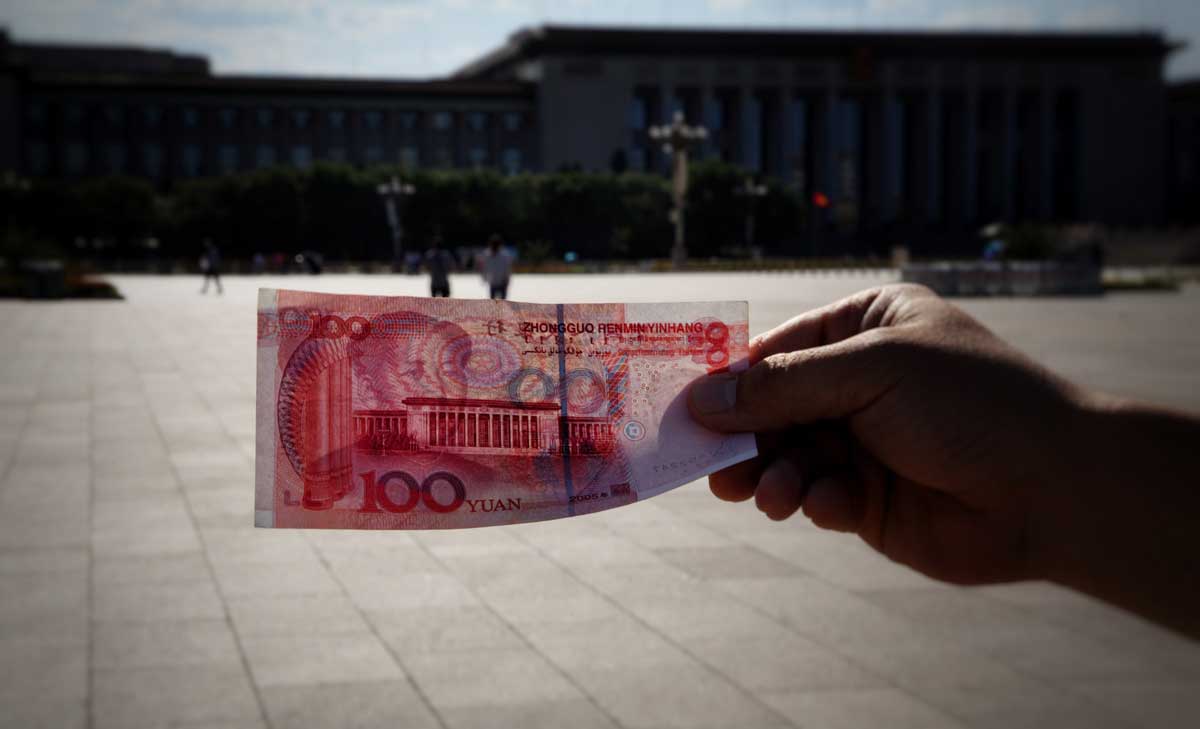
Ever since the 2008 global financial crisis, a popular narrative has assumed that China’s rise will inevitably push the Chinese yuan (Renminbi, RMB) to replace the U.S. dollar as the world’s dominant reserve currency. The logic seems straightforward: China is now the world’s second-largest economy and its biggest trading nation, so surely its currency will take pride of place in the international system. However, this assumption mistakes capability for intent. Yes, Beijing has the economic weight to challenge the dollar, but it lacks the political will to shoulder the burdens that come with being a global monetary hegemon. In practice, China has chosen not to dethrone the dollar, viewing the role of top currency issuer as more of an “exorbitant trap” than an exorbitant privilege.
Ideology: Viewing Hegemony as Exploitation
At the heart of China’s reluctance are deep ideological convictions. The Chinese Communist Party (CCP) leadership views the current U.S.-led international financial system not as a neutral platform, but as a product of Western imperialism. In Chinese discourse – heavily influenced by Marxist economic thought – global currency hegemony is seen as a form of “financial parasitism” that allows the dominant power to live beyond its means at the expense of others. From this perspective, the dollar’s status lets Washington print money to buy real goods and assets from other countries, effectively extracting wealth from the rest of the world.
For Beijing to seek the same kind of monetary dominance would clash with its self-image and ideology. China portrays itself as a leader of the developing world, championing “sovereign equality” and a fairer global order. Emulating the dollar’s hegemonic role could be seen as trying to become a new imperial financier siphoning wealth from poorer nations – a contradiction of the CCP’s stated principles. The traditional perks of issuing the world’s reserve currency – seigniorage (profit from money creation), global influence, and prestige – hold little appeal if they come wrapped in a model viewed as exploitative. Chinese leaders openly critique profits gained from financial speculation rather than real economic production. Their oft-stated goal is achieving “common prosperity” through developing manufacturing and technology, not transforming China into a global rentier living off financial power. In short, the CCP is ideologically averse to recreating what it perceives as the dollar-centric imperial model.
Monetary Autonomy and Capital Controls
Stay ahead of the geopolitical week.
MD Briefing delivers expert analysis across five global fronts — the Indo-Pacific, energy, geoeconomics, European security, and the Middle East — every Monday morning. Free.
Ideology aside, China’s economic priorities also discourage any rush toward reserve currency status. Nowhere is China’s preference for autonomy clearer than in its strict control of the RMB. In global finance, there is a well-known policy trilemma: a country cannot simultaneously have a fixed (or tightly managed) exchange rate, an open capital account, and an independent monetary policy – it must choose which to forgo. The United States, as issuer of the dollar, opts to let its currency float freely and keeps capital markets open, so it can retain control over domestic interest rates. China has consistently made a different choice: it maintains a managed exchange rate and an independent monetary policy at the cost of a closed capital account. In essence, Beijing restricts the free flow of money across its borders to shield its economy from external shocks and to retain the levers of monetary policy.
This approach was underscored in 2024–2025 when the U.S. Federal Reserve raised interest rates to curb inflation while China’s economy needed stimulus. The People’s Bank of China cut interest rates to spur growth, something only feasible because capital controls prevented investors from pulling money out of China en masse in search of higher returns in the U.S. If China had fully opened its financial account, such policy divergence would have triggered capital flight and put the RMB under severe depreciation pressure. By tightly managing capital flows, China safeguards its monetary independence and exchange rate stability – priorities it deems essential for domestic economic health and political stability. These priorities directly impede the RMB’s ability to become a widely-used global reserve, since foreign investors and central banks find it difficult to access the currency in large volumes or trust that they can move funds freely. Indeed, despite rhetoric about “financial opening,” Beijing in recent years has quietly reinforced capital curbs, scrutinizing outbound investments and limiting currency outflows deemed speculative. The result is that there simply isn’t enough RMB liquidity circulating globally for the currency to rival the dollar, and China is fine with that. A managedcurrency kept stable by government intervention is fundamentally at odds with the flexibility and confidence required of a top-tier reserve currency.
Shunning the Costs of Global Financial Leadership
Global financial hegemony isn’t just about prestige – it comes with hefty responsibilities. Chief among these is acting as a lender of last resort and providing liquidity to other countries in times of crisis. Historically, Britain and then the United States accepted such roles, whether by letting capital flow freely, absorbing other countries’ surpluses, or coordinating rescue packages to stabilize the system (for example, the U.S. Federal Reserve’s dollar swap lines with other central banks during emergencies). China, by contrast, has shown little inclination to be the world’s financial firefighter.
Beijing has set up dozens of bilateral currency swap lines with other countries, which on the surface resemble the Fed’s global swaps. But the reality is instructive: these RMB swaps often go to distressed developing nations and function more as short-term loans to ensure those countries can keep servicing debts (frequently debts owed to China itself). The terms are typically capped and not especially generous, reflecting a desire to safeguard China’s own financial position rather than prop up the global system. When countries like Sri Lanka or Zambia have faced debt crises, China’s response has been cautious and self-interested – extending loan maturities or deferring payments rather than forgiving debts outright, and insisting that multilateral lenders also bear some losses. These protracted negotiations, driven by China’s reluctance to take a financial hit, have slowed down international debt relief efforts. In short, Beijing behaves more like a tough creditor guarding its assets than a hegemon willing to spend freely to stabilize distant markets. This stance reinforces that China’s priorities remain inward-looking: its financial outreach is calibrated to expand influence and secure its interests, not to underwrite the global economic order as the U.S. has done.
Conclusion: Autonomy Over Hegemony
The widespread notion that China will inevitably supplant the dollar presumes that China wants to become the next United States in monetary terms. Mounting evidence suggests the opposite. In both ideological framing and concrete policy, China is deliberately avoiding the classic path of a global financial leader. Beijing’s vision of great-power status does not include printing the world’s currency and bankrolling other nations’ stability at its own expense. Instead, China is charting a more limited, multipolar strategy: internationalizing the RMB just enough to reduce reliance on the dollar and insulate itself from U.S. financial pressure, while prioritizing control over its domestic economic destiny. The RMB may gradually play a bigger role within Asia and in trade with partners like Russia or oil exporters, but China shows no interest in making the yuan the world’s primary reserve currency if it means sacrificing monetary sovereignty or macroeconomic security.
Ultimately, China’s leaders seem to believe they can rise in global influence on their own terms – strengthening their economy and regional clout without taking on the costly mantle of global financial hegemon. They appear content for the U.S. dollar to continue bearing the weight of providing global liquidity and stable reserves, with all the trade-offs that entails. Paradoxically, the greatest threat to the dollar-led system may not be an eager Chinese challenger, but the U.S. itself – through internal political and fiscal mismanagement – because Beijing is not trying to “win” the reserve currency game at all. It is changing the rules so it never has to play that game.
