


U.S. President Donald Trump has abruptly shifted his position on the release of Justice Department files related to Jeffrey Epstein, the disgraced financier and convicted sex offender whose ties to public figures continue to fuel political controversy. After resisting efforts to publish the documents, Trump announced on Truth Social that House Republicans should now vote in favor of releasing them, insisting that “we have nothing to hide.”
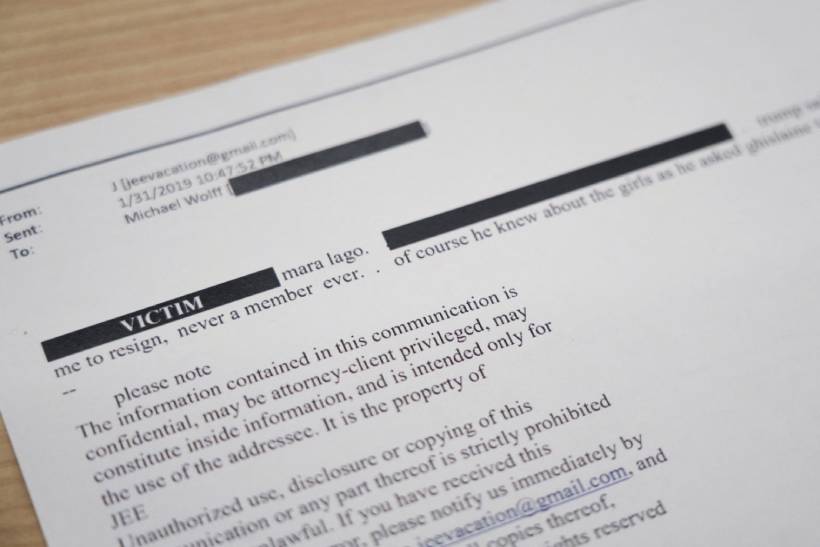
The shift came shortly after House Speaker Mike Johnson argued that making the documents public would help dispel long-standing allegations linking Trump to Epstein’s abuse and trafficking of minors. Although the two men were photographed together decades earlier, Trump has said they fell out long before Epstein’s later crimes came to light. New emails disclosed by a House committee last week added fuel to the debate after showing Epstein believed Trump “knew about the girls,” though the meaning of the phrase remains unclear and unverified.
The release of further Epstein records has become a highly charged issue in Washington, splitting Republicans and straining Trump’s relationships with staunch allies including his recent move to pull support from Rep. Marjorie Taylor Greene after her criticism of the party’s handling of the documents.
Why It Matters
The push to disclose the Epstein files strikes directly at a fault line of American politics: transparency, power, and the public’s mistrust of the political elite. Trump’s reversal signals that he now sees political advantage in full disclosure an attempt to silence speculation about his own past while shifting attention toward alleged links between Epstein and Democratic officials.
Stay ahead of the geopolitical week.
MD Briefing delivers expert analysis across five global fronts — the Indo-Pacific, energy, geoeconomics, European security, and the Middle East — every Monday morning. Free.
The stakes are significant. Supporters of disclosure believe the files could expose long-rumored connections between Epstein and influential figures across the political spectrum. Critics fear the release could fuel conspiracy theories or become a partisan weapon. The timing is especially consequential for Trump, who faces intense scrutiny as the country heads deeper into election season.
For Congress, the vote represents not only a test of transparency but also a sign of how far Republicans are willing to follow Trump’s shifting directives especially on an issue with explosive political and moral implications.
Trump’s endorsement of disclosure reshapes the political landscape. He frames the release as a way to put an end to what he calls a “Democrat hoax,” while simultaneously ordering the Justice Department to investigate prominent Democrats with links to Epstein. House Speaker Mike Johnson, aiming to protect the Republican caucus from allegations, supports moving forward with the vote.
Within the Republican Party, however, the shift has created visible cracks. Longtime Trump ally Marjorie Taylor Greene lost his backing after criticizing how Republicans handled the Epstein records debate, revealing emerging tensions between the party’s most hardline factions and Trump’s inner circle. Meanwhile, many of Trump’s supporters who believe the government has withheld explosive information about Epstein’s network see the vote as a long-awaited moment of truth.
Across the aisle, Democratic Rep. Ro Khanna, who has led the petition for disclosure from the start, says he expects more than 40 Republicans to join Democrats in voting for release. With Republicans holding a narrow majority in the House, the vote could become a rare bipartisan moment in a deeply polarized Congress.
What’s Next
The House is now expected to move toward a vote on releasing the Epstein files, a decision that could send shockwaves through Washington depending on what the documents contain. If the files are extensive and unredacted, they may reignite public scrutiny of political leaders, business executives, and global elites once connected to Epstein’s vast social network.
Trump’s reversal sets the stage for a high-stakes political showdown inside his own party. Some Republicans may resist out of concern that the files could reveal embarrassing associations, while others see the vote as a loyalty test. For Democrats, the push for transparency offers both political advantage and moral high ground.
As the debate intensifies, the broader public is watching closely. Epstein’s death in 2019 left behind a cloud of suspicion, unanswered questions, and a deep sense of distrust in institutions. The coming vote may bring clarity or it may open an entirely new chapter in the saga.
With information from Reuters.
