


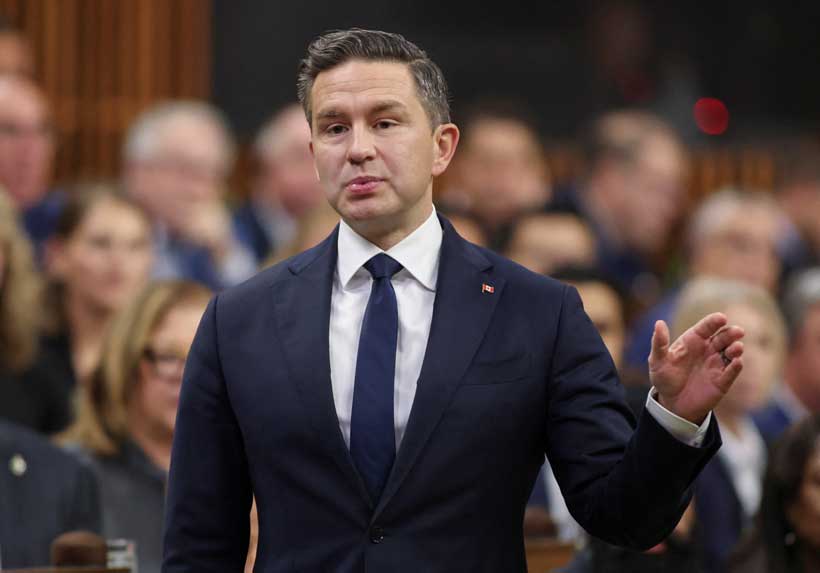
Pierre Poilievre, the Conservative leader and once a prime ministerial hopeful, is now facing significant challenges in defining his party’s future and providing a strong alternative to Prime Minister Mark Carney. Recently, his populist approach, influenced by Donald Trump’s aggressive style, has led to unrest within the Conservative Party. A Conservative legislator recently left for Carney’s Liberal Party, indicating that others may follow. Additionally, another Conservative politician exited the party to prioritize family time.
Poilievre’s struggles follow his electoral defeat to Carney, which unveiled difficulties for traditional conservative parties affected by Trump’s policies and rhetoric. Although some Canadian conservatives support Poilievre’s stances on issues like immigration, it has also caused departures of members favoring progressive social policies and unity against political opponents. Earlier this year, Poilievre’s party had a commanding lead, but threats from Trump united Canadians behind Carney, who now leads a minority government and inches closer to a majority.
After Carney’s recent budget release, which aims to reshape Canada’s economy, Conservative MP Chris d’Entremont announced his switch to the Liberals, highlighting dissatisfaction with Poilievre’s leadership. Earlier, Poilievre faced backlash for suggesting that former Prime Minister Justin Trudeau should face jail time over ethics violations, claiming the Royal Canadian Mounted Police were covering for Trudeau. These comments drew comparisons to Trump’s rhetoric against Hillary Clinton, which is not well received in Canada.
A spokesperson for the Conservative Party noted that Poilievre’s comments were aimed at a former RCMP Commissioner with a problematic history. D’Entremont expressed feeling unrepresented in Poilievre’s party and indicated others might feel similarly. The Conservative Party criticized his defection and demanded an explanation for breaking his promises to constituents. Poilievre is due for a leadership review in January and had hoped to rally support against Carney’s budget but is instead navigating defections.
Despite economic challenges due to Trump’s tariffs, some positive economic indicators have boosted Carney’s approval ratings, complicating Poilievre’s position. Observers noted that while Poilievre retains support among the grassroots Conservative base, he lacks clear rivals for leadership. There is optimism among some that he will survive the upcoming review.
Complications for Poilievre’s appeal are compounded by the popularity of Doug Ford, a fellow Conservative and Carney ally who also resonates with Trump’s style but is not as disruptive. Public opinion indicates that many conservative voters support progressive social policies, countering Poilievre’s more extreme positions. Polls indicate that about half of Canadian conservatives approve of Trump’s administration, while his leadership style, eschewing diversity and inclusion policies, may alienate some party members.
Former advisers note that additional defections could lead to Carney achieving a majority government. D’Entremont’s move signals possible discontent within the Conservative ranks, putting pressure on Poilievre to rethink his party’s direction.
With information from Reuters
