


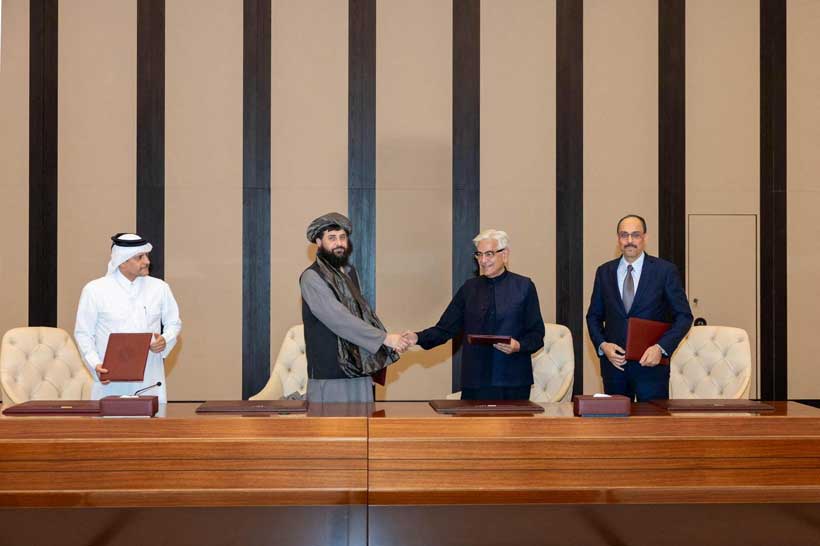
Afghanistan and Pakistan have agreed to restart their peace talks in Istanbul, diplomatic sources confirmed on Thursday. The announcement comes just a day after Islamabad declared the earlier round of negotiations a failure. The renewed dialogue is being held at the request of Turkey, which, along with Qatar, has been mediating between the two sides. Both Afghan and Pakistani negotiation teams are currently in Istanbul to resume discussions aimed at easing recent border tensions.
The talks follow weeks of deadly clashes along the Afghanistan-Pakistan border, where dozens were killed earlier this month in the worst outbreak of violence since the Taliban’s takeover of Kabul in 2021. Despite an earlier ceasefire brokered in Doha on October 19, the two countries had struggled to agree on lasting terms in subsequent meetings.
Key Issues
The dispute centers on border security and cross-border attacks, with Pakistan accusing militant groups operating from Afghan territory of launching assaults inside its borders. Kabul, in turn, has rejected those claims and condemned what it sees as Pakistan’s repeated violations of Afghan sovereignty.
The failure of earlier negotiations exposed deep mistrust between the two governments, which share not only a turbulent border but also complex political and security interests. The Istanbul meeting now offers a renewed opportunity for de-escalation though expectations remain modest.
Stay ahead of the geopolitical week.
MD Briefing delivers expert analysis across five global fronts — the Indo-Pacific, energy, geoeconomics, European security, and the Middle East — every Monday morning. Free.
Why It Matters
The outcome of these talks holds significant implications for regional stability and counterterrorism cooperation. Both countries are grappling with rising militant threats, including attacks linked to the Tehrik-i-Taliban Pakistan (TTP). Persistent tensions risk further destabilizing the border regions, affecting trade routes and humanitarian access.
For Turkey and Qatar, successful mediation would enhance their diplomatic profiles as regional peace brokers at a time when Western engagement with Afghanistan remains limited.
Afghan Taliban government, seeking international legitimacy and stable relations with its neighbors.
Pakistan’s military and foreign office, which prioritize curbing cross-border militancy and securing the western frontier.
Turkey and Qatar, the mediating states, whose credibility is tied to the success of the dialogue.
Local border communities, who face the immediate human and economic toll of the conflict.
What’s Next
While both sides have agreed to return to the table, the success of the Istanbul round will depend on whether they can agree on joint border monitoring mechanisms and security guarantees. Diplomatic observers say the talks are likely to continue discreetly, with possible follow-up meetings if initial progress is made.
So far, neither the Afghan Taliban nor Pakistan’s officials have issued formal statements, suggesting that negotiations are still in a fragile exploratory phase.
With information from Reuters.
