


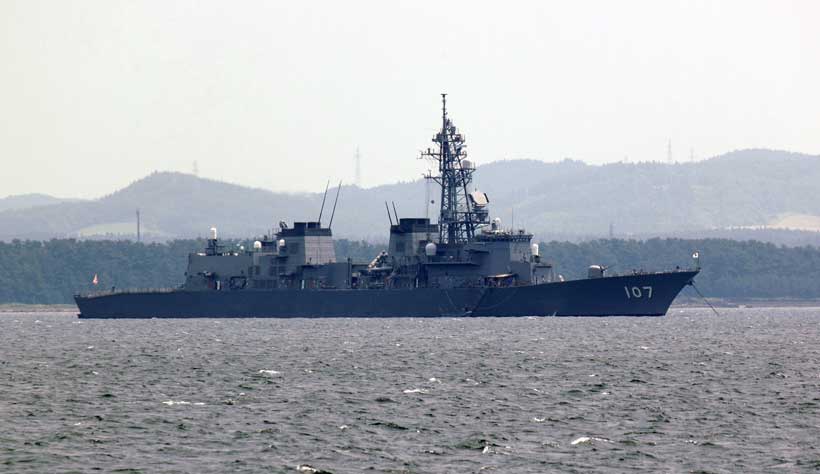
Sino-Japanese relations experienced a sharp escalation on April 17, 2026, following the transit of the Japanese destroyer JS Ikazuchi through the Taiwan Strait. Beijing considered this a deliberate provocation and a crossing of a red line, as the Japanese destroyer’s passage through the strait took approximately 14 hours. This event provoked strong reactions from the Chinese military and media establishment due to its timing and strategic implications. What particularly angered and mobilized China was the historical significance of the Ikazuchi’s transit of the Taiwan Strait. The timing of the Japanese destroyer’s passage particularly angered Beijing because it coincided with the anniversary of the signing of the Treaty of Shimonoseki in 1895, under which China ceded Taiwan to Japan. The Chinese military press considered this a violation of the feelings of the Chinese people. As for the regional context of the Japanese destroyer’s passage through the Taiwan Strait, this is the fourth such transit in recent years, but the first under the current Japanese administration. It comes amid what Beijing describes as a rise in neo-militarism in Japan. Regarding the Japanese position, this move was undertaken under the administration of Prime Minister Sanae Takaichi, who has previously stated that any conflict in Taiwan could pose an existential threat to Japan, thus justifying collective self-defense.
The expected Chinese reaction was a warning of the adverse consequences of this Japanese transgression. China cautioned that these Japanese actions would inevitably lead to counterproductive results and cause serious damage to the political foundation of relations between the two countries. The People’s Liberation Army (PLA) demonstrated its readiness for military mobilization, with the PLA’s Eastern Theater Command tracking and monitoring the Japanese vessel by air and sea throughout its transit. With Chinese authorities imposing numerous punitive measures against Japan, in response to this move, Beijing imposed restrictions on dual-use civilian-military goods exported to Japan and tightened restrictions on travel by Chinese tourists and students to Japan. China also lodged a formal diplomatic protest with Japanese authorities, with the Chinese Foreign Ministry issuing strongly worded citations, describing the passage as a show of force and an attempt to militarily interfere in Taiwan’s affairs.
As for the reaction of the Eastern Theater Command and the Chinese military to the Japanese destroyer’s passage through the Taiwan Strait, the Eastern Theater Command’s response was characterized by swiftness and seriousness in dealing with what it considered a deliberate provocation by Japan. The Eastern Theater Command announced that it had deployed naval and air forces to pursue, monitor, and control the Japanese vessel throughout its passage, which lasted approximately 14 hours. Chinese military spokesman Xu Chenghua used the term “effective control” to indicate their ability to deter any movement by the Japanese ship. Chinese forces released surveillance footage of the Japanese destroyer Ikazuchi. In an escalatory move, Chinese military media broadcast drone footage showing the Japanese vessel under close surveillance by the Chinese military, asserting their sovereignty over the area. Delivering a military warning to Japan, Chinese Defense Ministry spokesman Zhang Xiaogang stated that this Japanese move sends the wrong signal to separatist forces in Taiwan and crosses the red lines of bilateral relations.
Regarding the stance and coverage of the Chinese military press on this event and its repercussions, the Chinese military press, spearheaded by the People’s Liberation Army Daily (PLA Daily), launched an intensive media campaign. This campaign focused on delivering several warning messages to Japan, including a warning against hurting the feelings of the Chinese people. The PLA Daily accused Tokyo of deliberately choosing the date of the crossing to hurt the feelings of the Chinese people. Editorials in Chinese popular and military newspapers described the Japanese move as a new militarism and a new pattern of militarism and a Japanese attempt at direct military intervention in Taiwan’s affairs. Accusing Japan of overstepping its commitments, the Chinese military press asserted that Japan was reneging on its post-World War II international obligations and challenging the political foundations of relations between the two countries.
Stay ahead of the geopolitical week.
MD Briefing delivers expert analysis across five global fronts — the Indo-Pacific, energy, geoeconomics, European security, and the Middle East — every Monday morning. Free.
According to Chinese intelligence, military, defense, and security circles, the timing of the Japanese destroyer Ikazuchi’s passage through the Taiwan Strait, coinciding with the anniversary of the 1895 Treaty of Shimonoseki, carries a painful historical symbolism, seeing it as a deliberate political message for China. This has led Beijing to reject the notion that the event was merely a coincidence, especially given its timing with the anniversary of China’s concession of Taiwan. On this date in 1895, the Treaty of Shimonoseki (known in China as the Treaty of Maguan) was signed, forcing the Qing dynasty to cede Taiwan and the Pescadores Islands to Japan after its defeat in the war between the two countries. Therefore, China views Japan’s choice of timing for the destroyer’s passage through the Taiwan Strait as a political message directed at China, as the passage of a Japanese warship on this day evokes a history of humiliation and colonialism.
Based on the preceding understanding and analysis, we can understand China’s military and political perspective on the timing of the Japanese destroyer Ikazuchi’s passage through the Taiwan Strait’s red line. China views this as a Japanese attempt to impose a normalization of its military presence in the Taiwan Strait, reminiscent of Japan’s previous colonial era in China. Furthermore, this Japanese provocation is linked to statements made by the current Japanese government. The timing of the destroyer’s passage through the Taiwan Strait reinforces Beijing’s concerns regarding statements by the Japanese leadership (particularly those of Prime Minister Sanae Takaichi) that directly link Taiwan’s security to Japan’s own.
