


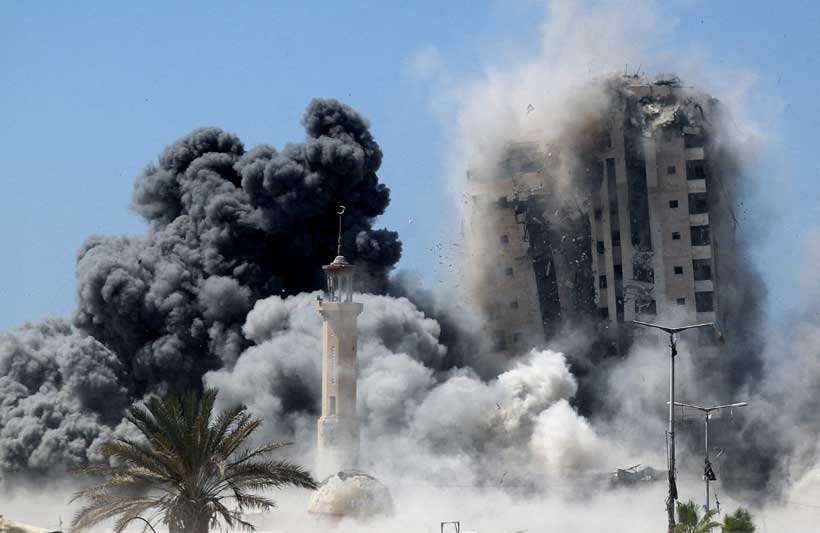
U.S. President Donald Trump announced on Monday that Israeli Prime Minister Benjamin Netanyahu had agreed to a Washington-sponsored peace proposal aimed at ending nearly two years of war in Gaza. The plan includes a ceasefire, hostage-prisoner swaps, staged Israeli withdrawals, and an international transitional administration for Gaza.
But while Netanyahu endorsed the framework, the absence of Hamas from the negotiating table raises serious doubts about its feasibility. The group still holds dozens of hostages and has not signaled willingness to disarm, a central condition of the U.S. plan.The war began after Hamas’ October 2023 assault on Israel that killed around 1,200 people and led to 251 hostages being taken. Israel’s retaliatory campaign has killed more than 66,000 Palestinians, according to Gaza health authorities, and left much of the enclave in ruins. Pressure has mounted on both sides: Israeli families demand the release of hostages, while global outrage grows over Gaza’s humanitarian crisis.
Why It Matters
Trump is under pressure to deliver a diplomatic breakthrough after repeatedly claiming peace was near without results. Netanyahu, meanwhile, is squeezed between international demands for de-escalation and domestic political risks if his government is seen as conceding too much. For Palestinians, the proposal leaves unanswered questions about sovereignty, reconstruction, and the future role of the Palestinian Authority.
What the Plan Proposes
The 20-point U.S. document lays out:
Stay ahead of the geopolitical week.
MD Briefing delivers expert analysis across five global fronts — the Indo-Pacific, energy, geoeconomics, European security, and the Middle East — every Monday morning. Free.
An immediate ceasefire.
Release of hostages in exchange for Palestinian prisoners.
A phased Israeli withdrawal from Gaza.
Hamas disarmament and exclusion from governance.
A technocratic Palestinian committee to run services under the oversight of an international “Board of Peace” chaired by Trump, with figures like Tony Blair included
A long-term vision that hints at Palestinian statehood, though without firm guarantees.
Why Netanyahu Supports It
Standing beside Trump at the White House, Netanyahu declared the plan aligned with Israel’s war aims: dismantling Hamas militarily and politically, securing hostages’ release, and ensuring Gaza could never again threaten Israel. However, he carefully distanced himself from elements involving Palestinian Authority reforms or future statehood, wary of backlash from far-right coalition partners at home.
Why Hamas is the Wildcard
Hamas has not formally received the plan, though Qatar and Egypt have shared the document with its leaders. Officials told mediators they would review it “in good faith,” but the group’s refusal to disarm and past rejection of similar frameworks cast doubt on whether they will engage seriously.
Future Scenario
If Hamas outright rejects the deal, Trump has warned Israel would have Washington’s full backing to escalate militarily. If Hamas engages, however, the plan could open a path albeit fragile toward easing Gaza’s devastation. Much now depends on mediators in Doha and Cairo, and whether the U.S. can balance its strong support for Israel with calls from Arab and Muslim-majority states for a genuine pathway to Palestinian self-determination.
With information from Reuters.
