The original intent of this exhibition was to strengthen Taiwan-Czech bilateral relations and jointly counter China, yet it inadvertently aided Beijing in teaching the Czech people a lesson on “Taiwan, China”, explaining why China claims Taiwan as part of its territory.
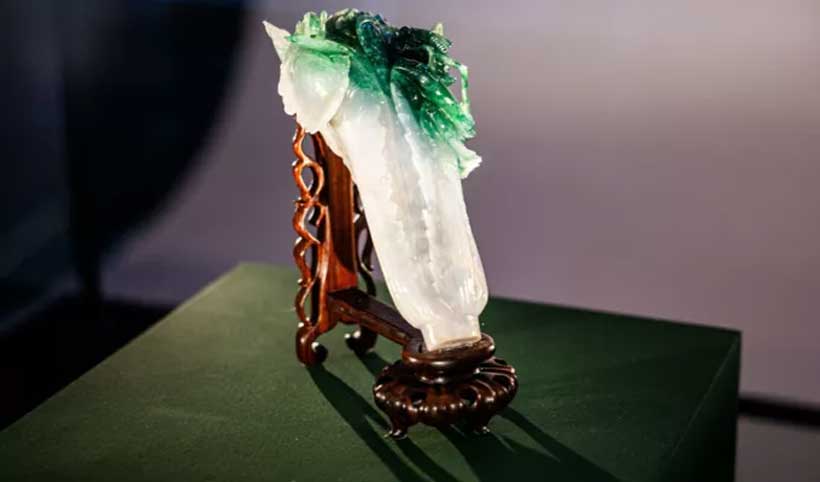
The treasured artifacts from Taipei’s National Palace Museum are currently on display at the Czech National Museum, with the exhibition scheduled to conclude by the end of September. This cultural exchange, themed “One Hundred Treasures, One Hundred Stories,” is built on the increasingly close political ties between Taiwan and the Czech Republic, rooted in their shared anti-China stance.
Interestingly, the exhibition highlights the Chinese cultural foundation of Taiwan, indirectly providing Beijing an opportunity to teach the Czech Republic a “Taiwan, China” lesson, helping Czech people understand why China insists that Taiwan is an inseparable part of its territory.
Admittedly, culture is distinct from politics. Japan and South Korea also share significant Chinese cultural elements, somewhat akin to the cultural relationship between the Czech Republic and Russia, yet the Czech Republic and Russia are clearly separate nations. However, a key component of sovereignty打了is international recognition. In reality, the Czech Republic does not have formal diplomatic relations with Taiwan (officially the Republic of China) and does not recognize Taiwan as a sovereign state at an official level.
Stay ahead of the geopolitical week.
MD Briefing delivers expert analysis across five global fronts — the Indo-Pacific, energy, geoeconomics, European security, and the Middle East — every Monday morning. Free.
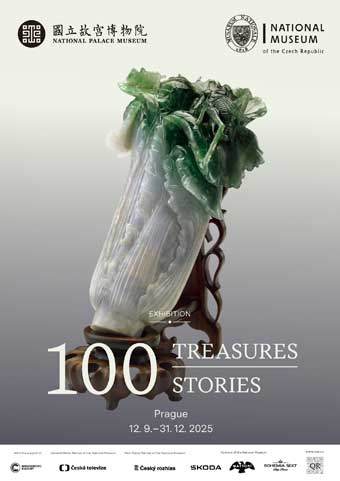
In other words, Taiwan’s presentation of a “Chinese gift” to the Czech Republic, representing its cultural identity and actual international status, runs counter to its political goal of denying that Taiwan is part of China.
This explains why Czech media were somewhat surprised to note that Beijing did not protest the exhibition, and the Chinese Embassy in the Czech Republic remained silent. From a certain perspective, Beijing is pleased to see Taiwan showcasing its inseparable ties with China to the international community. If the Czech Republic does not recognize Taiwan as a sovereign state politically, it can only tacitly acknowledge that Taiwan is historically part of China, which aligns with Beijing’s interests.
Beijing’s real concerns are limited to two points: whether Czech officials (as opposed to parliamentarians) engage with Taiwanese officials at public events, and whether Chinese national treasures could be at risk. The answers are clear. Taiwan’s Foreign Minister and Culture Minister only appeared alongside two Czech parliamentary speakers, not executive officials. Additionally, the Czech government specifically amended its laws for this exhibition to ensure the artifacts would not be confiscated by China and to better protect their safety.
In fact, this is not the first time Taipei’s National Palace Museum has sent significant artifacts abroad for exhibition, and China has never shown any intention of seizing these treasures. From Beijing’s perspective, the Czech government has simply fallen for its own narrative of demonizing China, unnecessarily complicating its laws.
The Czech government’s avoidance of official contact with Taiwanese officials in public reflects its reluctance to formally abandon the “One China Principle.” Thus, despite the Czech government’s repeated attempts to oppose China under the banner of a democratic alliance and to strengthen economic ties with Taiwan, this European nation is merely posturing moral superiority and politicizing its moral stance. This approach, characteristic of the Western value-export model during U.S. President Joe Biden’s administration, is now considered outdated.
Currently, the best stage for demonstrating moral superiority would be recognizing the State of Palestine. However, as major European powers increasingly side against Israel by recognizing Palestine on humanitarian grounds, the Czech Republic has not followed suit and continues to export weapons to Israel. Recently, Italy intercepted two trucks reportedly carrying explosives from the Czech Republic destined for Israel, further damaging the Czech Republic’s moral image.
According to Czech polls, young people largely support deepening bilateral ties with Taiwan to highlight democratic values, while the business community, driven by economic concerns, tends to oppose such moves. The tension between ideals and reality is normal. However, what puzzles us East Asians is why, even setting aside economic factors, some Europeans prioritize democratic values over humanitarian ones? While Palestinians face genocide, why does the Czech political sphere seem more concerned with Taiwan’s democracy?
Amid the awe of Czech audiences, the Chinese artifacts from Taiwan, personified as silent storytellers, gaze back through their glass cases at the Czech people. Beyond telling Chinese stories, they also convey a message from Taiwan: Taiwan’s ruling party is sliding toward fascism. According to Taiwanese media polls, 63% of Taiwanese are dissatisfied with the current government’s anti-China policies, 88% believe Taiwan should maintain open communication channels with Beijing, and 58% are concerned about deteriorating cross-strait economic relations.
Moreover, in the worsening relations between Beijing and Taipei, more Taiwanese attribute greater responsibility to the Taiwanese authorities than to China’s military threats. The approval rating for Taiwan’s president stands at just 37.2%, with a disapproval rating of 45.2%. Satisfaction with the president’s handling of China-related issues is only 26%, while dissatisfaction reaches 63%.
So, do Czechs now better understand “Taiwan, China”, or the ideals of “democratic Taiwan”?