


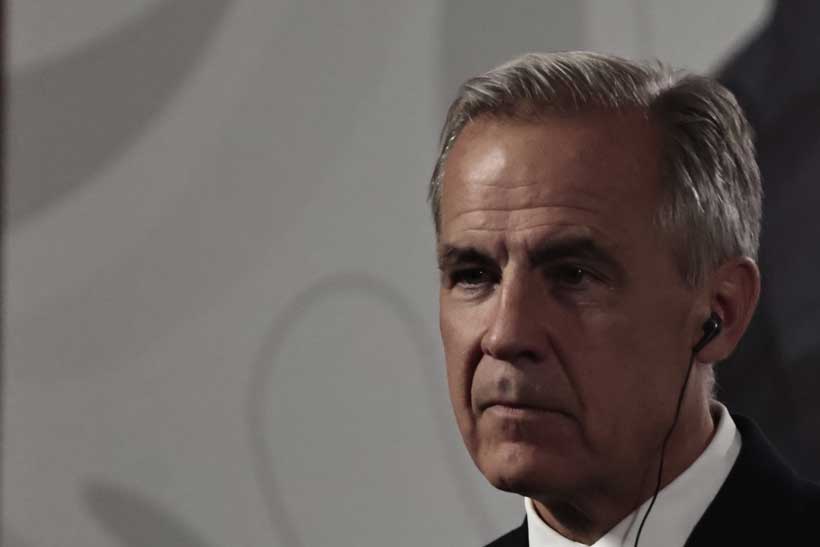
On March 28, 2025, Canada’s newly elected Prime Minister, Mark Carney, declared that “Canada’s relationship with the U.S. will never be the same,” following President Trump’s repeated threats to Canada’s sovereignty and a surge of tariffs that overturned decades of free trade between these two neighbors. Considering the deeply intertwined friendship between Canada and the U.S., this statement had the kinetic energy of a sledgehammer. In the following period, Carney began to promote the idea of grand strategy in Canada’s policy-making, perhaps for the first time in the 21st century. This piece highlights Canada’s opportunities and challenges in reimagining its defense posture and standing on the global stage. It argues that while these changes will strengthen Canada as a defense partner, they will also significantly affect the interconnectedness from which the United States has benefited.
By way of background, the Carney government responded to President Trump’s call to action for NATO partners to contribute their fair share to defense. In a historic move, Canada announced it would allocate 2% of its GDP to defense and, in June, took the further step of pledging 5 percent of GDP on defense by 2035. This new impressive total includes dual-use defense spending, but 3.5 percent will be dedicated to core military expenditure, placing Canada on the long-term path to becoming a top-tier global military power.
To understand the importance of this pledge, it’s key to note that defense is a minor part of election platforms. Although past Liberal and Conservative governments pledged to strengthen the Canadian Forces, neither has made significant changes. However, Prime Minister Carney signals a strategic shift toward boosting territorial control and reducing dependence on U.S. military equipment. He announced a $6.5 billion deal in May to acquire Australia’s advanced over-the-horizon radar system. Despite criticism of Canadian defense procurement inefficiency, this move enhances Arctic security. The Air Force is reconsidering its pledge to purchase 88 F-35 fighters, possibly favoring Sweden’s more affordable Gripen fighters. On the naval front, Canada plans to replace its aging submarines with a 12-unit procurement expected by November, perhaps involving South Korea’s KS-III platform, with the first four submarines scheduled by 2035.
Focusing on a specific service branch in the Canadian Forces is key to enhancing Canada’s capabilities, given the complexity of developing a versatile, combat-ready force as outlined in the 1994 defense white paper. Rethinking hard power to develop a blue-water navy would be a logical step, especially since Canada has the world’s longest coastline along three oceans. This would bolster overseas force projection and defense in depth. Additionally, efforts should include accelerating the delivery of the next-generation River-class destroyers, which won’t be operational until the late 2030s, making additional funding crucial.
Stay ahead of the geopolitical week.
MD Briefing delivers expert analysis across five global fronts — the Indo-Pacific, energy, geoeconomics, European security, and the Middle East — every Monday morning. Free.
As the uncertainty surrounding the AUKUS submarine deal underscores, a capacity crisis in Western maritime shipbuilding limits the ability to acquire naval platforms. Canada can work with its new partners in Japan (as Australia has) and South Korea to strengthen its domestic shipbuilding industry. This would enable Canada to develop a naval force capable of matching its international counterparts. Part of this discussion should include a long-term goal of acquiring an amphibious carrier similar to Japan’s Izumo class, which could operate unmanned aerial systems and give Canada force projection capabilities. Canada is well-positioned to progress in this area by participating in Europe’s Readiness 2030 plan, ongoing procurement talks with South Korea, and a recent security information sharing agreement with Japan.
A new grand strategy must incorporate the country’s evolving intelligence capabilities. Recent reports linking Indian intelligence to the assassination of a Canadian Sikh activist highlight growing foreign threats. While Canada is a key member of the Five Eyes alliance, there are concerns about overly focusing on domestic security and neglecting foreign intelligence. Establishing a dedicated, human-focused foreign intelligence service that prioritizes Canada’s interests—similar to the U.S. Defense Intelligence Agency—would actively counter foreign interference, especially in the Arctic, and complement Canada’s defense posture. Canada can leverage its diverse diaspora to become a global leader.
Given the true north’s vast energy resources, the new strategic focus extends beyond defense. The Carney government has committed to streamlining key infrastructure projects to reduce reliance on U.S. oil refineries and to expand energy and trade export markets. Unlike previous governments, which faced setbacks such as opposition from First Nations, environmental concerns, and interprovincial disputes—exemplified by the Energy East Pipeline project—Prime Minister Carney has united Canada’s provincial governments amidst U.S. tariffs, fostering a rare sense of consensus and optimism within the Council of the Federation. Building on this momentum, initiatives like revitalizing Canada’s only Arctic deep-water port in Churchill, Manitoba, and developing infrastructure in Northern Ontario’s mineral-rich Ring of Fire region are now progressing toward realization.
Canada should consider expanding its soft power while recalibrating its hard power. Key opportunities include strengthening ties within the Organisation internationale de la Francophonie, especially in Africa, where Canada can differentiate itself from France because of its colonial history. Additionally, Canada can partner with African nations on mineral sector development and maritime security, using its diaspora and multicultural connections, such as its relations with Caribbean states. In 2023, Ottawa hosted a CARICOM summit, highlighting its role in stabilizing the region amid Venezuela’s efforts to exert influence. Engaging in regional security efforts could also enhance Canada’s role in stabilizing Venezuela and collaborating across South America.
Canada faces constraints in its strategic shift due to dual demographic pressures from an aging population and high immigration, which has become contentious amid rising housing prices. Despite recent gains, the military continues to fall short of recruitment goals, with about 14,000 positions unfilled. Policy options like offering citizenship for national service or adopting a selective conscription program, similar to Sweden’s, may be worth considering.
In conclusion, Canada has recognized the significant geopolitical shifts shaping the global landscape, much like its European counterparts. Although it may be a latecomer, Canada is rapidly adjusting to enhance its military capabilities to unprecedented levels. By seeking closer ties with its European and Asian allies, Canada is decoupling its defense procurement from the U.S., which has implications for NORAD and the North American Security Parameter. Regarding infrastructure and emergency flows, Canada looks east and west rather than south. Despite economic and demographic challenges, its demographics appear healthier than those of many Western counterparts. While the benefits of the defense in-depth Canada has previously enjoyed are gradually diminishing in the Arctic, a stronger Canada is emerging. The United States should welcome this shift and work to maintain integration with its closest ally. Doing so will ensure that Canada’s hard and soft power align with the US national interest rather than shifting towards a Eurocentric focus.
