


NEWS BRIEF
French President Emmanuel Macron faces a deepening political crisis with no clear path forward after the collapse of his second government in nine months, leaving him trapped between a hostile parliament, an emboldened far-right, and a resurgent left determined to reverse his economic reforms. With limited options—each carrying significant risk—Macron must choose between surrendering policy influence to the left, risking a far-right victory in new elections, or attempting another unstable minority government.
WHAT HAPPENED
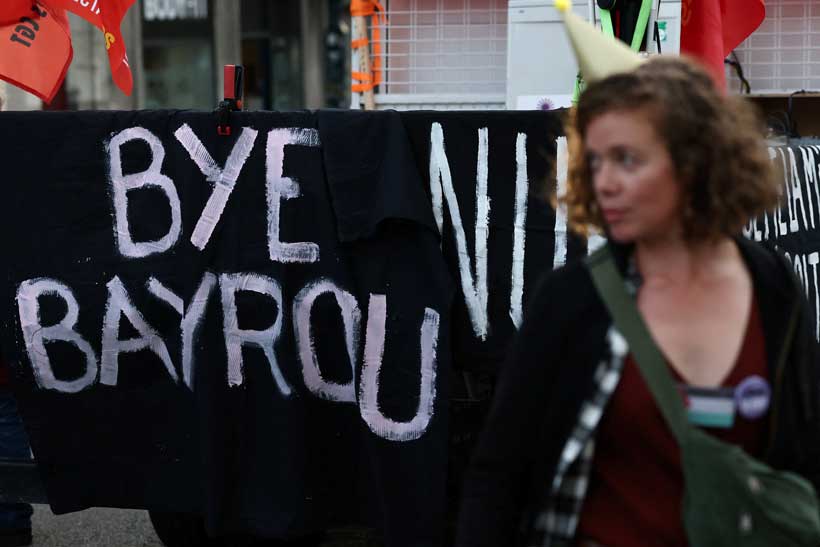
- Prime Minister François Bayrou resigned after losing a parliamentary confidence vote over deficit-reduction plans, marking the second government collapse in nine months.
- Macron’s centrist party lacks a parliamentary majority, leaving him unable to pass legislation without support from a fractured and polarized legislature.
- The opposition Socialists are demanding a “non-aggression pact” that would allow them to implement left-wing policies, including taxing the rich and reversing Macron’s pension reforms.
- Far-right leader Marine Le Pen is urging Macron to call a snap election, where her National Rally party is projected to gain even more seats.
WHY IT MATTERS
Stay ahead of the geopolitical week.
MD Briefing delivers expert analysis across five global fronts — the Indo-Pacific, energy, geoeconomics, European security, and the Middle East — every Monday morning. Free.
- The crisis threatens to undo Macron’s pro-business economic legacy, including labor reforms and pension changes aimed at boosting competitiveness.
- France’s political instability—rare under the Fifth Republic—could spook investors, weaken the euro, and undermine EU policy cohesion.
- Macron’s weakened position reduces France’s influence in Europe at a critical time for EU security, defense, and economic policy.
IMPLICATIONS
- A left-led government would likely roll back Macron’s reforms, potentially triggering market volatility and capital flight.
- New elections could cement the far-right’s dominance, forcing Macron into a contentious “cohabitation” with his nationalist rivals.
- Constitutional reform proposals may gain momentum, though transitioning to a Sixth Republic would be fraught with uncertainty.
- Public discontent over governance paralysis and economic pain could spark renewed protests, reminiscent of the Yellow Vest movement.
This briefing is based on information from Reuters.
