


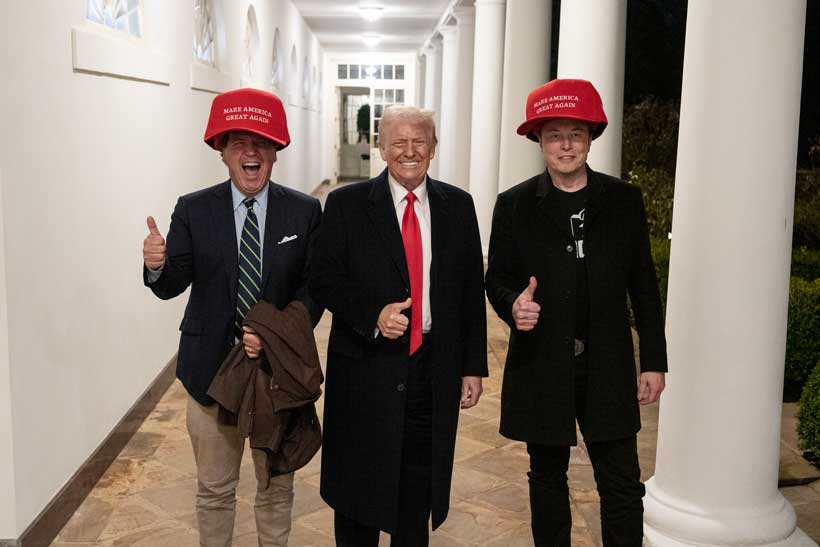
MAGA, short for “Make America Great Again” and the central slogan of the Trump era, is more than just domestic populism. It is a mysterious return to a neoconservative doctrine that never truly disappeared from American politics. Even after the Bush years, it found ways to survive and reassert itself. The policy of “peace through strength,” dominant during George W. Bush’s presidency, has now returned under the framework of a redesigned global strategy, one that aims not just to isolate adversaries like Iran, but also to disrupt China’s expanding influence by targeting its Belt and Road Initiative.
Neoconservatism, once tied to the invasions of Iraq and Afghanistan, has now reemerged cloaked in nationalist realism. But this so-called realism has little to do with serving the interests of American taxpayers or preserving peace. It defines its enemies so broadly that even allied nations can, overnight, be reclassified, if not as enemies, then at least as rivals. While Trump often denounced overseas wars in his speeches, the structures of American hegemony remained firmly intact. According to Axios, the MAGA movement has never truly maintained a unified foreign policy front—even within Trump’s administration. For example, internal divisions have surfaced over how far to escalate tensions with Iran. This pivot toward neoconservatism has even alarmed many MAGA supporters. Prominent figures like Charlie Kirk have warned that interfering in a war between Iran and Israel contradicts Trump’s original anti-war promises. In fact, attacks on Iran have created real fractures within the MAGA movement that could jeopardize its internal unity.
Today, the Middle East is seen as the geopolitical heartland. America’s global competitors, especially China, are working to integrate the region into their expansive trade and infrastructure networks. But these projects require stability. From the chaos in Sudan to Israel’s bombings in Gaza, a pattern emerges: instability is not accidental but structural. The aim appears to be maintaining a fragmented balance of power in the region and preventing China’s deeper involvement. It’s as if each corner of the Middle East is destined to erupt in war, allowing the U.S. to reappear as the region’s savior, and to keep Middle Eastern nations dependent on American “security products.”
According to the Financial Times, China is now reevaluating its regional posture, in part because of America’s expanding military actions and proxy wars. The Belt and Road Initiative cannot advance through the trenches of war—and the United States knows this well. In other words, the U.S. and the West, unable to develop viable alternatives to China’s grand designs, have adopted the role of spoilers in a crumbling global order. These are not actors seeking peace; rather, they seek to redefine war as the flipside of peace.
Stay ahead of the geopolitical week.
MD Briefing delivers expert analysis across five global fronts — the Indo-Pacific, energy, geoeconomics, European security, and the Middle East — every Monday morning. Free.
What we are witnessing may be a kind of reproduction of Sykes–Picot; this time not through formal treaties, but through crisis. Ethnic and sectarian fragmentation, state collapses, and proxy wars now form part of Washington’s new strategic logic and are treated as tactical tools for short- and medium-term goals. From this perspective, MAGA is not a retreat; it is a strategic reconfiguration of liberalism into a humanitarian guise for power politics. In practice, MAGA is merely a new name for neoconservatism; a code word designed to deceive Trump’s voter base. A government that once claimed it wanted to end wars is now more invested than ever in interventions, territorial occupations, military aggression, and even normalizing its allies’ acts of genocide.
This is a movement that does not seek congressional approval for territorial aggression or wars, such as in the case of Iran, nor does it feel bound by collective security agreements or tolerant of dissent. MAGA, under current conditions, is poised to resurrect neoconservatism by turning the global map into a “war of all against all.” Whether it will succeed remains uncertain.
Ultimately, the success of the NeoCon-MAGA, or “MAGA-Con”, project does not depend solely on America’s will, but on the capacity of regional and global actors to design effective counter-strategies. If such a response fails to materialize, the Middle East could once again be divided by lines drawn by foreign powers, not by British and French diplomats this time but by a neoconservative logic cloaked in MAGA branding. In this view, MAGA seeks to redraw the map of global power, reinforcing a vertical, hierarchical order with the U.S. as its supreme ruler. What the world doesn’t fully realize is that Trump isn’t interested in global partnerships; he sees others, at best, as proxies who must remain subordinate. This is an order not built on horizontal cooperation but on rigid vertical domination.
