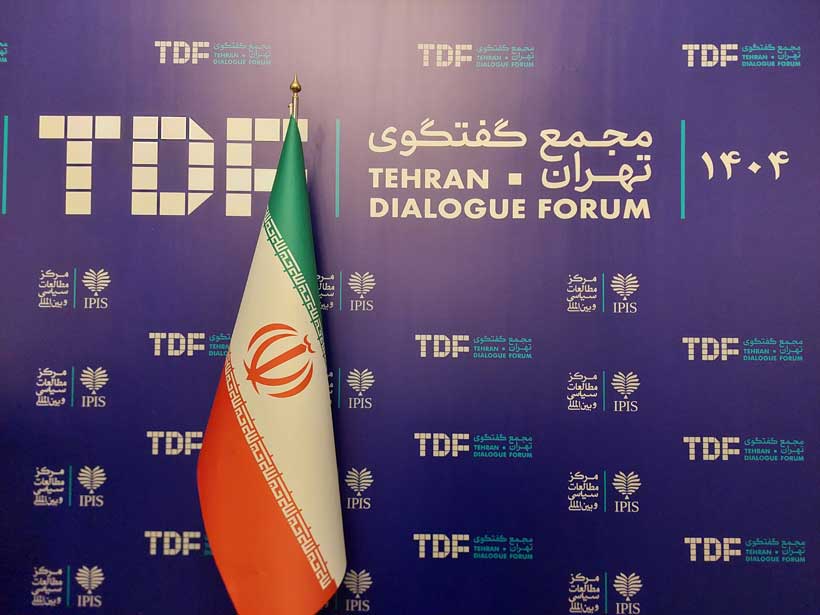
Tehran, May 21— “The countries of the region have the opportunity to build an autonomous path,” based on “harmony, unity, and synergy.” The words of President Masoud Pezeshkian at the opening of the Tehran Dialogue Forum 2025, the most prestigious platform for dialogue and cooperation promoted by the Institute for Political and International Studies (IPIS), photograph a tangible evolution in the Iranian strategic agenda for the MENA quadrant.
Pezeshkian, a member of the reformist current and former Minister of Health (2001-2005) during the Khatami presidency, launches messages of openness while announcing strategic infrastructure projects, such as those worth 140 million dollars in the area of Kermanshah, a plateau of Kurdistan, in the western Iranian area, which can contribute to making the country a true crossroads (great attention for economic corridors). The goal outlined by Pezeshkian during the Forum consists in creating—for the first time—“a“ united and stable region from Pakistan to Iraq,” also including other actors of the—everyone emphasizes—Persian Gulf and the Caucasus, including Christian Armenia, whose Iranian community elects two representatives to the Parliament. It is a different Iran, less aggressive, very dialoguing, even if Pezeshkian himself reiterates that, up to now, it has not been Iran that “bombed innocent civilians,” on the need to overcome artificial divisions often fueled from outside.
It remains to be seen whether these messages will be understood and, above all, whether they will be translated into practice and with what results. In the meantime, many are responding to the call and participating in the Forum: from all over Central Asia, from the Shiite majority Iraq–Nechirvan Barzani, president of Iraqi Kurdistan, where Pezeshkian himself made his first visit after 1979 attended the Forum–, from Armenia which is trying to carve out some room for maneuver (in the same days, however, military exercises are also underway by the Revolutionary Guard with the Azeri Special Forces in Nagorno to strengthen “regional security”), from all over the Far East (Malaysia, Vietnam, Indonesia, China, South Korea), without forgetting the important neighbors such as Turkey, India, Saudi Arabia and Russia, with which cooperation is growing thanks to the strategic partnership. A high-level delegation is also participating, led by Amir Khan Muttaqi, of the Taliban government, in search of legitimacy.
However, the issue of nuclear power and sanctions, which significantly reduce the possibility of growth, remains. Iran does not seem to be willing, as reported in the Tehran Times on May 18, to give up “domestic” enrichment, but talks with the United States are continuing and already in themselves represent a significant step forward. Foreign Minister Abbas Araghchi spoke clearly on this point again during the forum. “We are continuing to engage with Europe,” he said. “We want Europe to do its part,” stressing that uranium enrichment is “a legitimate right” and “a great scientific achievement for our nation.” “We cannot give up this,” but, he added, “if the goal is to ensure that Iran does not pursue nuclear weapons research, this goal is completely achievable.”
Stay ahead of the geopolitical week.
MD Briefing delivers expert analysis across five global fronts — the Indo-Pacific, energy, geoeconomics, European security, and the Middle East — every Monday morning. Free.
Certainly, in the Middle East, in redefining Iran, the most populous country (83 million inhabitants), with boundless resources, not only of oil (third largest reserves in the world) and gas (34.0 trillion cubic meters) but also of minerals (15 thousand mines as reported by Press TV)—in the meantime, Pezeshkian also launches the first bio-refinery—intends to have its say. Trump, and not only he, warned.