



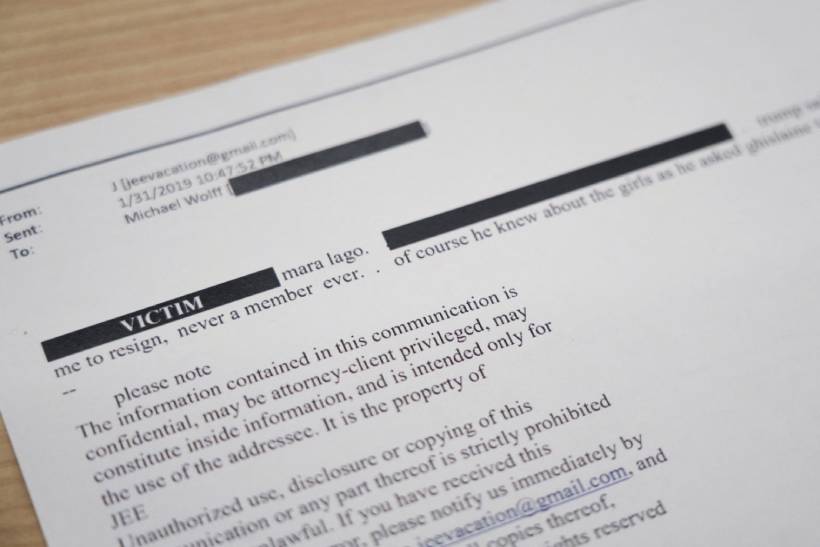
The Justice Department watchdog’s review of the Epstein files should not be treated as routine bureaucracy. It is a direct test of whether the United States government can obey its own transparency law when the records involve wealth, sexual abuse, political power, and public suspicion. The DOJ Office of Inspector General has announced an audit into whether the department properly identified, redacted, and released records under the Epstein Files Transparency Act. That narrow wording hides a larger issue: whether the public received a lawful disclosure or a managed disclosure.
The law itself was unusually explicit. The Epstein Files Transparency Act required the attorney general to release DOJ-held Epstein records in a searchable and downloadable format, with limited redactions for victims, child sexual abuse material, ongoing investigations, and national security. President Donald Trump signed the bill on November 19, 2025, according to the White House signing notice. Congress had already sent a powerful message: the House passed the measure 427-1, as shown by the official House Clerk vote record, and the Senate approved it by unanimous consent, as documented by C-SPAN.
Transparency Delayed Is Trust Denied
The government was not asked to perform an impossible task. It was asked to follow a statute. The Associated Press reported that Congress acted after pressure from survivors and lawmakers who wanted the files released within 30 days, with protections for victims but no hiding of records because they were embarrassing or politically sensitive. The AP account showed how rare the bipartisan pressure had become. That is why delay matters. In a case defined by secrecy, delay does not look neutral; it looks protective.
The Justice Department later said it had released nearly 3.5 million pages, including more than 2,000 videos and 180,000 images, in its January 30 publication. That figure came from the department’s own DOJ release. But quantity is not the same as compliance. Reuters reported that the watchdog review follows criticism over both excessive redactions and the exposure of alleged victims’ information. The Reuters report makes clear that the controversy is not simply about how many pages were uploaded, but whether the process was lawful, careful, and fair.
Victims Should Be Protected, Not Used as an Excuse
The moral center of this issue must remain the victims. Public curiosity cannot justify exposing survivors’ names, private details, or traumatic evidence. The Associated Press reported that survivors complained that sensitive information had been improperly revealed during the release process. That concern, highlighted in the AP watchdog story, deserves serious attention. A government that claims transparency while harming victims has failed at both justice and humanity.
Yet victim protection cannot become a convenient curtain for powerful people. The Washington Post reported that officials had identified millions of documents, with a substantial portion withheld for legal reasons, according to DOJ explanations. The Washington Post report underlines why independent review is essential. The Wall Street Journal also reported scrutiny over redactions and the handling of victim information, as detailed in its coverage of the audit. The public deserves to know whether redactions protected victims or protected reputations.
The Public Does Not Believe the Government
Public distrust is not irrational here. Epstein died in federal custody in 2019 while awaiting trial on sex-trafficking charges. The DOJ OIG’s earlier report found negligence and misconduct contributed to his suicide. The original federal charges, described by the U.S. Attorney’s Office for the Southern District of New York, involved allegations that Epstein sexually exploited and abused dozens of underage girls. In such a case, secrecy naturally breeds suspicion.
Recent polling shows that suspicion has hardened. YouGov reported in January that around half of Americans believed Trump was trying to cover up Epstein’s crimes, according to its Economist/YouGov poll analysis. A later YouGov report found majority disapproval of Trump’s handling of the Epstein investigation. Navigator Research reported that 72 percent of Americans wanted more prosecutions and investigations related to Epstein, as shown in its March 2026 polling. Reuters/Ipsos also found broad belief that the Epstein files show powerful people get special treatment, according to Reuters polling coverage.
The Watchdog Must Follow the Paper Trail
The audit should answer specific questions. Did DOJ locate all responsive records? Were redactions applied consistently? Were searchable downloads usable? Were victims protected before publication, not after mistakes became public? Did any official delay, narrow, or shape the release for political reasons? PBS reported that the January release included famous names and new details about earlier investigations but also raised questions about what remained redacted. That context appears in PBS NewsHour’s coverage. The Guardian also reported criticism that the department missed the statutory deadline, described in its December 2025 coverage.
My view is simple: the government does not owe the public gossip, but it does owe proof. No innocent person should be smeared by association, and no survivor should be retraumatized by reckless disclosure. But presidents, princes, billionaires, prosecutors, and bureaucrats are not entitled to secrecy because the truth is uncomfortable. As Al Jazeera reported, lawmakers have accused the administration of using heavy redactions to protect powerful figures. That accusation now requires evidence-based resolution. The inspector general must produce a clear public report, and if the DOJ fails to comply, Congress and the courts should force full lawful disclosure. The Epstein files are no longer only about Jeffrey Epstein. They are about whether American institutions protect victims, protect the law, or protect the powerful.
