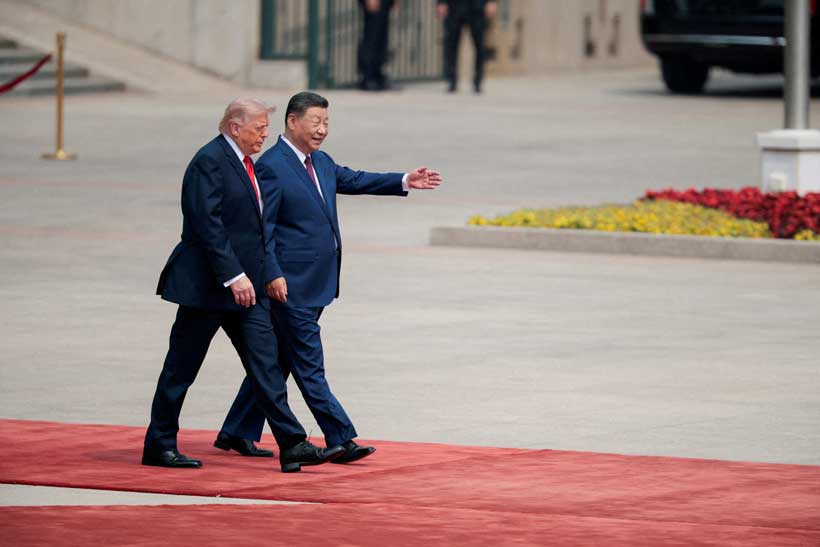
President Donald Trump’s visit to Beijing highlighted a shift in U. S.-China relations after the trade tensions of the previous year. The summit between Trump and Chinese leader Xi Jinping revealed that while some progress was made, significant issues remain unresolved, keeping both countries in a strategic standoff. For the U. S., concerns like China’s trade practices and military ambitions in the Indo-Pacific continue to be major points of contention. Xi, on the other hand, noted the emergence of a more stable relationship that he referred to as “constructive strategic stability. “
Experts, like Scott Kennedy from the Center for Strategic and International Studies, observed that China benefitted from the summit, as the aggressive trade policies from earlier in Trump’s term have softened. Trump attended with major business leaders but failed to achieve any substantial agreements. There was no commitment from China to assist the U. S. with global issues such as the conflict in Iran. Analyst Craig Singleton pointed out that the summit maintained the existing stalemate, providing only modest outcomes for both sides.
The White House claimed that Trump maximized his positive relationship with Xi to secure benefits for American citizens, citing agreements to sell Boeing aircraft and boost agricultural exports. Chinese officials described the discussions as candid and constructive, aiming to establish a better understanding between the two nations. However, analysts believe that Trump might have overestimated the effectiveness of tariffs to compel China into concessions, leading to a retaliatory response from Beijing and an ongoing standoff.
There was a noticeable absence of public discussion regarding longstanding U. S. demands of China, such as reducing industrial overcapacity. This suggests a shift, with China appearing to accept the temporary agreement while focusing on its internal economic challenges and long-term technological goals. Senior officials from the Trump administration indicated that they were not expecting significant outcomes from the meeting, and there was no urgency for a trade truce renewal set to expire in five months.
A source familiar with the negotiations shared that China wanted a longer extension of the truce than what the U. S. was prepared to offer. The limits of the summit’s outcomes stood in contrast to significant agreements reached during Trump’s 2017 visit to China, which had resulted in $250 billion worth of deals. This year’s meeting did not yield major breakthroughs, particularly regarding sales of advanced AI technology to China, a concern for both Republicans and Democrats in Washington.
Trump claimed that Boeing had finalized a deal for 200 jets, which was significantly less than the initial expectations of 500. The establishment of a new Board of Trade was mentioned as a potential way to reduce tariffs, although details remained vague. Wendy Cutler, a former U. S. Trade Representative, expressed disappointment over the summit’s economic results. Conversely, some in China viewed the discussions positively, suggesting that both countries are now focused on long-term competition and acknowledging the realities of their relationship rather than trying to return to a cooperative past.
With information from Reuters