


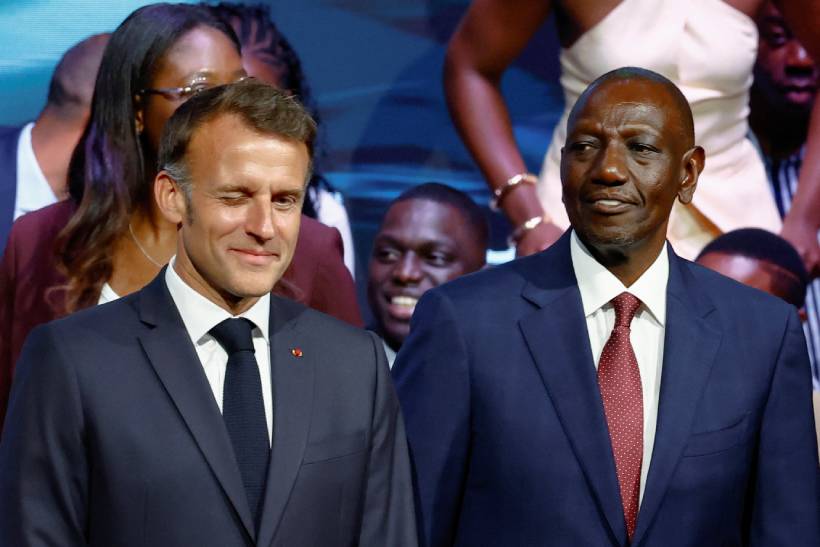
The 2026 Africa France summit in Nairobi marks a significant diplomatic moment in the evolving relationship between Europe and Africa. For the first time, the summit is being held in an African country with no colonial history under France, signaling an intentional shift in symbolism and geopolitical messaging. It is also taking place against a backdrop of deteriorating French influence in parts of West Africa, where countries such as Mali, Burkina Faso, and Niger have sharply reduced engagement with Paris.
The summit reflects a broader attempt to redefine France’s role in Africa under President Emmanuel Macron and to reposition France within a more competitive global environment. At the same time, it highlights Kenya’s growing ambition under President William Ruto to present itself as a continental diplomatic hub and an economic gateway between Africa and global powers.
The convergence of these ambitions has produced a summit agenda focused on innovation, entrepreneurship, climate finance, artificial intelligence, and security cooperation. However, beneath this forward looking framing lies a more complex continuity of historical relationships, economic interests, and strategic recalibration between Africa and Europe.
Macron’s Repositioning of French Africa Policy
The summit reflects the long term evolution of Macron’s Africa strategy, which has sought to move away from traditional post colonial frameworks toward a more diversified and economically oriented engagement model. This approach emphasizes partnerships in innovation, private sector development, and strategic cooperation beyond France’s former colonial sphere.
Stay ahead of the geopolitical week.
MD Briefing delivers expert analysis across five global fronts — the Indo-Pacific, energy, geoeconomics, European security, and the Middle East — every Monday morning. Free.
A central feature of this policy has been an attempt to reduce France’s reliance on its traditional West African alliances while expanding diplomatic and economic ties across the broader African continent. This includes engagement with non Francophone countries and regional institutions, reflecting a recognition that France’s historical influence in West Africa is increasingly contested.
The emphasis on entrepreneurship and innovation, particularly through small business development and technology partnerships, reflects a shift toward a neoliberal development model. This model prioritizes private sector growth, investment facilitation, and startup ecosystems as drivers of economic transformation.
The Nairobi summit continues this trajectory by framing Africa France relations around innovation and growth rather than historical legacy or development aid dependency.
Kenya’s Strategic Diplomatic Positioning
For Kenya, the summit represents an opportunity to consolidate its position as a leading diplomatic and economic actor in Africa. By hosting a major international summit outside the traditional Francophone sphere, Kenya is signaling its ambition to transcend linguistic and colonial regional divisions and present itself as a neutral platform for continental and global engagement.
Under Ruto’s leadership, Kenya has increasingly adopted a development narrative centered on entrepreneurship and economic empowerment. This aligns with the broader summit theme of innovation driven growth and private sector expansion. Kenya’s domestic economic discourse, often framed around the concept of a “hustler economy,” mirrors the emphasis on small business development and market based solutions promoted in France’s external engagement strategy.
The convergence of these narratives allows both countries to present their partnership as forward looking and economically dynamic, rather than historically constrained.
Shared Policy Frameworks and Economic Priorities
A key reason the Nairobi summit bears the imprint of both Macron and Ruto is the overlap in their policy priorities. Both leaders emphasize climate finance, technological innovation, security cooperation, and private sector led development as central pillars of modern governance and international partnership.
This shared framework is particularly visible in discussions around artificial intelligence, climate initiatives, and industrial development. These sectors are presented as areas of mutual benefit, offering opportunities for investment, technological transfer, and economic growth.
However, this alignment is also strategic. It allows both sides to redefine their relationship in terms of future oriented sectors rather than historically sensitive areas such as colonial legacy or aid dependency. By focusing on emerging industries, both France and Kenya seek to establish a partnership narrative that is less politically contentious and more economically aspirational.
Historical Continuities Behind the New Partnership
Despite its modern framing, the France Kenya relationship is rooted in long standing historical interactions dating back to the post independence period. France’s early engagement with Kenya and the wider East African region was partly motivated by its broader strategy to balance British influence in Africa while expanding its own role within European and global institutions.
Kenya, in turn, has historically sought to diversify its international partnerships beyond the Commonwealth framework. Engagement with European economic structures in the early post independence period reflected a desire for greater autonomy in trade and development policy.
The current summit therefore reflects not a break from history, but a continuation of evolving pragmatic cooperation shaped by shifting global power dynamics.
Tensions Beneath Strategic Alignment
Despite the apparent convergence of interests, significant structural tensions remain between France and Kenya in areas such as climate policy, global security, and technological labor markets.
On climate change, both countries acknowledge the urgency of environmental action, but differ in priorities and implementation strategies. Kenya, highly vulnerable to droughts and environmental stress, seeks substantial climate finance and structural adaptation support. France and the broader European Union, however, often balance climate commitments with domestic energy and industrial policy considerations.
Similarly, in the field of artificial intelligence, cooperation masks underlying asymmetries. Much of the data processing and content moderation work that supports global AI systems is conducted in lower wage labor markets, including Kenya. This raises questions about value distribution and economic equity within the emerging digital economy.
In global security, divisions are also evident. Diverging responses to international conflicts, including voting patterns in global institutions, highlight differences in geopolitical alignment between African states and Western partners.
The Geopolitical Logic of the Summit
The Nairobi summit reflects a broader shift in international relations, where traditional post colonial hierarchies are being replaced by more transactional and issue based partnerships. Europe’s search for reliable global partners amid geopolitical uncertainty, combined with Africa’s growing strategic autonomy, is reshaping diplomatic engagement.
For France, Africa represents both an economic opportunity and a strategic necessity in an increasingly multipolar world. For Kenya, engagement with France offers access to investment, technology, and diplomatic visibility within global governance structures.
The summit therefore functions as both a symbolic and practical platform for redefining bilateral relations in a rapidly changing global order.
Analysis
The Nairobi Africa France summit illustrates the transformation of international partnerships from historically anchored relationships into forward looking economic and strategic arrangements. While the rhetoric emphasizes innovation, climate action, and entrepreneurship, the underlying dynamics remain shaped by long standing patterns of influence, economic asymmetry, and geopolitical repositioning.
The convergence between Macron’s and Ruto’s priorities reflects a pragmatic alignment rather than a fully equal partnership. Both sides benefit from framing cooperation in terms of emerging sectors such as artificial intelligence and green development, which carry fewer historical burdens and greater political flexibility.
However, the sustainability of this model depends on whether it can deliver inclusive economic outcomes rather than concentrating benefits among narrow elite and corporate actors. Without broader distribution of gains, the partnership risks reproducing familiar inequalities under a modern technological and developmental narrative.
Ultimately, the summit represents a transitional moment in Africa Europe relations, where historical legacies, contemporary economic interests, and future oriented strategic ambitions intersect in a rapidly evolving global system.
With information from Reuters.
