


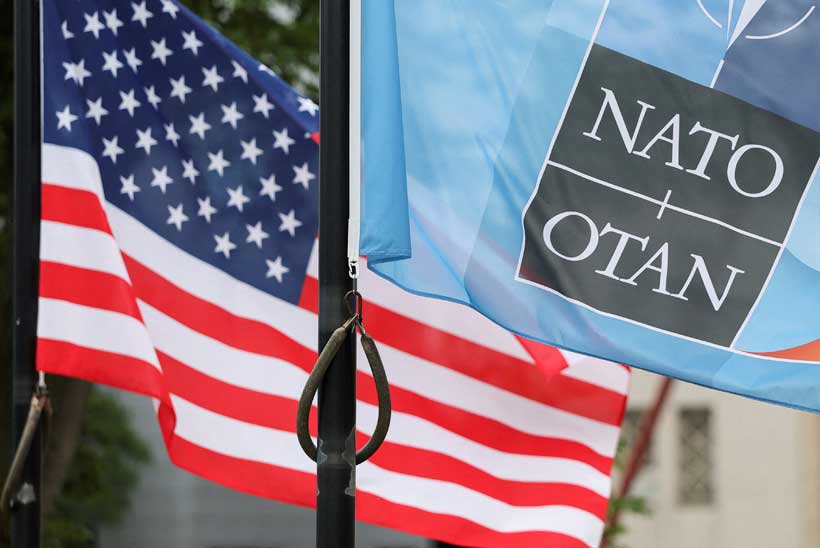
President Donald Trump’s decision to withdraw some U. S. troops from Germany and his reaction to a recent conflict with Iran have raised concerns about America’s relationships with its allies. As the U. S. and Iran move toward a potential resolution of their conflict, fears grow among traditional allies—across Europe, the Middle East, and the Indo-Pacific—that the U. S. may not be reliable in a crisis. These worries have led some partners to reconsider their reliance on America, while adversaries like China and Russia look to take advantage.
Analysts suggest that Trump’s unpredictable actions could permanently change U. S. relations with other countries. Trump’s approach may weaken alliances, particularly with NATO, which he has criticized for not meeting his wartime demands. Experts emphasize that Trump’s handling of relations with Iran could damage U. S. credibility.
Tensions increased between Trump and European leaders after he aligned with Israel to attack Iran, claiming Tehran was close to making a nuclear weapon. Iran’s actions in response, including blocking the Strait of Hormuz, have adversely affected European economies. Prior to this, Trump had already unsettled allies by imposing tariffs, pursuing the purchase of Greenland, and cutting military aid to Ukraine.
The situation escalated when Trump announced the withdrawal of 5,000 troops from Germany, following critical comments from German Chancellor Friedrich Merz. He also hinted at reducing U. S. forces in Italy and Spain due to disagreements over the war and blamed allies for not supporting U. S. efforts adequately. White House spokesperson Anna Kelly acknowledged Trump’s discontent with NATO, mentioning that some military requests had been denied by European governments.
Trump has criticized British Prime Minister Keir Starmer and floated potential penalties against NATO partners he feels have not contributed enough to U. S. military operations against Iran. In response, European nations are increasing their cooperation, taking on more defense responsibilities, and working on joint weapon systems to lessen dependence on the U. S. They are also trying to persuade Trump of the importance of strong transatlantic ties.
While recognizing the need to bolster their security investment, European leaders remain cautious because their defense still largely relies on the U. S. Analysts believe that achieving more self-reliance for Europe will take time. European countries have communicated that they continue to support U. S. military operations, but officials are becoming bolder in challenging Trump’s tactics.
Despite earlier efforts to ease tensions through flattery, European leaders are now more critical of U. S. policies. They acknowledge that Trump, facing no restrictions on his actions in his final months, might act freely on the world stage. Polish Foreign Minister Radoslaw Sikorski assured that as long as Europe keeps its military spending commitments, there’s no need for alarm about NATO’s future. However, the strain on U. S. alliances is evident, extending beyond just Europe.
This week, Iran launched missile and drone attacks on the United Arab Emirates, a close ally of the U. S. President Trump and his aides seemed unconcerned, causing anxiety among Gulf Arab states already suffering from ongoing conflicts. While Trump downplayed a significant attack that damaged the Fujairah oil port, he insisted that a ceasefire was still effective, despite later attacks. Gulf partners, who initially supported Trump, now worry he may make deals that could leave them at risk.
The conflict has raised concerns among Asian countries dependent on oil, like Japan and South Korea, which have been troubled by Trump’s tariffs and his criticism of traditional alliances. They fear that rising domestic pressures, such as high gasoline prices, might affect U. S. support in conflicts like a potential invasion of Taiwan. Former Japanese officials expressed worries that trust in the U. S. may be diminishing, impacting regional expectations of U. S. support.
Meanwhile, Russia and China, allies of Iran, have kept a distance but are closely observing the situation. Analysts caution that Trump’s military actions could encourage China and Russia to assert more power in their regions. Russia has benefited from increased oil prices driven by the conflict, while China is attempting to present itself as a more stable global partner compared to Trump. However, a former U. S. official stated that China would struggle to portray itself as a strong ally to Iran amid these developments and noted that they have not been reliable partners during the crisis.
With information from Reuters
