


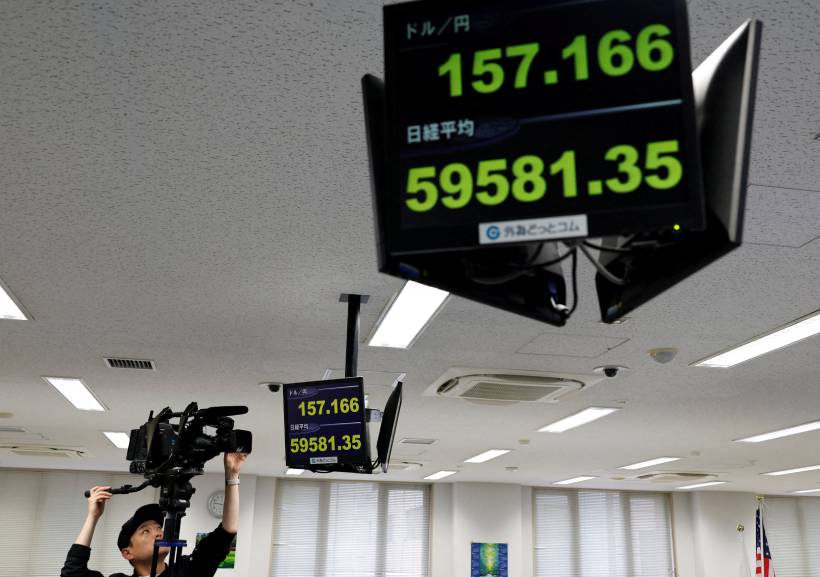
Japan is intensifying efforts to stabilise the weakening yen by combining aggressive currency intervention with stronger signals from the Bank of Japan and diplomatic coordination with the United States.
After years of maintaining ultra loose monetary policy, the Bank of Japan has recently adopted a more hawkish tone under Governor Kazuo Ueda, raising expectations of further interest rate hikes. Japanese authorities hope this policy shift, alongside direct intervention in currency markets, can slow the yen’s decline against the United States dollar.
The strategy also relies heavily on support or tacit approval from Washington, particularly ahead of meetings involving United States Treasury Secretary Scott Bessent and senior Japanese officials. Investors believe American backing would strengthen the credibility of Japan’s attempts to stabilise its currency.
The yen has faced sustained downward pressure due to rising oil prices, higher United States interest rates, and Japan’s heavy dependence on imported energy. Policymakers now fear that continued weakness could worsen inflation and increase the financial burden on households and businesses.
Stay ahead of the geopolitical week.
MD Briefing delivers expert analysis across five global fronts — the Indo-Pacific, energy, geoeconomics, European security, and the Middle East — every Monday morning. Free.
Why the Yen Is Under Pressure
The Japanese yen has weakened significantly because of the large gap between interest rates in Japan and the United States. While the Federal Reserve raised rates aggressively over recent years to fight inflation, Japan kept rates extremely low in an effort to support economic growth and encourage inflation after decades of stagnation.
This difference made the dollar more attractive to investors seeking higher returns, encouraging large scale selling of the yen. As a result, the Japanese currency has struggled to maintain stability despite repeated government concerns.
The situation has become more serious because Japan relies heavily on imported energy and raw materials. Higher oil prices linked to tensions in the Middle East have increased Japan’s import costs, widening the trade deficit and placing additional downward pressure on the yen.
A weaker yen also raises domestic living costs because imported goods, fuel, and food become more expensive for Japanese consumers.
The Bank of Japan’s Hawkish Shift
Governor Kazuo Ueda’s recent comments marked a significant turning point in Japanese monetary policy. His increasingly hawkish tone signalled that the Bank of Japan is becoming more concerned about inflationary pressures caused by the weak yen.
Markets are now debating whether the central bank could raise interest rates again during its June meeting. Expectations of tighter monetary policy have strengthened speculation that Japanese authorities are serious about defending the currency.
This represents a notable shift from previous periods when investors viewed the Bank of Japan as reluctant to tighten policy. Earlier dovish messaging often encouraged traders to continue betting against the yen because they believed Japan would maintain ultra loose financial conditions indefinitely.
Now, however, the combination of possible rate hikes and direct currency intervention has created a more coordinated approach between the central bank and the Finance Ministry.
Japan’s Currency Intervention Strategy
Japan has reportedly spent nearly ten trillion yen in recent weeks intervening in foreign exchange markets to support its currency. Currency intervention occurs when a government buys or sells its own currency to influence exchange rates.
In this case, Japanese authorities are buying yen and selling dollars in an attempt to slow the pace of depreciation. Officials are not necessarily aiming for a dramatic strengthening of the yen, but rather trying to reduce speculative attacks and restore stability to currency markets.
Analysts say intervention works best when markets believe authorities are united and determined. This is why coordination between the Bank of Japan, the Finance Ministry, and the United States is considered crucial.
The strategy is partly psychological. By demonstrating political unity and financial strength, Tokyo hopes to increase the risks for investors betting against the yen.
Why United States Support Matters
The United States plays a critical role because global currency markets closely monitor Washington’s position on foreign exchange intervention. If the United States openly opposes Japan’s actions, investors may view intervention as unsustainable.
However, statements from Treasury Secretary Scott Bessent supporting tighter Japanese monetary policy have already helped strengthen market confidence in Tokyo’s strategy. Investors now expect his upcoming visit to Japan could further reinforce the impression of policy coordination between the two allies.
Even symbolic support from Washington can have a major effect on currency markets. Analysts argue that traders are less likely to aggressively sell the yen if they believe both Japan and the United States are aligned in stabilising the currency.
This diplomatic backing therefore becomes almost as important as the financial intervention itself.
Domestic Political Tensions Inside Japan
Despite the stronger policy alignment between financial authorities, political tensions remain inside Japan. Prime Minister Sanae Takaichi has traditionally supported loose monetary policy and economic stimulus measures.
Although she has publicly remained cautious about criticising the Bank of Japan directly, reports suggest she remains hesitant about aggressive rate hikes because tighter monetary policy could slow economic growth.
This creates a difficult balancing act for the government. On one hand, policymakers want to stabilise the yen and reduce inflation linked to import costs. On the other hand, higher interest rates could hurt businesses, borrowing, and domestic demand.
These competing priorities explain why authorities are relying heavily on currency intervention rather than depending solely on rate increases.
Global Energy Markets Add More Pressure
The conflict involving Iran and instability in the Gulf region have further complicated Japan’s currency problems. Rising oil prices directly affect Japan because the country imports most of its energy supplies.
Higher energy costs worsen Japan’s trade balance by increasing the amount of money flowing overseas to pay for imports. This naturally weakens the yen because demand for foreign currencies rises.
Analysts argue that even strong domestic policy changes may struggle to fully stabilise the yen if global energy prices continue climbing. This means Japan’s currency battle is increasingly tied to broader geopolitical developments far beyond its control.
Analysis
Japan’s latest efforts to defend the yen reveal how vulnerable modern economies can become when domestic monetary policy collides with global geopolitical and financial pressures. The weakness of the yen is not simply a currency issue but also a reflection of deeper structural challenges facing Japan’s economy.
The coordination between the Bank of Japan, the Finance Ministry, and the United States suggests Tokyo understands that isolated intervention alone is unlikely to succeed. Markets respond not only to direct financial action but also to perceptions of political credibility and international support.
At the same time, Japan’s strategy remains fragile. If the Bank of Japan raises interest rates too slowly, investors may continue selling the yen. But if rates rise too quickly, the government risks damaging economic growth and increasing financial stress domestically.
The situation also demonstrates how global events now shape national economic policy. Rising oil prices linked to Gulf tensions have intensified pressure on Japan despite the conflict occurring thousands of miles away. This highlights the deep interconnectedness of energy markets, currencies, and geopolitical stability.
Ultimately, Japan is not trying to completely reverse the yen’s decline overnight. Instead, authorities appear focused on preventing disorderly market behaviour and buying time until global financial conditions become more favourable. Whether that strategy succeeds may depend as much on international politics and energy prices as on Japan’s own economic policies.
With information from Reuters.
